America First Advocates Reject Interventionism, Call for Focus on Domestic Priorities
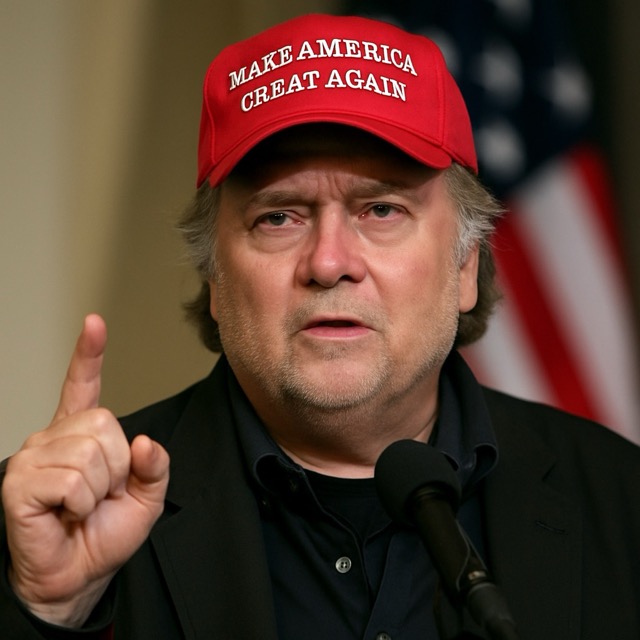
As tensions rise in the Middle East and discussions intensify in Washington over potential military responses to Iran’s nuclear activity, a surprising voice of dissent has emerged from within the conservative populist right. Steve Bannon and key figures in the Make America Great Again (MAGA) movement are vocally opposing any U.S. military involvement in Iran, arguing that such action contradicts the core principles of American sovereignty and non-interventionism.
Bannon, the former chief strategist for President Donald Trump and a prominent voice in nationalist political circles, has taken a firm stand against what he calls the “military-industrial temptation” to plunge America into yet another foreign conflict. In a recent broadcast of his “War Room” podcast, Bannon declared, “We did not build a movement to protect borders 6,000 miles away while our own are overrun. No war with Iran. Period.”
This sentiment is echoed by many MAGA-aligned political figures, influencers, and voters who see military adventurism as a betrayal of the America First doctrine. For this bloc, U.S. foreign policy should prioritize domestic strength—economic security, energy independence, and border control—over costly overseas entanglements.
The renewed debate was sparked after leaked reports suggested that Pentagon planners were reviewing preemptive strike options against Iranian nuclear infrastructure. These developments, coupled with escalating rhetoric from hawkish lawmakers, ignited fears that the U.S. might be edging toward another major conflict in the region.
For MAGA conservatives, the Iran issue recalls the wars in Iraq and Afghanistan—campaigns they believe drained U.S. resources, sacrificed American lives, and failed to deliver meaningful strategic outcomes. They argue that Iran poses no immediate existential threat to the United States and that regional actors should take the lead in managing their own security challenges.
Some analysts believe the MAGA resistance to interventionism reflects a broader shift in Republican Party ideology. “There’s a post-Trump realignment happening, where traditional neoconservative policies are being replaced by nationalist realism,” said Dr. Hannah Fielding, a fellow at the Center for Strategic Politics. “The MAGA movement is skeptical of foreign wars and deeply focused on national renewal.”
However, not all conservatives agree. A faction within the GOP—particularly among defense hawks—maintains that strong military posture in the Middle East is essential to U.S. strategic dominance. They argue that failing to respond to Iranian aggression could embolden America’s adversaries and destabilize key allies.
Despite the divide, Bannon and his allies continue to push back forcefully. On social media, MAGA-aligned accounts have trended hashtags like #NoWarWithIran and #AmericaFirst, and rallies have featured speeches condemning U.S. intervention abroad. In conservative media, commentators warn that military escalation would betray the working-class voters who form the MAGA base.
Ultimately, the future of U.S. policy on Iran may hinge not only on intelligence assessments and diplomatic calculations, but also on the evolving internal dynamics of the Republican Party. With a potential Trump return looming in the 2024 election cycle, the voice of the MAGA movement—and its aversion to foreign entanglements—may carry greater weight than ever before.
For now, one thing is clear: as Washington debates confrontation, a powerful faction within its own ranks is demanding restraint.

 The Tower Post