Beijing Weighs Political and Strategic Options Amid Shifting Regional Dynamics
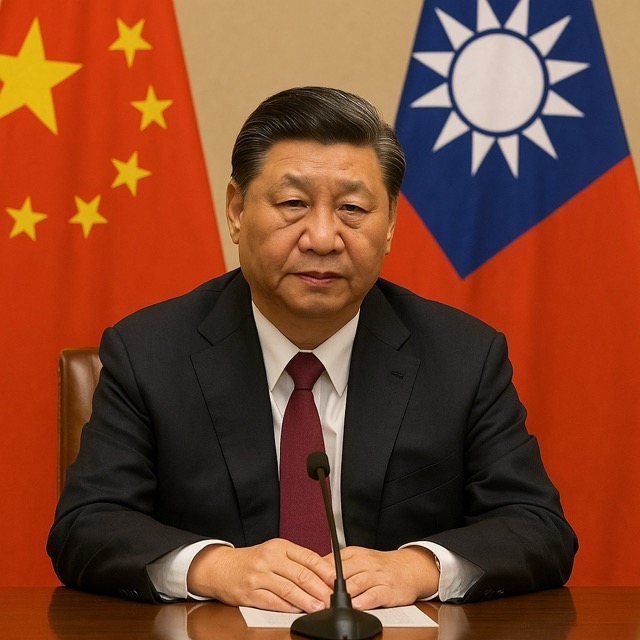
Amid rising geopolitical tensions and changing dynamics in the Indo-Pacific, China is reportedly exploring the possibility of accelerating its timeline for the integration of Taiwan. According to several regional intelligence sources and policy analysts, top officials within the Chinese Communist Party (CCP) have been holding high-level discussions about adjusting long-standing strategies in response to what they perceive as a narrowing window of opportunity.
The push for faster integration comes amid growing U.S. military support for Taiwan, deepening trade ties between Taipei and Western democracies, and increased participation of Taiwan in global forums despite China’s objections. These developments, seen by Beijing as infringements on its “One China” principle, have led to speculation that Chinese leadership may feel compelled to act sooner rather than later.
President Xi Jinping has repeatedly emphasized that the “complete reunification of the motherland” is a core national mission. While official policy continues to emphasize peaceful unification, recent military exercises around Taiwan and aggressive rhetoric in Chinese state media suggest a more assertive stance is taking shape behind closed doors.
Military analysts note an uptick in People’s Liberation Army (PLA) activity, including naval maneuvers and air patrols near Taiwan’s air defense identification zone. At the same time, China has intensified cyber and disinformation campaigns aimed at undermining Taiwan’s democratic institutions and public morale. These actions are widely interpreted as part of a broader hybrid strategy designed to pressure Taiwan without triggering open conflict.
Internally, the CCP faces increasing pressure to project strength ahead of major political milestones, including upcoming Party congresses. Nationalist sentiment, amplified by social media and state-controlled narratives, has bolstered public support for decisive action on Taiwan. However, such a move would come with enormous risks.
Economically, an accelerated push toward integration could provoke severe international backlash, including trade sanctions and strategic decoupling from key markets. The global economy’s reliance on Taiwan’s semiconductor industry—home to chip giant TSMC—adds another layer of complexity, as disruption could trigger widespread technological and supply chain crises.
In Taiwan, President Lai Ching-te’s administration has reaffirmed the island’s sovereignty and democratic values. While avoiding provocative language, Taipei has increased defense spending and enhanced military readiness. Strategic cooperation with Japan, the U.S., and Australia continues to deepen, further complicating Beijing’s calculus.
The international community remains wary. While many governments adhere to the One China Policy, they have also expressed concern over unilateral changes to the status quo. The U.S. has reiterated its commitment to peace and stability in the Taiwan Strait, warning that any attempt to change Taiwan’s status by force would face firm opposition.
Ultimately, whether China moves to accelerate integration will depend on a complex interplay of domestic, regional, and global factors. For now, Beijing appears to be signaling both its resolve and its readiness—leaving the world to speculate how close the region is to a decisive turning point.
What remains clear is that Taiwan’s fate is no longer a distant or hypothetical issue. It is rapidly becoming a central flashpoint in the 21st-century geopolitical landscape.

 The Tower Post