Delhi’s Agencies Intensify Surveillance Amid Rising Tensions in the Region
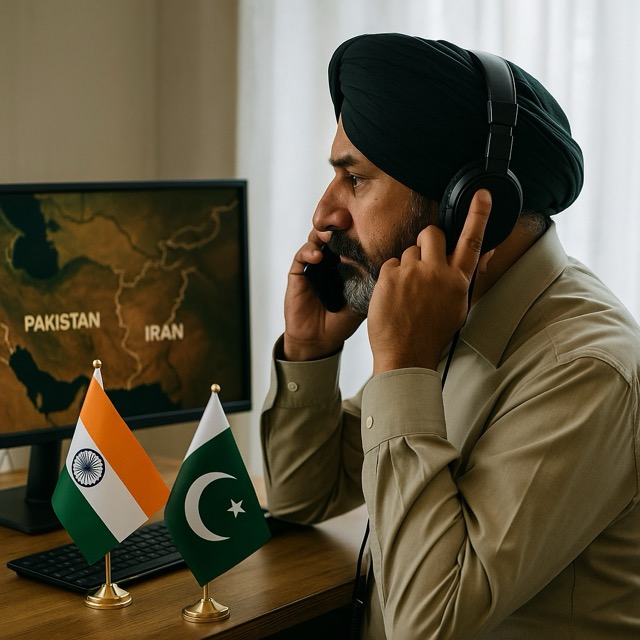
As regional tensions simmer in the Middle East and South Asia, Indian intelligence agencies are reportedly increasing their surveillance on Pakistan, amid growing concerns that Islamabad may be covertly supporting Iran in its standoff with the West. According to intelligence insiders and regional analysts, New Delhi sees any deepening alignment between Pakistan and Iran as a potential destabilizing factor in an already volatile geopolitical landscape.
Sources within India’s Research and Analysis Wing (RAW) and Military Intelligence (MI) indicate that joint monitoring efforts have been underway for several weeks. These efforts include satellite imaging, human intelligence (HUMINT) networks near the Iran-Pakistan border, and electronic surveillance of key military and diplomatic communications. While no direct evidence of military aid has surfaced publicly, India remains highly cautious of any signs that Pakistan might be providing logistical, intelligence, or strategic assistance to Iran.
New Delhi’s concern stems from the close historical and religious ties between Pakistan and Iran, despite their differences. Although their bilateral relations have often been strained—particularly over sectarian dynamics and border incidents—there is renewed speculation that shared grievances against Western pressure and mutual interests in resisting regional isolation may be drawing the two neighbors closer.
India is particularly wary of any transfer of arms, fuel, or intelligence that could indirectly bolster Iran’s posture in its growing confrontation with the United States and Israel. Such a scenario could have a ripple effect on India’s own regional security, especially along its western frontier and in the Indian Ocean, where Indian and Iranian interests have intersected for years.
A senior Indian official speaking on condition of anonymity remarked, “Our concern is not only about direct military coordination, but also about how Pakistan might facilitate Iranian resilience, either through infrastructure, economic support, or covert intelligence exchange.”
India’s intelligence community is also reportedly tracking developments in Gwadar, a key port in Pakistan’s Balochistan province that has strategic value for both China and Iran. Any use of the port by Iranian vessels or military units, analysts say, could raise alarms in Delhi and prompt diplomatic or strategic countermeasures.
In parallel, India continues to strengthen its alliances with Gulf countries and Israel, deepening its own intelligence-sharing mechanisms and maritime security cooperation. These moves are part of a broader strategy to balance regional influence and contain any adverse alignment between Pakistan and Iran.
Pakistan, for its part, has officially denied any military cooperation with Iran, emphasizing its commitment to regional peace and neutrality. However, its recent diplomatic engagements with Tehran—including high-level visits and joint infrastructure projects—have drawn scrutiny from Indian observers.
Experts warn that the covert intelligence dynamics at play could further complicate an already tense environment. “This is not a conventional conflict zone, but a web of shadow diplomacy, proxy positioning, and strategic signaling,” said Dr. Meera Chand, a geopolitical analyst in New Delhi. “India is watching every move because the consequences of misalignment could be severe.”
As the situation unfolds, India’s vigilance underscores its role as a regional power navigating the complexities of shifting alliances, nuclear thresholds, and clandestine maneuvering. Whether these efforts will prevent deeper instability or merely delay confrontation remains to be seen.

 The Tower Post