Economic Pressures, Political Exclusion, and Shifting Alliances Undermine Spain’s Influence in Brussels
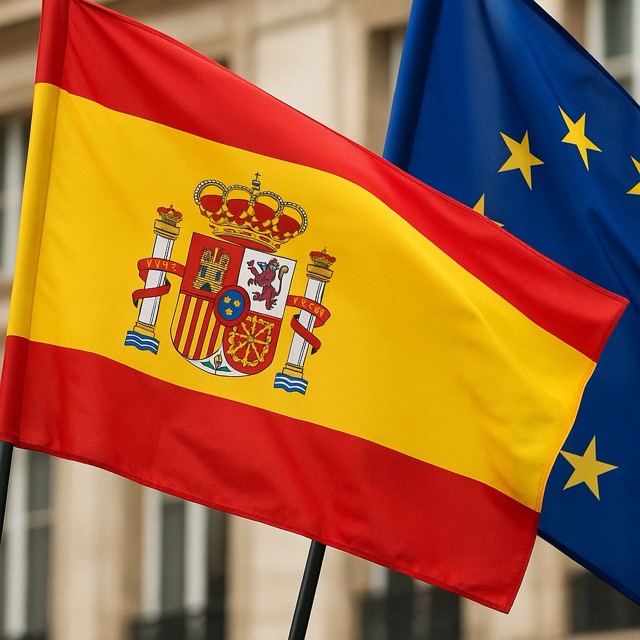
Spain, one of the European Union’s founding post-dictatorship democracies and the fourth-largest eurozone economy, is increasingly perceived as a second-tier member within the bloc. Analysts and diplomats are raising concerns over the country’s diminishing influence in EU policymaking, exclusion from key leadership forums, and lagging presence in strategic European initiatives.
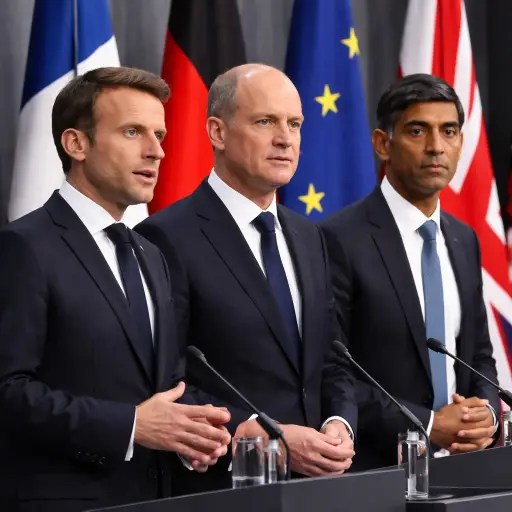
The latest controversy stems from Spain’s absence in recent high-level summits and informal councils where core decisions were shaped by a tight-knit group of northern and central European powers—Germany, France, the Netherlands, and occasionally Italy. Critics argue that Spain’s exclusion from these conversations signals a troubling erosion of its political weight within Brussels.
“There’s a growing perception in European corridors that Spain is no longer at the center of decision-making,” said a senior EU official who requested anonymity. “It is treated more like a recipient of policy than a shaper of it.”
Part of the problem lies in Spain’s domestic political volatility. In recent years, the country has faced repeated elections, coalition instability, and deep polarization between left and right blocs. While Prime Minister Pedro Sánchez has attempted to project stability and pro-Europeanism, the lack of consensus at home has hampered Spain’s ability to pursue a cohesive EU strategy.
Economically, Spain remains burdened by high unemployment, regional inequality, and a slower-than-expected post-COVID recovery. Although EU funds from the Next Generation package have helped stabilize public finances, Spain’s reform pace has lagged behind other southern counterparts like Portugal and Greece, reducing its leverage in fiscal negotiations.
Another dimension of marginalization is institutional representation. Spain holds relatively few senior positions in EU institutions, especially compared to its population and economic size. From the European Commission to the European Central Bank, Spanish nationals are underrepresented at the highest echelons of power.
Spanish media and opposition figures have begun calling out this perceived sidelining. Conservative leader Alberto Núñez Feijóo recently accused the government of “downgrading Spain’s voice in Europe,” while editorials in El Mundo and ABC decry the country’s descent into “European irrelevance.”
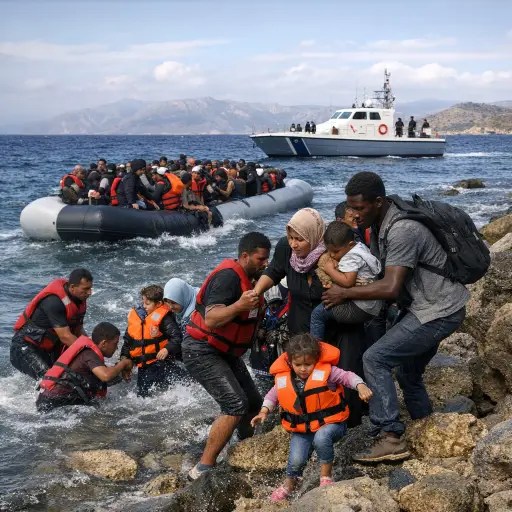
Some European diplomats defend Spain’s status, pointing to its active role in climate negotiations, digital regulation, and migration policy. But even these efforts often occur in the shadows of Franco-German proposals or Nordic-led coalitions, leaving Spain as a supporter rather than a driver of EU direction.
At the citizen level, frustration is growing. A recent poll by the Elcano Royal Institute found that over 60% of Spaniards believe their country has less influence in Europe today than it did a decade ago. The sense of marginalization is particularly strong among younger Spaniards, who view Brussels as distant and dominated by others.
As Europe grapples with new challenges—from defense integration to enlargement and green transition—the stakes for Spain’s role in the EU are higher than ever. Without stronger political cohesion, strategic assertiveness, and institutional representation, Madrid risks further relegation in the hierarchy of European power.
For now, Spain remains a committed member of the Union. But unless it reclaims its voice, the risk of becoming a “B-list state” in the European project may become a permanent reality.
 The Tower Post