An Overview of Nations with Significant Shia Muslim Influence in Politics and Society
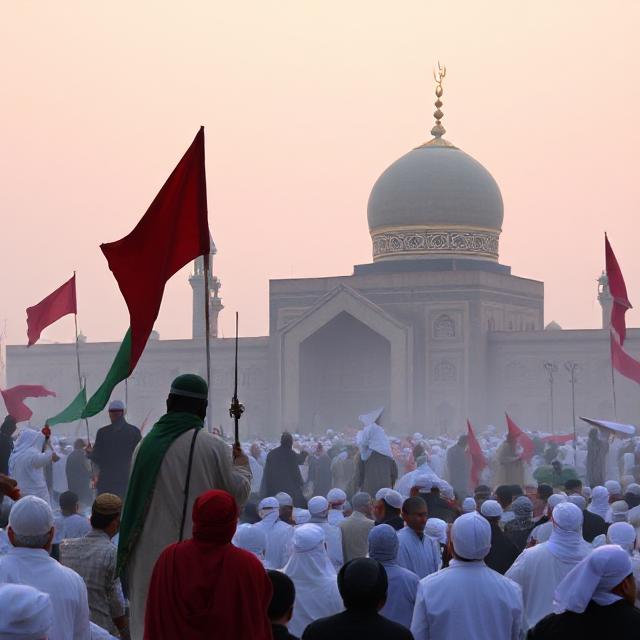
Shiite Islam, one of the two main branches of Islam alongside Sunni Islam, represents a significant portion of the global Muslim population. While Sunnis constitute the majority worldwide, Shia Muslims play a central role in the political and religious landscapes of several key countries, forming what are often referred to as “Shiite states” or states with dominant or influential Shiite communities.
Iran is the most prominent and powerful Shiite state. As the only theocratic republic officially governed by Shia Islamic law, Iran’s political system is deeply entwined with Shiite theology. The Supreme Leader, the highest authority in Iran, is always a high-ranking Shiite cleric. Iran has positioned itself as the leader of Shia Islam globally, offering political, financial, and military support to Shia groups and movements across the Middle East.
Iraq has emerged as another significant Shiite state, particularly after the fall of Saddam Hussein in 2003. While Iraq is constitutionally a federal parliamentary republic, its political landscape is heavily influenced by its Shiite majority. Many of the country’s post-war leaders have come from Shia backgrounds, and the government maintains close ties with Iran.
Bahrain, although governed by a Sunni monarchy, has a Shia-majority population. This demographic divide has led to longstanding tensions and periodic unrest. Shia communities in Bahrain often face political marginalization, but they remain a potent social and cultural force.
Azerbaijan is another country with a predominantly Shia Muslim population. However, unlike Iran, its government is secular and nationalist in orientation. Despite this, Shiism remains deeply embedded in Azerbaijani culture and religious life.
Lebanon features prominently on the list due to the role of Hezbollah, a powerful Shia militant and political organization backed by Iran. While Lebanon’s government is based on a confessional system that shares power among various religious sects, Hezbollah’s influence ensures that the country has a strong Shia political and military presence.
Yemen has also come into focus due to the Houthi movement, a Zaidi Shia rebel group that controls significant territory, including the capital Sana’a. While Zaidism is a distinct branch of Shiism, the Houthis have received support from Iran, making Yemen part of the broader regional Shia-Sunni power struggle.
Syria, led by the Alawite-dominated regime of President Bashar al-Assad, is often associated with the Shia axis, although Alawites represent a distinct sect that has historically been considered heretical by mainstream Sunni and Shia clerics alike. Nonetheless, Iran’s support for the Assad government places Syria within the strategic sphere of Shiite influence.
In addition to these countries, significant Shia populations exist in Saudi Arabia (especially in the Eastern Province), Pakistan (where sectarian tensions often lead to violence), India, Afghanistan, Turkey, and Kuwait. These communities contribute to religious diversity but also face discrimination and violence in certain regions.
The identification of Shiite states is complex, as it involves a mix of theological identity, political power, and foreign policy alignment. However, the influence of Shiite Islam continues to shape geopolitics across the Middle East and beyond, with Iran often at the center of this dynamic network.
Understanding the distribution and role of Shiite states is essential to grasp the intricacies of regional alliances, sectarian conflicts, and the broader geopolitical landscape of the Muslim world.


 The Tower Post