Global Regulators Raise Concerns Over the Functionality and Risks of Popular Digital Assets
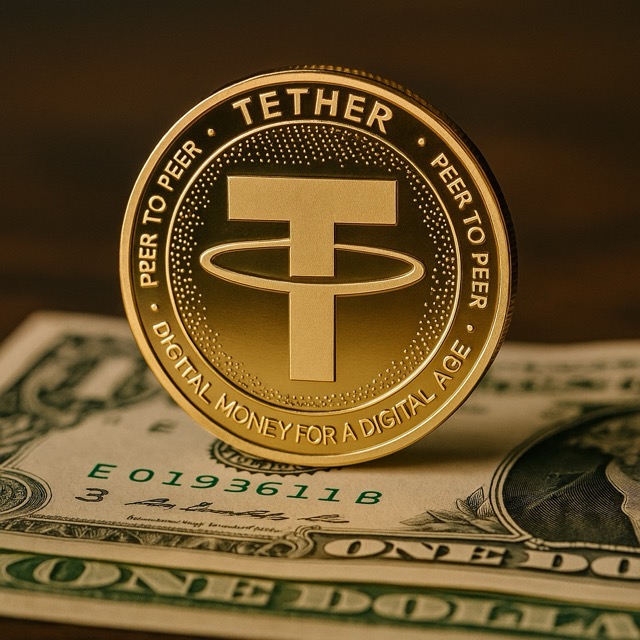
Global central banks have issued renewed warnings that stablecoins like Tether (USDT) do not adequately perform the core functions of money. Despite their increasing adoption in digital finance and crypto markets, monetary authorities argue that these digital assets lack the stability, reliability, and trust required to function as true currency in the broader financial ecosystem.
Tether, the world’s largest stablecoin by market capitalization, is pegged to the U.S. dollar and widely used for trading cryptocurrencies and storing value in volatile markets. Its issuer claims it is fully backed by reserves, but regulators remain skeptical, citing concerns about transparency, redemption mechanisms, and systemic risk.
According to a recent joint report by several leading central banks—including the European Central Bank (ECB), the Bank of England, and the U.S. Federal Reserve—stablecoins such as Tether fail to meet the three fundamental roles of money: unit of account, medium of exchange, and store of value. “Stablecoins do not exhibit the consistent value or trust necessary for everyday economic transactions,” the report stated.
The concerns are not merely academic. As stablecoins continue to grow in popularity, especially in jurisdictions with unstable local currencies, central banks fear a dilution of monetary sovereignty and reduced control over interest rates and inflation. Moreover, the lack of regulatory oversight could make stablecoins vulnerable to misuse in illicit finance and speculative bubbles.
Tether’s critics point out that it operates outside of traditional banking regulations while maintaining massive transaction volumes. The company’s refusal to submit to regular, comprehensive audits has further drawn scrutiny. Although Tether has released attestation reports, these fall short of full financial audits under global accounting standards.
Supporters of stablecoins argue that they offer a faster, cheaper alternative to traditional cross-border payments and have revolutionized liquidity management in digital markets. However, central banks counter that innovation must not come at the cost of financial stability. They are pushing for stringent regulations, enhanced disclosure requirements, and possibly the introduction of central bank digital currencies (CBDCs) as safer alternatives.
The Financial Stability Board (FSB) and the International Monetary Fund (IMF) have echoed these warnings, urging countries to implement frameworks that subject stablecoin issuers to similar rules as commercial banks. “Without appropriate guardrails, these instruments could pose real threats to financial systems,” said one IMF official.
Some jurisdictions, such as the European Union, are already taking action. The EU’s Markets in Crypto-Assets (MiCA) regulation seeks to impose stricter oversight on stablecoin operations starting in 2025. Other countries, including the United States, are considering similar measures but face political gridlock.
In the meantime, the debate over Tether’s role in the future of finance remains heated. Will it evolve into a regulated, mainstream instrument—or remain a speculative tool on the margins of the economy?
For now, the message from central banks is clear: Tether and its peers may look like money, move like money, and be used like money—but until they meet rigorous standards of accountability and performance, they cannot be treated as such.



 The Tower Post