The Curious Role of the Dutch PM in Transatlantic Power Plays Echoes Mob Movie Plots
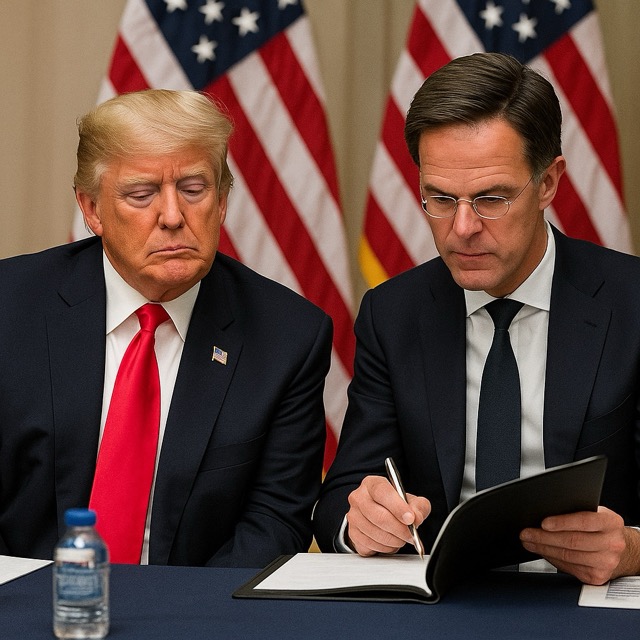
In an international political landscape increasingly resembling a film noir, Dutch Prime Minister Mark Rutte has found himself cast in an unexpected role—that of Donald Trump’s pragmatic accountant. At least, that’s the comparison being floated by critics and commentators who liken Rutte’s recent actions to those of the calculating number-crunchers seen in old-school gangster films, particularly those inspired by the life of Al Capone.
Rutte, long known for his managerial style and dry wit, has been unusually close to Trump in a number of recent forums. Whether in diplomatic backrooms, economic panels, or NATO consultations, the Dutch leader has emerged as a quiet but influential figure, especially in navigating the economic and financial dimensions of transatlantic cooperation. Some insiders say he’s effectively taken on the role of managing Trump’s “ledger” in the realm of European commitments, defense expenditures, and joint investments.
This behind-the-scenes influence has led some to dub Rutte the “accountant of the alliance.” Much like the discreet financial operatives in crime classics, Rutte doesn’t draw attention with bold pronouncements or media stunts. Instead, he moves methodically, presenting budget frameworks, compliance charts, and economic projections—making sure everything aligns behind closed doors.
The comparison to Al Capone’s bookkeeper isn’t about criminality, but about archetype. Just as Capone relied on trusted men to maintain order amidst chaos, Trump appears to have found in Rutte a technocratic ally who brings a semblance of stability to volatile negotiations. Rutte’s reputation for reliability and fiscal discipline has made him a rare figure of trust, even among ideologically diverse leaders.
Of course, this perceived closeness has raised eyebrows in both Washington and The Hague. Critics question whether Rutte’s increasing alignment with Trump compromises European unity or Dutch neutrality. Others argue that the Dutch PM is merely doing what he’s always done: leveraging numbers and data to build influence in a world dominated by bluster.
Indeed, there’s a school of thought that sees Rutte not as Trump’s accountant, but as Europe’s strategic operator—using the opportunity to influence U.S. policy by positioning himself where decisions are made. If Trump regains political influence or returns to office, Rutte’s approach may secure advantages for the Netherlands and the EU more broadly.
In the end, the image of Mark Rutte in a dimly lit office, ledger in hand, calmly guiding Trump through fiscal fog may be more metaphor than reality. Still, in an era when global politics often feels stranger than fiction, it’s a narrative that fits the times: the quiet accountant behind the power, balancing numbers while others chase headlines.



 The Tower Post