How American Political Decay Challenges the Foundations of Democratic Governance
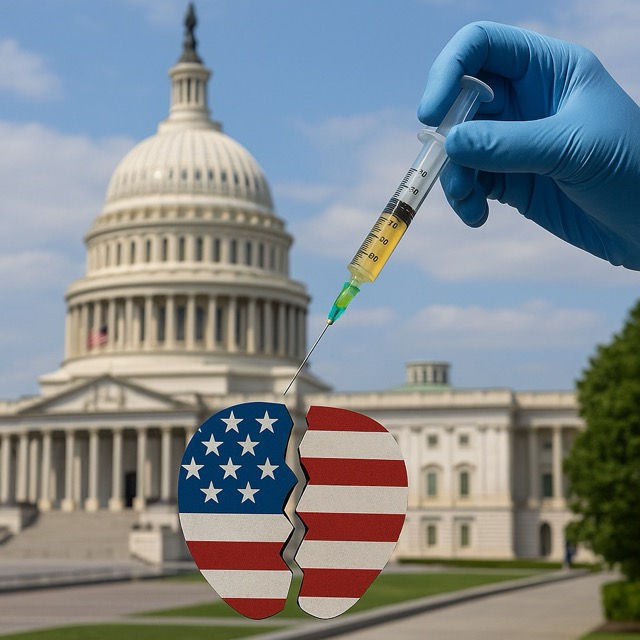
In recent years, political analysts and citizens alike have voiced growing concerns about the health of democracy in the United States. What was once considered the beacon of democratic ideals is now facing internal challenges that threaten the very structure it helped promote worldwide. From deep polarization to institutional dysfunction and erosion of trust, the American democratic system appears to be undergoing a slow but significant decline—what some have termed the ‘euthanasia of democracy.’
Democracy is not merely about holding elections; it is a complex framework of checks and balances, civic participation, independent media, and the rule of law. However, the increasing tribalism between political parties in the U.S. has led to legislative gridlock, judicial battles, and an erosion of democratic norms. Issues like gerrymandering, voter suppression, and misinformation campaigns have further deepened public mistrust in electoral outcomes.
One of the most visible symptoms of democratic decay is the weakening of institutional integrity. The politicization of the judiciary, the normalization of executive overreach, and the decline of Congressional oversight have all contributed to a governance system that seems more focused on power retention than public service. Political leaders increasingly cater to their base rather than the common good, eroding the spirit of compromise that democracy requires to function effectively.
Moreover, the rise of populist rhetoric and authoritarian tendencies within segments of American politics has undermined respect for democratic processes. Conspiracy theories about election fraud, violent attacks on democratic institutions such as the January 6 Capitol insurrection, and the use of social media to inflame rather than inform, have all weakened the democratic culture. These events have caused many observers to question whether the United States is still a model of democracy or an example of its slow disintegration.
Education and media also play a pivotal role in sustaining democratic values. However, the spread of disinformation and the fragmentation of the public sphere through partisan media outlets have led to an electorate that is less informed and more divided. When citizens no longer agree on basic facts, meaningful dialogue becomes impossible, and democracy loses its foundation.
Internationally, America’s democratic backsliding has serious consequences. Countries once inspired by the U.S. democratic model are now looking elsewhere for guidance, while authoritarian regimes use America’s dysfunction to justify their own systems. If the U.S. cannot uphold the principles it espouses, its credibility and moral authority on the global stage will continue to wane.
Still, all is not lost. Democratic decline is not irreversible. Civil society, investigative journalism, grassroots movements, and a renewed focus on civic education can act as antidotes to the ailments afflicting American democracy. But acknowledging the problem is the first step toward solving it. The “euthanasia” of democracy does not occur in one dramatic moment—it happens slowly, through apathy, manipulation, and erosion of norms.
The future of democracy in the United States will depend on the willingness of its people and leaders to confront uncomfortable truths and recommit to democratic ideals. It is not too late—but the time to act is now.
 The Tower Post