High Stakes and Global Risks in a Volatile Region
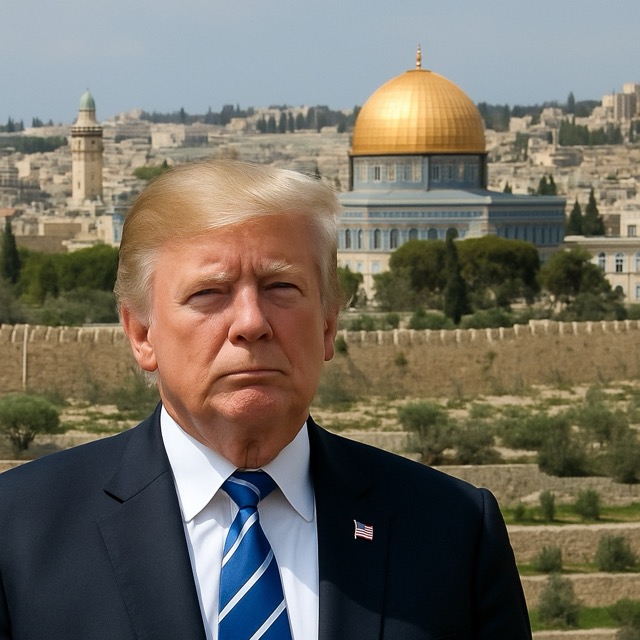
Former U.S. President Donald Trump has never shied away from bold moves. From trade wars to border policies, his tenure was marked by audacity. Now, by choosing the Middle East as the stage to assert his global leadership ambitions once again, Trump is engaging in one of his most dangerous gambits yet.
The Middle East remains one of the world’s most volatile regions. With deep-rooted ethnic conflicts, proxy wars, and shifting alliances, any foreign intervention—especially one with heavy political and military implications—carries significant risks. Trump’s approach to the region during his presidency was unconventional. The Abraham Accords, which normalized relations between Israel and several Arab states, were seen by some as a diplomatic success. However, critics argue that this fragile peace overlooked the complex Palestinian question and may unravel under renewed tensions.
Trump’s re-engagement with the Middle East, possibly in an advisory or informal leadership capacity, appears focused on Iran, Israel, and Saudi Arabia. His strong stance against Iran’s nuclear ambitions and unwavering support for Israel are well known. Yet, reigniting this agenda in a post-Afghanistan-withdrawal world may prove counterproductive. The U.S. now faces a dramatically changed geopolitical landscape, with China and Russia asserting their influence more aggressively, including in Middle Eastern affairs.
Furthermore, Trump’s potential return to the global stage risks undermining U.S. diplomatic coherence. His policies often contradict those of current and past administrations, confusing allies and emboldening adversaries. A return to Trump-led Middle East strategies may also stoke internal divisions in the region, where his image remains polarizing.
Another crucial point is domestic pressure. Trump faces numerous legal challenges and a deeply divided electorate at home. Involving himself too heavily in foreign affairs—particularly in a region that demands long-term, nuanced engagement—might distract from pressing national issues. The risk is that bold declarations and symbolic actions take precedence over sustainable, practical diplomacy.
Ultimately, choosing the Middle East as the proving ground for leadership is a double-edged sword. While success could boost Trump’s global credentials, failure could damage U.S. credibility and destabilize a region already on the brink. The world will be watching closely, and so will history.


 The Tower Post