With only 12% popular support, Spain’s Prime Minister steers a lonely foreign policy amid growing domestic discontent
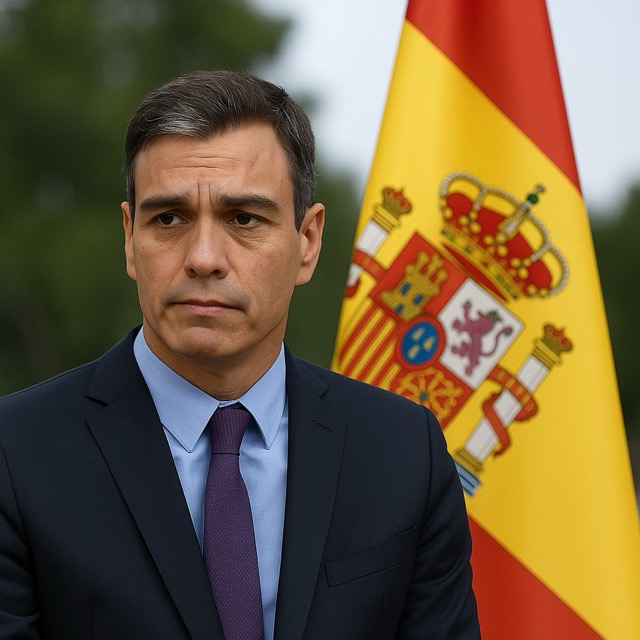
MADRID — Prime Minister Pedro Sánchez is increasingly under fire both at home and abroad, as a wave of criticism builds over his controversial diplomatic stances and a domestic support base that continues to shrink. According to a new poll by El Confidencial, Sánchez commands the confidence of just 12% of Spaniards — a staggering low for a sitting head of government.
The survey results come at a time when Sánchez’s foreign policy is facing fierce scrutiny. His decision to distance Spain from key NATO and EU allies in recent weeks has raised eyebrows across the continent. Most notably, his refusal to back joint EU declarations on Middle East policy and his solitary push for diplomatic recognition of Palestine have left Spain increasingly isolated.
Foreign Policy or Political Gamble?
Sánchez’s defenders argue that his foreign policy positions reflect principled leadership, particularly in response to humanitarian crises. But critics see them as ideological posturing at odds with Spain’s geopolitical reality. The Prime Minister’s approach has prompted unease in Brussels and strained ties with Germany, France, and the United States.
“Spain has become a question mark within the European bloc,” said Clara Martínez, a senior fellow at the Spanish Institute for Strategic Studies. “Sánchez risks turning principle into peril.”
Domestic Discontent on the Rise
The foreign policy turbulence is unfolding against a backdrop of growing unrest at home. Opposition parties have seized on the poll numbers, calling for early elections and accusing Sánchez of prioritizing global stage performance over national unity.
Spain’s inflation and youth unemployment remain stubbornly high, and efforts to pass sweeping reforms have stalled in the face of parliamentary resistance. The socialist-led coalition, once seen as a progressive model for southern Europe, is now fractured and facing eroding public trust.
A Premier Without a Base?
Political analysts note that Sánchez’s 12% approval rating puts him at risk of becoming politically irrelevant, even while in office. Many regional leaders within his own Socialist Workers’ Party (PSOE) are said to be distancing themselves ahead of next year’s local elections.
“It’s one thing to govern without a majority,” said political scientist Javier Ortega. “It’s another to govern without legitimacy.”
Implications for Spain and Europe
As Spain navigates a delicate balance between economic pressures and international commitments, Sánchez’s leadership style is becoming a liability. While he continues to double down on his messaging — emphasizing social justice, climate commitments, and non-alignment — critics argue that Spain cannot afford moral grandstanding if it comes at the cost of influence and credibility.
For now, the Prime Minister remains defiant. But with only 12% of the electorate behind him, the question is not just whether Sánchez can hold power — but whether he can still speak for Spain.

 The Tower Post