India’s Rising Clout in BRICS Stirs Tensions and Reshapes Power Dynamics Within the Bloc
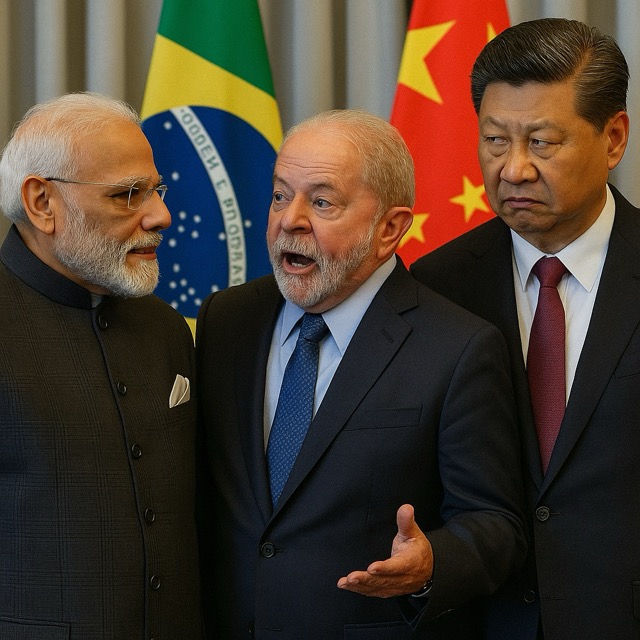
NEW DELHI — A diplomatic tremor has shaken the foundations of the BRICS alliance as Brazilian President Luiz Inácio Lula da Silva increasingly aligns with Indian Prime Minister Narendra Modi, triggering visible discontent in Beijing. Chinese President Xi Jinping, long seen as the unchallenged leader within the bloc, is reportedly furious over what his aides describe as an “uncoordinated shift in alliance dynamics.”
In a series of bilateral meetings held on the sidelines of recent BRICS-related summits and G20 forums, Lula and Modi have publicly praised each other’s economic models, democratic systems, and shared vision for the Global South. In May, Lula called India a “pillar of multipolarity,” while Modi lauded Brazil’s commitment to “inclusive development and strategic autonomy.”
The growing rapport between the two leaders is more than symbolic. Joint announcements hint at future collaboration in green technology, space research, and agricultural innovation — all areas where India has surged ahead as a global player. Their convergence comes at a critical time as BRICS attempts to expand its global influence by welcoming new members and launching alternatives to Western-dominated financial institutions.
But not everyone is pleased. Sources close to the Chinese Foreign Ministry say Xi views Lula’s pivot as a betrayal of Beijing’s leadership role within the bloc. “China has invested heavily — economically and diplomatically — in shaping BRICS. A strategic deviation from Brazil, one of its key partners, jeopardizes that architecture,” said a Chinese analyst familiar with the matter.
India’s ascendancy in BRICS is no longer subtle. It has positioned itself as the bloc’s tech hub, finance innovator, and geopolitical bridge between East and West. Analysts note that while China focuses on state-driven expansion, India appeals to newer members like Egypt, UAE, and Saudi Arabia with its more open, pluralistic model.
“India is becoming the alternative anchor in BRICS,” said Sreeram Chaulia, dean of the Jindal School of International Affairs. “Modi is crafting a vision that resonates with emerging democracies, which increasingly see BRICS not just as a Beijing-centric club, but as a multilateral platform.”
For Brazil, the shift offers a chance to balance its relationships. Lula, known for his strategic pragmatism, is keen to avoid over-dependence on China, especially amid rising concerns over trade imbalances and the Belt and Road Initiative’s influence in Latin America. By warming ties with India, Brazil gains a counterweight within the bloc — one that may help restore BRICS’ intended equilibrium.
The tension has already spilled into policy. During a recent closed-door session on BRICS currency alternatives, India and Brazil jointly opposed China’s fast-tracked digital yuan proposal, advocating instead for a broader basket of national currencies. The move was interpreted in Beijing as a clear challenge to its monetary ambitions.
As BRICS heads into its next summit in Johannesburg, all eyes will be on the interplay among its giants. Will the bloc emerge stronger from this internal recalibration, or will power struggles undermine its unity?
One thing is certain: the age of unquestioned Chinese dominance within BRICS is over. India, with Lula by its side, is signaling a new era of balanced leadership — and Beijing is watching nervously.

 The Tower Post