From Devotion to Transience: The Evolution of a Universal Symbol
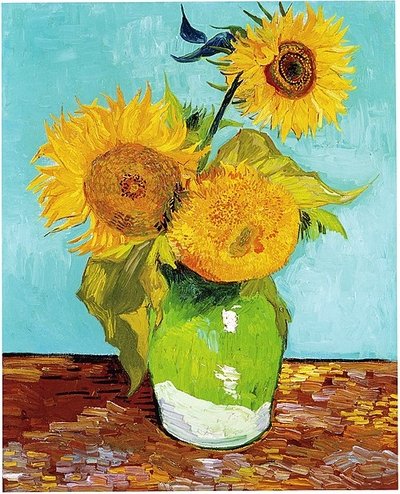
The sunflower, an emblem of devotion, loyalty, and the pursuit of higher principles, has captivated artists and writers for centuries. Vincent van Gogh’s iconic sunflower paintings, which have become synonymous with the artist’s style, have been a subject of fascination for art historians and enthusiasts alike. But what lies behind the sunflower’s enduring symbolism, and how has it evolved over time?
The sunflower’s origins date back to the 16th century, when it was introduced to Europe from the Americas. Initially, its heliotropic nature – the ability to move its face towards the sun – was its most striking feature. This phenomenon led to the flower being associated with Clytie, a mythological character who was said to have fallen in love with Apollo, the sun god. As a result, the sunflower became an icon of devoted love, appearing in artworks such as Maria van Oosterwyck’s “Flowers in an Ornamental Vase” (1670-75) and Anthony van Dyck’s “Rest on the Flight into Egypt” (1632).
Over time, the sunflower’s symbolism expanded to include themes of romantic love, marriage, and even art itself. In 1654, the Dutch poet and playwright Joost van den Vondel suggested that the sunflower could represent the artist’s pursuit of beauty and truth. This idea is reflected in Anthony van Dyck’s “Self-Portrait with a Sunflower” (1633), where the artist points to himself and a sunflower, drawing a parallel between the flower’s natural inclination towards the sun and the artist’s own devotion to his craft.
Van Gogh’s sunflower paintings, which were created in three bursts between 1887 and 1889, reflect the artist’s own personal struggles and desires. On one hand, they represent his experimentation with color combinations and his desire to create a sense of warmth and comfort. On the other hand, they may have been intended to fill a house where his fellow artist, Paul Gauguin, was due to live. Gauguin’s admiration for Van Gogh’s previous sunflower paintings may have inspired the artist’s hope for solidarity and friendship, a desire that would ultimately be thwarted by Gauguin’s departure.
The sunflower’s symbolism has also been influenced by the artist’s own cultural and historical context. Van Gogh’s move from Paris to Provence, for example, may have inspired his depiction of sunflowers as a symbol of the South. The artist’s own experiences of love, loss, and artistic struggle are also reflected in his sunflower paintings, which convey a sense of longing and devotion.
In the 20th century, the sunflower’s symbolism continued to evolve, with artists such as Anselm Kiefer drawing on its themes of devotion, loyalty, and the pursuit of higher principles. Kiefer’s woodcut print “Hortus Conclusus” (2007-14), which features blackened and desiccated sunflowers, reflects the artist’s interest in the cycle of life and death, as well as the promise of new life to come. Kiefer’s sunflowers are also framed by the sky, reminding us of their heliotropic attachment to the sun and the mystical link between the living plants of the Earth and the stars.
As the sunflower continues to blaze in the ecstasy of life, its symbolism remains a powerful and enduring force in art and culture. Whether seen as a symbol of devotion, loyalty, or the pursuit of higher principles, the sunflower remains a universal and timeless emblem of the human experience.




 The Tower Post