France and Italy Seek Diplomatic Solution as Trade Tensions with the U.S. Escalate
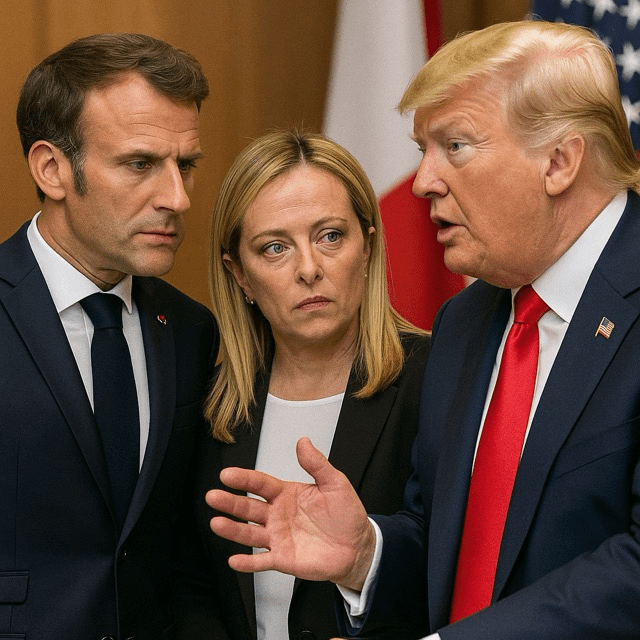
In a dramatic diplomatic push, French President Emmanuel Macron and Italian Prime Minister Giorgia Meloni have engaged in backchannel negotiations with former U.S. President Donald Trump, hoping to defuse rising tensions over threatened American tariffs on European goods.
The unexpected move comes amid growing fears in Brussels that a potential return of Trump to the White House could reignite a full-blown trade war between the United States and the European Union. Macron and Meloni, representing two of the EU’s major economies, are reportedly working in concert to convince Trump to reconsider his aggressive stance on tariffs should he win the 2024 election.
According to diplomatic sources familiar with the talks, both leaders are emphasizing the strategic partnership between the U.S. and Europe, and warning of the economic damage a new round of tariffs could inflict on transatlantic trade. “They are not just acting in their own national interest,” said one senior EU official. “This is about preserving the integrity of the European market and maintaining a balanced relationship with Washington.”
Trump has long criticized what he perceives as unfair trade practices by European nations, particularly in the automotive and agricultural sectors. During his first term, he imposed tariffs on steel and aluminum imports, sparking retaliatory measures from the EU. Now, as his political comeback gains momentum, his rhetoric has returned to familiar ground—threatening punitive tariffs on European cars, wines, and luxury goods.
While no formal agreement has been reached, insiders say the tone of the talks has been pragmatic. Macron has reportedly offered proposals involving joint investment initiatives in clean energy and defense manufacturing. Meloni, known for her nationalist leanings, has positioned Italy as a “bridge” between American business interests and European regulation.
“Trump respects strength and directness,” said one Italian diplomatic adviser. “Meloni’s style resonates with him. She speaks his language—firm, transactional, and strategic.”
Behind closed doors, EU leaders are said to be watching the developments closely, wary of Trump’s unpredictability and the political implications of individual member states engaging him outside official EU channels. Nonetheless, there is quiet acknowledgment that Macron and Meloni might be uniquely positioned to manage the former president’s ego and policy instincts.
The urgency stems from mounting economic pressures in Europe, where inflation and slowing growth have left industries vulnerable to external shocks. The automotive sector, a particular target of Trump’s ire, has warned of job losses and supply chain disruptions if new tariffs are introduced.
Publicly, both Macron and Meloni have remained tight-lipped about the details of their conversations. However, Macron recently acknowledged the importance of “preventive diplomacy,” while Meloni spoke of the need for “constructive engagement with all global partners, regardless of political cycles.”
Analysts believe the outreach may also be politically motivated. With European elections on the horizon, both leaders are eager to demonstrate their ability to defend national economic interests on the global stage.
As negotiations continue behind the scenes, the outcome could shape the tone of transatlantic relations for years to come. Whether Macron and Meloni can persuade Trump to back off his tariff threats remains uncertain—but for now, their efforts signal a bold and coordinated attempt to shield Europe from another costly trade conflict.


 The Tower Post