Hungary’s Prime Minister Softens Rhetoric Amid EU Tensions While Pride March Fills the Capital
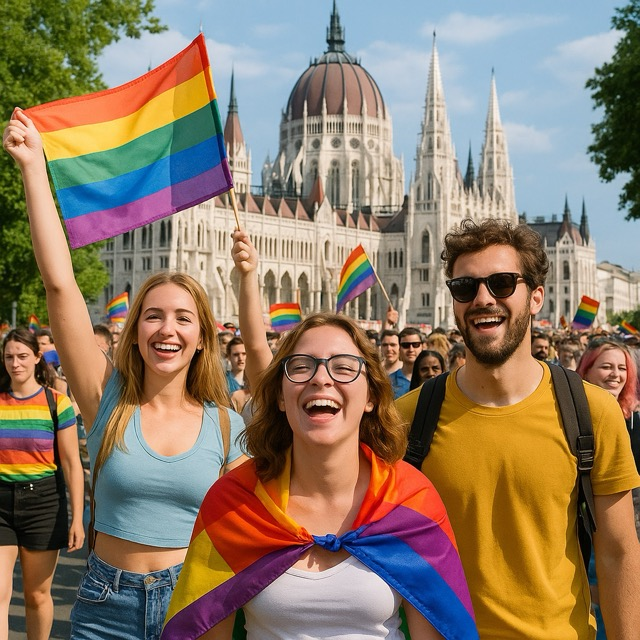
In a surprising display of political restraint, Hungarian Prime Minister Viktor Orbán has avoided direct confrontation with European Commission President Ursula von der Leyen and EU leadership, even as Budapest became the vibrant stage for Hungary’s annual LGBTQI+ Pride March. The contrast between political diplomacy and grassroots activism has placed Hungary once again at the heart of Europe’s ongoing debate over civil rights and democratic values.
Thousands of people gathered in central Budapest this weekend, waving rainbow flags, chanting slogans for equality, and marching peacefully under the watchful eye of police forces. The parade, one of the most visible displays of LGBTQI+ solidarity in Central Europe, was both a celebration and a form of protest against years of controversial policies implemented by Orbán’s government, which critics say have curtailed LGBTQI+ rights.
Yet, in contrast to previous years, Orbán refrained from inflammatory statements or legislative provocations in the lead-up to the event. Sources within the government suggest the move was strategic, with Orbán seeking to de-escalate tensions with Brussels amid ongoing negotiations over EU funding and Hungary’s contested rule-of-law status.
“Orbán is walking a tightrope,” said Andrea Szalai, a political analyst at the Central European Policy Institute. “He wants to maintain his domestic image as a nationalist and cultural conservative, but at the same time, he cannot afford further isolation within the EU.”
Indeed, Brussels has recently ramped up its scrutiny of Hungary’s judicial independence and press freedom. Von der Leyen, while not directly addressing the parade, issued a pointed message during a speech in Strasbourg earlier this week, emphasizing that “European values are not optional—they are binding.” The message was widely interpreted as a veiled warning to member states accused of democratic backsliding.
While Hungary’s political opposition took part in the Pride festivities, Orbán and senior members of his Fidesz party remained notably silent. In past years, government figures have described LGBTQI+ advocacy as a threat to “traditional family values,” pushing legislation that bans content deemed to promote homosexuality to minors—measures that have drawn condemnation from human rights groups and EU institutions alike.
“This year, there’s a sense of cautious optimism,” said Balázs Nagy, one of the organizers of the Pride March. “The silence from the government is better than hostility. It shows that we’re being heard—if only indirectly.”
Local media outlets covered the parade extensively, capturing images of colorful costumes, families marching together, and even a small contingent of supportive clergy members. The peaceful nature of the event was in stark contrast to the confrontational tone of previous editions, where counter-protests and police barricades were common.
Diplomats in Brussels have acknowledged the relative calm in Hungary as a positive signal but remain wary. “Orbán has a history of taking one step forward and two steps back,” noted one EU official. “The real test will be whether this moderation is sustained.”
As Hungary navigates this complex political terrain, the LGBTQI+ community in Budapest continues to assert its visibility and rights. Whether Orbán’s recent posture marks a genuine shift or a temporary pause remains to be seen, but for now, Pride has marched through the capital—bold, proud, and, for once, uninterrupted.
 The Tower Post