A City’s Delicate Balance: Luxury and Protest
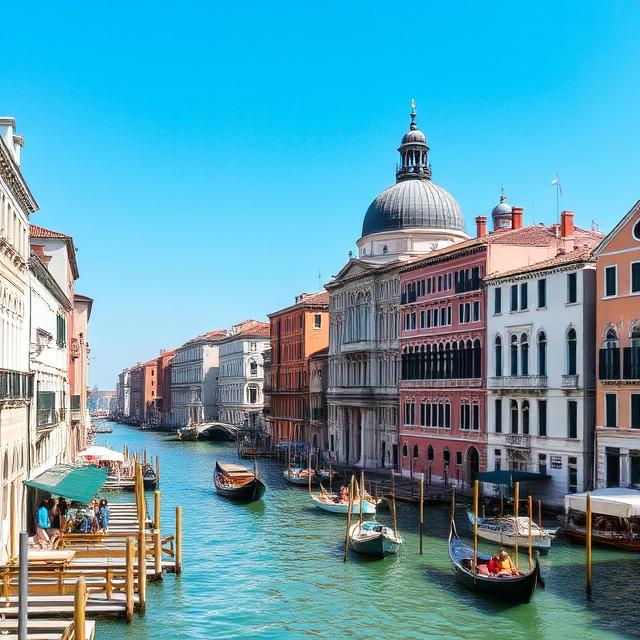
Venice, a city already struggling to maintain its delicate balance between preserving its unique culture and coping with the pressures of mass tourism, was brought to the forefront of the global spotlight as Amazon founder Jeff Bezos and his wife Lauren Sanchez tied the knot in a lavish ceremony. The event, which drew A-list celebrities and sparked protests from local activists, has left the city’s residents and officials divided on the impact of high-end tourism on the city’s fragile ecosystem.
As the wedding party came to a close on Saturday evening, hundreds of protesters marched through the city, hanging a “no space for Bezos” banner from the Rialto bridge and setting off multicoloured flares. The activists, who cited concerns over over-tourism, climate change, and capitalism, had initially planned to launch themselves into the city’s canals with inflatable crocodiles and block the wedding guests’ passage, but ultimately dropped the plan for security reasons.
Despite the protests, the city’s deputy mayor, Simone Venturini, dismissed the activists as “narcissists” and insisted that the wedding was the “high-quality tourism” Venice needs to boost its economy. However, the city’s councillor for economic developments, Venturini also acknowledged that the wedding had already claimed one victory, with the party being moved to a more secure venue, the Arsenale, further from the city centre.
The contrast between the city’s residents’ views on the wedding was stark. While some, like Roberto Zanon, a 77-year-old Venetian who is being evicted from his home to make way for out-of-town developers, expressed concerns over the impact of tourism on the city’s residents. Zanon, who has spent his entire life in the city, now has to leave his home due to rising rents and the increasing presence of high-end tourists. “One, two, three doors – those are locals, but the rest is all for tourism now,” he said, pointing to the wooden doors around his square. “There are fewer and fewer Venetians here,” he said quietly, deeply upset at the loss of his home.
Others, like Leda, a souvenir shop owner, saw the wedding as an opportunity to bring in high-spending tourists and boost the local economy. “I think there should be more people like Bezos here. Right now we get trash tourism and Venice doesn’t deserve that,” she said. Leda, who used to have her own store selling quality Italian goods, had to close it to adapt to a low-spending market. “It’s low-cost, hit-and-run tourism,” she said. “People take 20 euro flights, come here and don’t spend a thing. That’s not what Venice needs.”
The city’s officials also highlighted the fact that Bezos had donated around three million euros to groups working to protect the city, in a gesture of support. However, activists argue that this amount is a mere drop in the lagoon for one of the richest men on earth, and that the real issue is the city’s reliance on high-end tourism to sustain its economy. “It’s around three euros for a normal person, if you put in proportion to Bezos’s wealth,” Lorenzo from Extinction Rebellion said. “It’s a very low amount of money.”
As the wedding party jets out of town, the city is left to ponder the delicate balance between preserving its unique culture and coping with the pressures of mass tourism. The question remains: what will be left for the city’s residents when the luxury tourists depart?


 The Tower Post