Elon Musk’s Vision for a Fully Autonomous Car Faces Technical Challenges and Regulatory Scrutiny
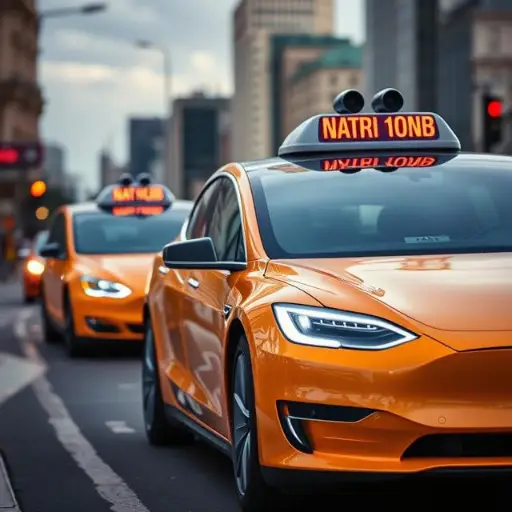
Tesla’s highly anticipated rollout of its self-driving taxi service in Austin, Texas, got off to a rocky start, with videos from social media influencers showing the cars struggling to navigate streets and traffic laws. The National Highway Traffic Safety Administration (NHTSA) has launched an investigation into the service, requesting information from Tesla on the incidents.
The limited public rollout, which debuted on June 22, was touted by Elon Musk as a major milestone in the company’s mission to achieve true self-driving capability. However, footage from at least 11 rides showed the cars failing to make left turns, exceeding speed limits, and dropping passengers off in the middle of intersections.
Musk has long been a proponent of using only cameras to achieve self-driving, rather than relying on more expensive and complex technologies like lidar and radar. However, this approach has been criticized by experts and regulators, who say it is not sufficient to ensure safe and reliable operation in a variety of weather and lighting conditions.
Critics point to the fact that lidar and radar sensors can detect objects and people in a way that cameras alone cannot. For example, in low-light conditions or in areas with heavy fog, cameras may struggle to detect pedestrians or other vehicles, increasing the risk of accidents. In contrast, lidar and radar sensors can provide a more comprehensive view of the surroundings, allowing self-driving cars to react more quickly and accurately.
In contrast, Tesla’s rival Waymo has taken a more cautious approach, spending months or even years mapping cities and testing its vehicles before launching a commercial service. Waymo’s latest version of its driverless car uses a combination of cameras, radar, and lidar to navigate, whereas Tesla’s cars rely solely on cameras.
The NHTSA’s investigation into Tesla’s robotaxi service is just the latest in a string of regulatory scrutiny and lawsuits over the company’s full self-driving mode. At least 736 crashes and 17 deaths have been attributed to the technology, which has been criticized for its inability to operate safely in adverse weather conditions.
Tesla’s tactics have also been compared unfavorably to Waymo’s more measured approach. While Waymo has encountered problems with its self-driving cars, including a software issue that caused collisions with stationary objects, the company has taken steps to address the issue and has not rushed to launch a commercial service.
In contrast, Tesla’s robotaxi launch in Austin was the first time the company’s fully self-driving technology was unleashed in the wild, with no information released on how long the company had spent mapping out or testing the driverless technology on Austin’s streets. The launch was reminiscent of Uber’s ill-fated self-driving pilot in San Francisco in 2016, which was shut down after a vehicle ran a red light.
As Tesla continues to push the boundaries of self-driving technology, it remains to be seen whether the company’s approach will ultimately prove successful. For now, the NHTSA’s investigation and the string of regulatory scrutiny and lawsuits suggest that Tesla still has a long way to go before it can achieve its vision of a fully autonomous car.
The Risks of Rushing Self-Driving Technology
Tesla’s decision to launch its robotaxi service without adequate testing and mapping has raised concerns about the safety of the technology. By rushing to market, Tesla may be putting passengers and other road users at risk.
“This is a classic case of ‘move fast and break things’,” said Brett Schreiber, an attorney who represents several alleged victims of Tesla’s autopilot failures. “Tesla is prioritizing speed over safety, and it’s only a matter of time before someone gets seriously hurt.”
Schreiber pointed out that Tesla’s reliance on cameras alone is a major risk factor, as it can struggle to detect objects and people in certain conditions. “Lidar and radar sensors are essential for safe and reliable operation,” he said. “Tesla’s decision to abandon these technologies is a reckless gamble with people’s lives.”
The Way Forward
As the NHTSA investigation continues, it remains to be seen whether Tesla will take steps to address the safety concerns surrounding its robotaxi service. The company has a history of prioritizing speed over safety, but it may be time for a change.
Waymo, on the other hand, has taken a more cautious approach, investing heavily in mapping and testing its self-driving cars. The company’s focus on safety and reliability has paid off, with a commercial service that is widely regarded as one of the most advanced in the industry.
As the self-driving revolution continues to unfold, it’s clear that safety and reliability will be key factors in determining which companies succeed and which ones fail. Tesla’s decision to rush to market may ultimately prove to be a costly mistake, while Waymo’s more measured approach may pay off in the long run.


 The Tower Post