Kyiv’s Controversial Tactic Raises Strategic Gains and Humanitarian Concerns
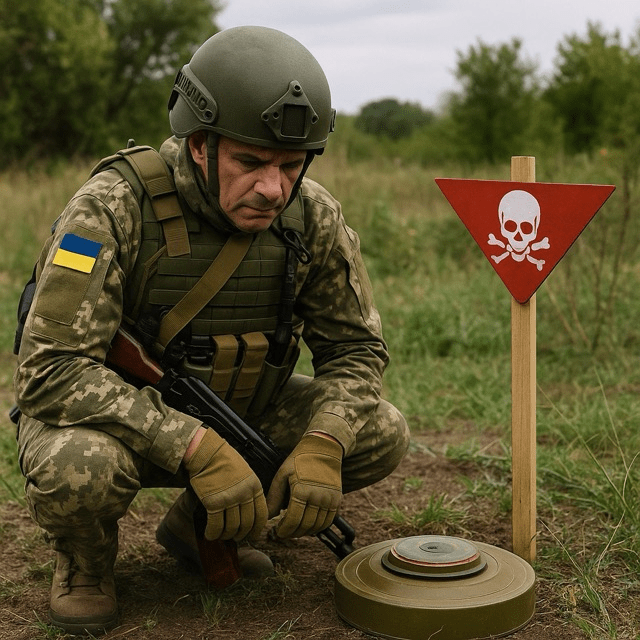
As the frontlines in Eastern Ukraine remain fiercely contested, the Ukrainian military has increasingly turned to the use of anti-personnel landmines in an effort to stop the continued advance of Russian forces. While military officials tout the tactic as effective in slowing enemy movements, critics warn of long-term humanitarian fallout that could haunt the region for years to come.
Reports from the Donetsk and Luhansk fronts confirm the deployment of mines around key defensive positions and along routes Russian infantry and armored units are likely to use. Ukrainian officials argue that the tactic is a matter of necessity, not choice, as they face relentless pressure and artillery bombardment from Russian forces.
“Our priority is to protect Ukrainian lives and maintain control of territory,” said Colonel Andriy Melnyk of Ukraine’s Armed Forces. “Landmines are one of the few cost-effective tools we have to deny enemy access and channel their movements.”
Though Ukraine is not a signatory to the 1997 Mine Ban Treaty, also known as the Ottawa Convention, its decision to increase the use of landmines has drawn cautious criticism from international human rights organizations. Groups such as Amnesty International and Human Rights Watch have urged Kyiv to consider the long-term implications for civilians.
“Landmines do not discriminate,” said Anna Westerhof, a researcher with the International Campaign to Ban Landmines. “Their use may seem strategically justified now, but decades from now, children, farmers, and displaced civilians could still be at risk.”
Ukrainian forces, in their defense, have claimed that all minefields are being mapped and marked to the extent possible. Still, in the chaos of combat and rapid battlefield shifts, even well-documented zones can pose a danger to returning civilians or advancing friendly units.
On the ground, Ukrainian engineers have deployed a range of Soviet-era and modern mine types, often in combination with booby traps and remotely detonated devices. These minefields, combined with trenches and drones, form part of a layered defense strategy that has succeeded in delaying or repelling some Russian attacks.
For its part, Russia has been accused of laying far more mines in occupied areas, often without proper documentation or warnings. Independent demining experts suggest that both sides are contributing to what could become one of the most mine-contaminated conflict zones in Europe since the Balkan wars.
International monitors remain concerned but restrained in their criticism, recognizing Ukraine’s right to self-defense. NATO has largely stayed silent on the mine issue, focusing instead on the broader support for Ukraine’s territorial integrity.
In many Ukrainian villages recently recaptured from Russian forces, returning residents have found signs warning of mines, along with destroyed homes and damaged infrastructure. Humanitarian groups are now calling for expanded funding for demining operations—an effort that could take decades once the war ends.
In the broader picture, Ukraine’s turn to landmines reflects the brutal nature of a war where every meter of territory can cost lives. With winter approaching and offensives slowing, minefields are expected to remain a key feature of the landscape.
Whether history will judge the tactic as justified or reckless remains to be seen. For now, it is another stark reminder of how modern warfare often sacrifices tomorrow’s peace for today’s survival.




 The Tower Post