Grading the Military Vision, Economic Ambitions, and Diplomatic Performance of the MAGA Era
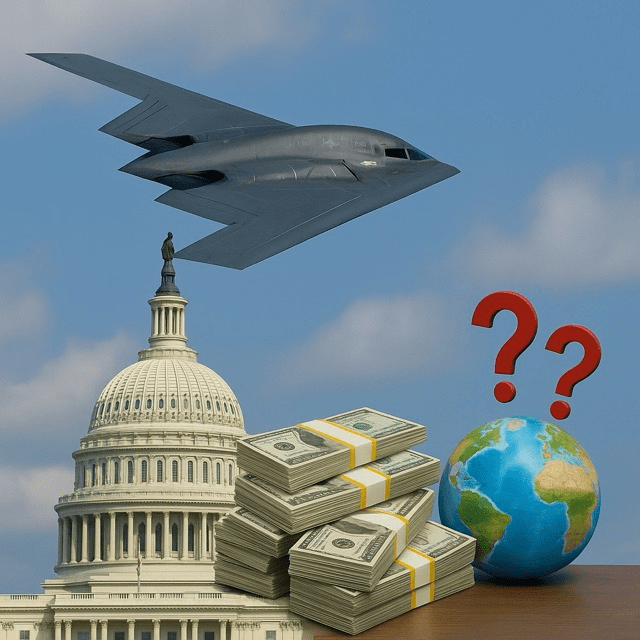
In the unconventional classroom of American politics, the MAGA administration’s report card reads like a pop quiz in irony. With a military grade of B2—evoking both a solid ‘good’ mark and the sleek stealth bomber—an economic score of B3 (think ‘Big Beautiful Bills’), and a diplomatic ‘C’ that barely scratches passing, the approach to governance delivers more double entendres than clear policy wins.
Let’s start with the B2 grade. On one hand, it denotes ‘above average’ readiness: a robust budget increase for the Air Force, accelerated procurement of B‑2 Spirit bombers, and high-profile shows of force in contested regions. On the other, it’s literally the B2 stealth bomber itself—the symbol of strategic muscle and deterrence.
Yet even that high-flying imagery masks questions: Are more bombers the best use of defense dollars? Critics argue that while the B‑2 fleet remains cutting-edge, potential adversaries invest in missile defense and cyberwarfare, shifting the battlefield away from stealth runs to hidden digital skirmishes.
Then comes the economic B3, shorthand for ‘Big Beautiful Bills.’ The administration touts sprawling spending packages—on infrastructure, tax rebates, and domestic manufacturing incentives—as its fiscal masterpiece. The triple ‘B’ branding mirrors the unforgettable ‘Big Beautiful Wall,’ capturing media attention but leaving economists debating trade-offs.
The B3 legislation has pumped trillions into the economy, boosting short-term growth and job creation. However, deficits balloon, inflationary pressures rise, and critics warn that the long-term returns on such ‘big bills’ may be more C‑level than stellar.
Academically speaking, a B3 would normally translate to ‘good effort,’ yet not quite stellar. Here, it underlines the tension: grand ambition meets budgetary reality, and questions linger about sustainability once the funding spigot runs low.
Finally, the diplomatic ‘C-minus.’ In global forums, America’s traditional allies report mixed signals—one day reassured by summit declarations, the next unsettled by abrupt policy shifts. China’s rise goes largely unchecked, Russia probes limits of sanctions, and international institutions find themselves lecturing Washington on rule-of-law norms.
This grade hovered perilously close to failing. Absent consistent engagement—from climate accords to trade partnerships—the world perceives a hesitant superpower, more comfortable issuing tariffs or sanctions than brokering long-term agreements.
Combined, the MAGA report card presents a paradox: a formidable military posture (B2) bolstered by conspicuous hardware; an economic strategy (B3) that dazzles with big numbers but strains fiscal prudence; and a foreign policy (C) that risks leaving America stranded at the back of the class.
As the semester presses on, students of geopolitics and economics alike will watch whether the administration can curve up those grades—or if America must prepare for remedial coursework in diplomacy.




 The Tower Post