How ‘America First’ tactics have transformed international relations into a game of high-stakes leverage
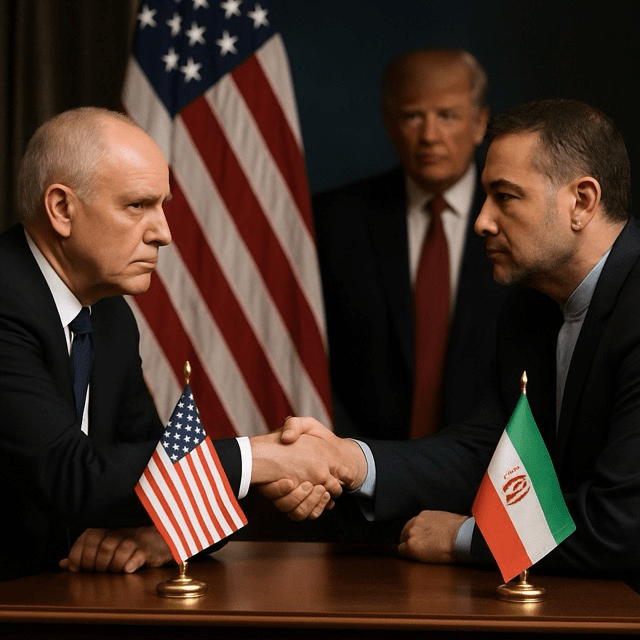
In recent years, the United States has witnessed a seismic shift in its approach to diplomacy under the banner of the Make America Great Again (MAGA) movement. What was once a realm of careful negotiation and multilateral engagement has increasingly become an arena of leverage, threats, and transactional bargains.
At the heart of this transformation lies a doctrine of coercive diplomacy—using economic, military, and political pressure to force allies and adversaries alike into conceding American demands. From trade tariffs to military withdrawal, the underlying message is clear: compliance or consequence.
Trade negotiations under MAGA have become paradigmatic. The administration imposed steep tariffs on longstanding trading partners, most notably China and the European Union, reframing disputes over intellectual property and trade imbalances as moral imperatives under ‘America First.’ These measures were accompanied by the implicit threat of further escalation if concessions proved insufficient.
In the security domain, the United States has leveraged regional threats to extort greater defense spending from NATO allies. Public declarations threatened to withdraw American troops—undermining decades of collective security—unless European nations increased their budgetary commitments. This gamble paid dividends in budget pledges but raised questions about the reliability of U.S. commitments.
Against Iran, the MAGA foreign policy adopted a maximum pressure campaign, withdrawing from the 2015 nuclear accord and reimposing stringent sanctions. Teheran found itself economically besieged, while U.S. diplomats made clear that relief would only come through broader concessions, extending beyond nuclear constraints to regional behavior.
Similarly, in negotiations with North Korea, the United States employed a mix of personal diplomacy and coercion—waxing and waning between summits and sanctions. The episodic nature of talks underscored a strategy of calibrated escalation, aimed at extracting symbolic gestures while keeping the door to concessions ajar.
Environmental diplomacy also bore the imprint of this doctrine. The U.S. withdrawal from the Paris Agreement served as both an economic and political warning shot, demonstrating how international cooperation on climate could be held hostage to domestic agendas.
Critics argue that this style of diplomacy erodes trust. Allies question the reliability of U.S. guarantees, while adversaries learn that American policy can swing dramatically with electoral tides. The resulting unpredictability complicates long-term strategy and coalition-building.
Nonetheless, proponents counter that coercion yields results. They point to newly negotiated trade terms and increased defense spending as proof that firmness, rather than conciliation, drives outcomes. For them, diplomacy’s purpose is to secure American interests by any means necessary.
As the MAGA doctrine continues to influence State Department practices, the world watches closely. Will high-stakes leverage become the new normal? Or will a return to traditional diplomacy emerge after the current political cycle? The answer may well determine the shape of the next era of international relations.
What remains undeniable is that U.S. diplomacy has adopted a sharper edge. The politics of blackmail, once relegated to rogue states, now feature prominently in Washington’s playbook. Whether this approach strengthens or undermines American influence will be the central question for years to come.


 The Tower Post