Former President proposes massive economic package to Iran in landmark overture
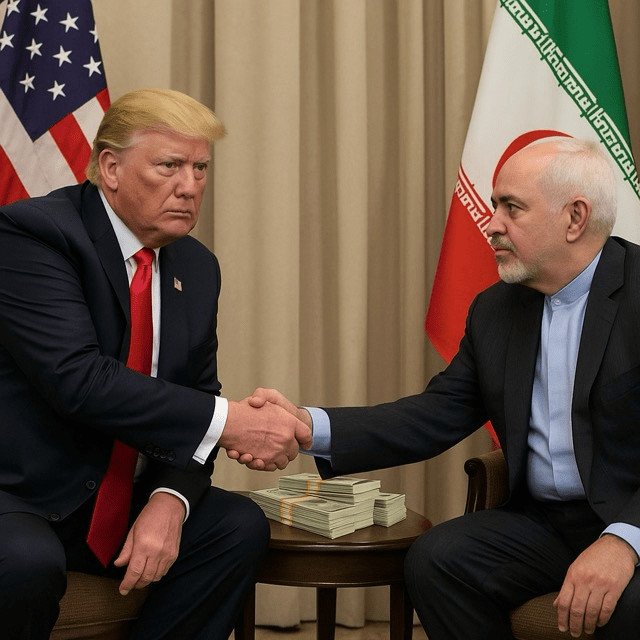
In a move that has sent ripples through international capitals, former U.S. President Donald Trump has unveiled a $30 billion economic package to Iran aimed at securing a “durable peace” in the Middle East. The announcement, made via a statement from his political action committee, outlines sweeping incentives including infrastructure investment, energy sector development, and humanitarian aid, contingent on Iran’s agreement to halt regional hostilities and allow intrusive verification measures.
Trump’s proposal arrives at a critical juncture, as tensions between Tehran and Washington have ebbed and flowed since the U.S. withdrawal from the 2015 nuclear accord in 2018. While critics remain skeptical of Trump’s intentions, proponents argue that the offer represents a high-stakes strategy to break decades of impasse. Republican and Democratic figures alike are watching closely—and warily—to see whether Iran’s leadership will engage with the plan.
The $30 billion package is divided into three core components: $15 billion for rebuilding critical infrastructure such as roads, railways, and power grids; $10 billion in oil and gas sector development, to be managed through international consortia; and $5 billion earmarked for healthcare and educational programs. Trump’s statement emphasizes that disbursements would be overseen by a joint U.S.–Iran supervisory board, with representatives from the United Nations and the European Union acting as neutral observers.
Under the terms of the proposal, Iran would be required to cease support for proxy groups across the region, including Hezbollah in Lebanon and the Houthis in Yemen. The plan also demands that Iran fully comply with International Atomic Energy Agency inspections and halt enrichment beyond 3.67% uranium purity. Critics, however, question whether Iran—particularly under hardline President Ebrahim Raisi—would accept such stringent conditions.
In a televised reaction, Iran’s Foreign Ministry spokesperson described the offer as “an interesting development,” but stressed that Iran would make no concessions under “external pressure.” Diplomats in Tehran noted that Iran’s priority remains the removal of all sanctions precedent to any negotiations, rather than a phased economic incentive. The Iranian government has not formally responded to Trump’s statement at the time of writing.
Analysts point out that Trump’s proposal diverges significantly from preceding diplomatic efforts, which typically linked sanction relief to nuclear compliance. Instead, the former president’s plan offers immediate financial benefits in exchange for broader behavioral changes. “This is a classic carrot-and-stick approach,” says Dr. Nadia Mesri, a Middle East policy specialist at Georgetown University. “It’s aggressive, but it shifts the balance of risk and reward in a novel way.”
Reaction in Washington has been mixed. Some Republican lawmakers praised the boldness of the initiative, arguing it could reset U.S.–Iran relations ahead of upcoming elections. Meanwhile, leading Democrats cautioned that bypassing the sitting administration might undermine official foreign policy channels and complicate coordination with allies. The State Department reiterated that any substantive negotiations would need to proceed through the established diplomatic framework.
Observers in allied capitals—from Brussels to Riyadh—will be assessing the proposal’s credibility. Europe has long backed a cautious approach, emphasizing incremental confidence-building measures, while regional powers like Saudi Arabia view Iran’s influence as a strategic threat. Whether Trump’s $30 billion offer can overcome deep-seated mistrust remains to be seen.
As the Middle East stands at another crossroads, Trump’s plan represents both a political gambit and a test of international will. If Iran engages, the package could herald a new era of cooperation—or, if rebuffed, deepen the chasm between Washington and Tehran. For now, the world watches and waits.
Ultimately, the success of Trump’s initiative hinges on a delicate interplay of economic incentives, security guarantees, and diplomatic deftness. In a region marked by decades of conflict, a $30 billion gamble may be exactly the boldness required—or an ill-fated overreach destined to falter.




 The Tower Post