What the rollback means for diplomacy, reconstruction, and the Syrian people
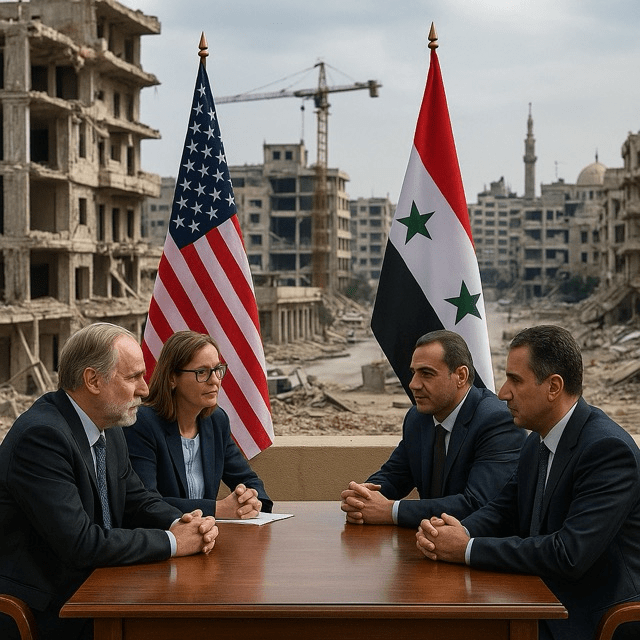
In a surprising turn in Middle East diplomacy, the United States has announced the lifting of most sanctions it imposed on Syria over the past decade. The decision, unveiled by the Treasury Department last week, marks a significant shift in policy, aimed at incentivizing Damascus to engage in political dialogue and humanitarian cooperation. Administration officials describe the move as a calibrated step designed to reward positive behavior without fully restoring pre‑2011 relations.
Since the Syrian civil war began in 2011, the United States has maintained a complex web of sanctions targeting government entities, key officials, and economic sectors. These measures sought to pressure President Bashar al‑Assad’s regime into ending hostilities and negotiating a political settlement. However, critics have long argued that the sanctions have exacerbated the humanitarian crisis, hindering reconstruction and fueling widespread suffering.
Under the new framework, the U.S. will lift restrictions on Syrian state‑owned enterprises involved in energy and agriculture, sectors critical to reviving the country’s crippled economy. Licenses will also be granted to allow nongovernmental organizations to import medicine, foodstuffs, and construction materials for civilian use. High‑ranking regime figures remain under asset freezes, and prohibitions on arms transfers continue, ensuring that core leverage is retained.
The decision followed months of behind‑the‑scenes negotiations in Geneva, where U.S. envoys met Syrian and Russian counterparts. While no direct talks with Assad’s government have occurred, Western diplomats credit persistent shuttle diplomacy for opening channels on humanitarian access. The rollback of sanctions, they argue, provides tangible incentives for Damascus to permit aid agencies to operate freely in rebel‑held regions.
International aid organizations have cautiously welcomed the move. Médecins Sans Frontières praised the new licenses, noting they could remove bureaucratic hurdles that have delayed life‑saving medical deliveries. The International Red Cross, however, warned that far more remains to be done, urging the U.S. and its allies to coordinate with donors to ensure reconstruction funds are not diverted by corrupt intermediaries.
On the political front, the State Department framed the action as part of a broader strategy to support a UN‑led constitutional committee tasked with drafting a new Syrian constitution. U.S. diplomats hope that easing economic pressures will encourage moderate opposition groups to return to the negotiating table. Yet skeptics point out that without firm timelines and enforcement mechanisms, the gesture risks being seen as a concession without reciprocity.
The reaction in Damascus was muted. State media reported the sanctions relief as a modest victory, highlighting that many restrictions remain in place. Foreign Minister Faisal Mekdad called for “serious engagement” from the U.S. on issues such as lifting travel bans and releasing frozen assets. Analysts caution that Syria’s leadership will likely continue to exploit divisions among Western capitals to extract further concessions.
Economic experts warn that Syria’s revival faces daunting obstacles. Years of conflict have devastated infrastructure, displaced millions, and left much of the industrial base in ruins. Even with sanctions eased, attracting foreign investment will require security guarantees and transparent governance—conditions that Assad’s government has historically resisted. Reconstruction estimates top $400 billion, a figure unlikely to be met without a comprehensive political settlement.
Neighbouring countries are watching closely. Lebanon and Jordan, both struggling under the weight of Syrian refugees, hope that economic normalization could facilitate returns. Turkey, which maintains troops in northern Syria, has expressed concerns that reconstruction aid might shore up Assad’s authority rather than empower local communities. The European Union, which retains its own sanctions regime, has signaled a willingness to align with U.S. policy if meaningful progress is demonstrated.
As Washington calibrates its approach, the overarching question remains: will the easing of sanctions catalyze a genuine political transition or merely prop up a war‑hardened regime? For now, the thaw offers a glimmer of hope to Syrians weary of conflict and isolation. Whether it heralds a new chapter of reconstruction and reconciliation will depend on the interplay between diplomatic will, regional dynamics, and the resilience of Syria’s fractured society.




 The Tower Post