From Controversy to Unity: Has Spanish Football Truly Changed?
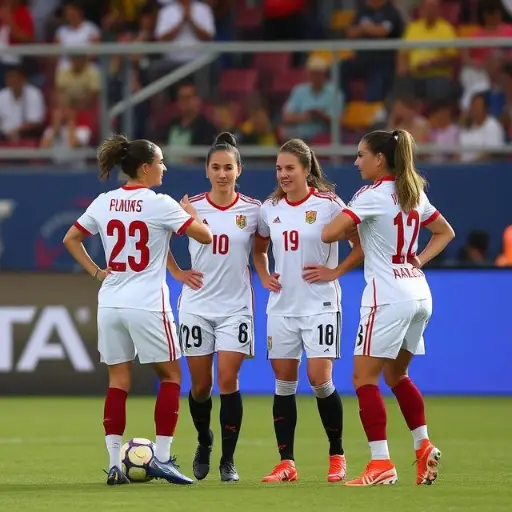
It’s been nearly two years since Spain’s historic triumph at the 2023 Women’s World Cup was overshadowed by a sexism scandal that left the team at the center of a maelstrom. The fallout from the incident, which involved a kiss between then-president Luis Rubiales and striker Jenni Hermoso, sparked widespread protests, boycotts, and a court case that found Rubiales guilty of sexual assault. The scandal led to a mass exodus of players from the national team, with 81 players, including all 23 World Cup winners, announcing they would not play for Spain again while Rubiales was in charge.
The boycott only ended after the Spanish Football Federation (RFEF) promised “profound changes” following a lengthy meeting with players and government officials. But has the RFEF kept its promises? The answer is complex. While the players were heard and their concerns addressed, the changes have been gradual, and there is still much work to be done.
Montse Tome, the new head coach of the Spanish women’s team, has been at the helm since Jorge Vilda’s departure. Tome’s appointment was not without controversy, with many feeling that she was a continuation of the previous regime. However, Tome has slowly but surely earned the respect of the players, who appreciate her willingness to listen and adapt to their needs.
The squad has undergone significant changes since the World Cup. Jenni Hermoso, who was left out of the final four squads, has not been punished for speaking out against the RFEF. Instead, she has been replaced by other talented players, including Irene Paredes and Alexia Putellas. Patri Guijarro and Claudia Pina, who had withdrawn from the team in 2022, have also returned after making themselves available again.
The return of Guijarro and Pina is a testament to the changes that have taken place within the team. The pair had withdrawn from the team in 2022 due to concerns over their emotional state and health, and had been critical of Vilda’s leadership. However, with the RFEF’s promises of change and the support of their teammates, they have been able to return to the team and continue their careers.
As Spain prepares to head to the Euro 2025, their chances of winning look promising. Opta has given them a 25% chance of victory, a significant improvement from their 8% chance at the World Cup. The team’s unity and focus have improved significantly, and they are now seen as a cohesive unit, a “family” that is ready to take on the challenges of the tournament.
The team’s newfound unity has been credited to the leadership of Tome, who has created a positive and supportive environment within the team. The players have also been praised for their maturity and resilience in the face of adversity. As journalist Maria Tikas noted, “The players put up with a lot of stuff, but they’ve set a limit and if it goes below that, they won’t tolerate it.”
The road to recovery has been long and arduous, but Spain’s women’s team is finally beginning to heal and move forward. As journalist Guillem Balague noted, “The players were heard, there’s no doubt about that.” The team’s journey is a testament to the power of unity, resilience, and determination, and serves as a reminder that even in the face of adversity, there is always hope for a better future.
With a new coach, a new attitude, and a renewed sense of purpose, Spain’s women’s team is ready to take on the world and prove themselves as a force to be reckoned with. As they head into the Euro 2025, they will be looking to build on their successes and continue to grow and develop as a team.




 The Tower Post