Revelations Surface: Trump Withheld Deployment of Bunker Busters Despite Intelligence Warnings
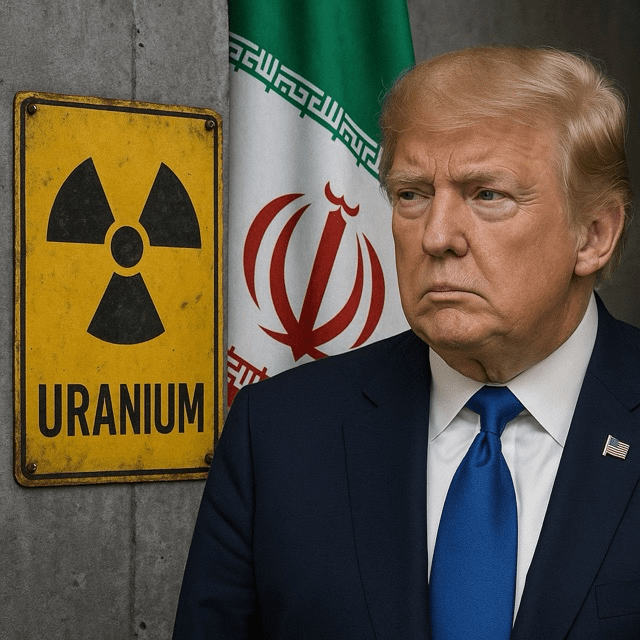
In a development that has sent shockwaves through international security circles, new intelligence reports have confirmed that Iran’s uranium enrichment operations have remained largely intact despite a series of high-profile U.S. airstrikes in recent years. The news comes amid escalating tensions in the Middle East and raises serious questions about the efficacy and intent of past American military strategies—particularly during the Trump administration.
According to multiple intelligence and defense sources, a classified Pentagon assessment has revealed that key uranium stockpiles and enrichment facilities in Iran were not destroyed in U.S. operations. These sites, located in heavily fortified bunkers across the country, remained untouched due to a decision from the Trump White House not to authorize the use of bunker buster bombs—precision-guided munitions specifically designed to penetrate underground targets.
The revelations have reignited criticism of Trump’s handling of Iranian nuclear policy. During his presidency, Trump often adopted a confrontational tone toward Tehran, withdrawing from the Joint Comprehensive Plan of Action (JCPOA) in 2018 and ramping up economic sanctions. However, despite the fiery rhetoric and a campaign of maximum pressure, sources say Trump consistently refused to authorize more aggressive military options that could have significantly degraded Iran’s nuclear capabilities.
“It was all bark, no bite,” said one senior defense official who reviewed the internal memos. “We had the intelligence. We had the targeting coordinates. But the President simply did not want to escalate to that level—even when advisors, including from the National Security Council, pushed for limited use of bunker busters.”
Some analysts argue that Trump’s reluctance was rooted in fears of igniting a full-scale war in the Gulf, especially in the lead-up to the 2020 presidential election. Others believe his approach was more transactional, using threats of force as leverage in potential backchannel negotiations with Tehran. In either case, the result is that Iran’s nuclear infrastructure not only survived but may now be closer than ever to achieving weapons-grade enrichment.
The Biden administration has been briefed on the findings and is reportedly re-evaluating current military postures and diplomatic approaches. While talks to revive the JCPOA have stalled, the possibility of Iran crossing a nuclear threshold without effective countermeasures has drawn renewed concern from U.S. allies in Europe and Israel.
“It’s a worst-case scenario unfolding in slow motion,” said Carla Mendelson, a non-proliferation expert at the Center for Strategic Studies. “We’re dealing with a legacy of strategic hesitation, and the consequences could be irreversible.”
Satellite imagery analyzed by independent watchdogs supports claims that key Iranian sites, such as Fordow and Natanz, remain operational and under heavy security. While inspectors from the International Atomic Energy Agency (IAEA) continue to face restricted access, leaked footage has suggested ongoing activity well beyond what has been publicly disclosed by Iranian authorities.
Critics are now pressing Congress to launch a formal inquiry into Trump-era military decision-making and to assess whether political considerations outweighed national security imperatives. At the same time, military strategists are scrambling to develop updated contingency plans, should a kinetic response become unavoidable.
As the world watches Iran’s next moves, questions linger over missed opportunities and the delicate balance between diplomacy and deterrence. The enduring shadow of Trump’s policies looms large—one that could shape nuclear geopolitics for years to come.


 The Tower Post