In a historic spiritual declaration, the Tibetan leader says his successor will emerge from Indian soil, signaling a defiant message to Beijing and a reaffirmation of exile identity.
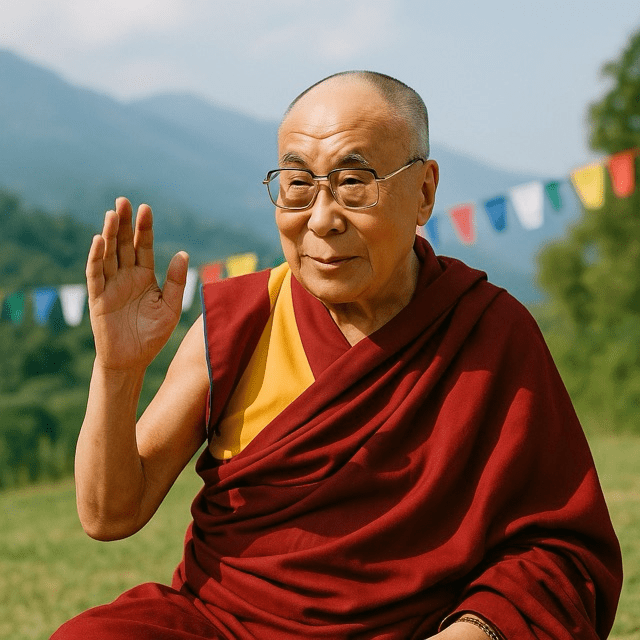
As he approaches his 90th birthday on July 6, the 14th Dalai Lama, Tenzin Gyatso, is preparing to make one of the most consequential announcements of his spiritual legacy. According to close aides and religious scholars in Dharamshala, the Tibetan Buddhist leader is expected to declare that his next reincarnation — the child who will carry his immortal soul — will be born in India.
The move, while deeply spiritual, also carries profound political implications. It comes amid continuing tensions with China, which has long claimed the right to approve the Dalai Lama’s successor and insists that any future reincarnation must be born within Chinese-controlled territory, particularly Tibet.
By declaring that his successor will be born in India, the Dalai Lama is asserting religious sovereignty and reaffirming the Tibetan government-in-exile’s rejection of Chinese interference. “This is both a spiritual and political message,” said Dr. Sonam Tsering, a Tibetan scholar and former monk. “It says: the soul of Tibet lives on — free and outside of Beijing’s grasp.”
India, which has hosted the Dalai Lama and the Tibetan exile community since 1959, would thus become the birthplace of the 15th Dalai Lama — a decision that will likely deepen diplomatic tensions between New Delhi and Beijing.
Tenzin Gyatso has spent more than six decades in exile, advocating for a peaceful resolution to the Tibetan issue and spreading the teachings of compassion, mindfulness, and non-violence. Though officially retired from political leadership since 2011, his influence remains enormous, both among Tibetans and the wider global spiritual community.
The question of succession has loomed large in recent years. China has already anointed its own Panchen Lama — traditionally responsible for identifying the reincarnated Dalai Lama — a move widely rejected by the Tibetan diaspora. The real Panchen Lama, chosen by the Dalai Lama in 1995, has not been seen since being taken into custody by Chinese authorities as a child.
“This is an attempt to ensure that the next Dalai Lama is not a political puppet,” said Lobsang Sangay, former president of the Central Tibetan Administration. “The lineage must continue on Tibetan terms, not Beijing’s.”
The Dalai Lama has hinted before that he may choose his reincarnation while still alive — a practice called “emanation” — or possibly end the line altogether if conditions are not right. But recent statements suggest he now believes the continuity of the institution is necessary to protect Tibetan culture and autonomy.
While the exact process and timing remain unclear, aides say the announcement will be made formally during his 90th birthday commemorations in Dharamshala, which are expected to draw global attention.
For many Tibetans, the pronouncement is a source of hope and reassurance. “We feared China might hijack the future of our spiritual leader,” said 28-year-old Sonam Lhamo, a second-generation exile. “But now we know the soul of the Dalai Lama will remain free — just like us.”
As the spiritual leader marks his 90th year, he appears focused not on legacy, but continuity. His message is clear: the light of Tibetan Buddhism, and its commitment to peace and compassion, will not be extinguished — no matter where its next chapter begins.



 The Tower Post