After a wave of missile threats, Israel’s air defense system proves its reliability once more—reinforcing the nation’s technological edge and strategic foresight.
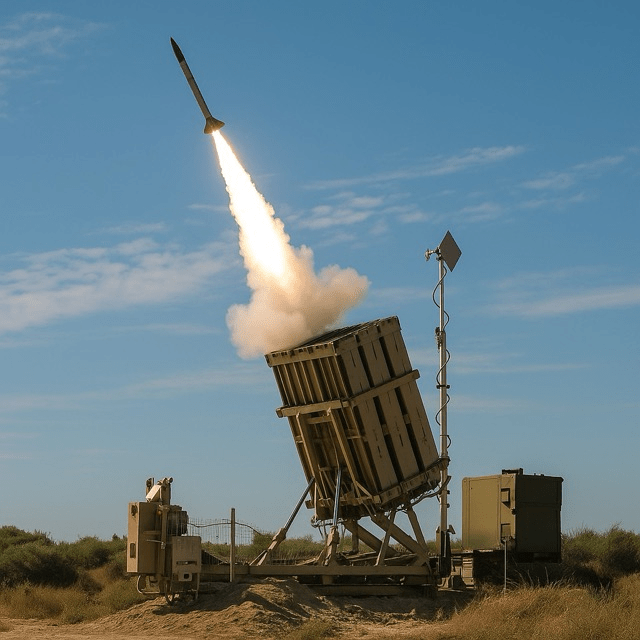
In a region where seconds count and preparation can mean survival, Israel has once again demonstrated its technological superiority and military preparedness. The Iron Dome air defense system, a cornerstone of Israel’s national security strategy, has successfully intercepted and neutralized a significant barrage of missile attacks in recent days, reaffirming its reputation as one of the world’s most effective missile shield systems.
The operation, which saw dozens of short-range rockets launched toward populated areas, was met with swift and decisive response from the Iron Dome batteries strategically placed across the country. Within moments, the system’s radar units identified incoming threats, calculated trajectories, and launched interceptor missiles to destroy them mid-air—saving lives and averting disaster.
Defense officials confirmed that the system achieved an interception rate exceeding 90%, with several key urban centers shielded from direct hits. The response not only protected civilian infrastructure but also highlighted Israel’s sustained investment in innovation, coordination, and military readiness.
“Every time Iron Dome is tested in real-time conditions, it proves its value,” said Brigadier General (Res.) Ariel Dov, a former commander in Israel’s Air Defense Command. “This isn’t just defense—it’s deterrence. It sends a message to adversaries: Israel is always prepared, and always a step ahead.”
Developed by Rafael Advanced Defense Systems in collaboration with Israel Aerospace Industries and support from the United States, the Iron Dome has become a symbol of technological resilience. It is capable of distinguishing between missiles likely to strike populated areas and those that will land in open fields—allowing for cost-effective and precise responses.
The most recent activation follows a growing period of regional tension, with hostile actors attempting to test Israel’s defense perimeter. While none of the launches resulted in significant damage or casualties, the incident serves as a stark reminder of the constant threat environment in which Israel operates.
Prime Minister Benjamin Netanyahu praised the Iron Dome’s performance in a televised address, calling it “a triumph of Israeli ingenuity and strategic vision.” He added: “In this part of the world, readiness is not an option—it’s a necessity. We will continue to invest, innovate, and lead.”
International military analysts echoed this sentiment. “No other country has faced such frequent missile threats with such consistent defensive success,” noted Rachel Altman, a senior fellow at the Defense Technology Institute in Washington. “The Iron Dome has changed the nature of warfare by proving that missile defense can be both reactive and predictive.”
Beyond its tactical value, the Iron Dome has also become a point of national pride and a key asset in Israel’s international defense partnerships. With export interest from countries facing similar security challenges, the system has emerged as a case study in military and industrial cooperation.
As threats evolve, Israel is not resting on its laurels. Next-generation systems like David’s Sling and the Arrow program are already in deployment or development, designed to counter longer-range ballistic missiles and cruise threats. Yet Iron Dome remains the frontline shield, battle-tested and continually upgraded.
In a world increasingly shaped by asymmetric threats and technological arms races, Israel’s Iron Dome stands as both protector and symbol. It is not merely a defense system—it is the embodiment of a national doctrine built on foresight, speed, and strategic depth.




 The Tower Post