As elections loom, Israel’s longest-serving Prime Minister begins crafting a strategy for re-election amid political turbulence and public scrutiny.
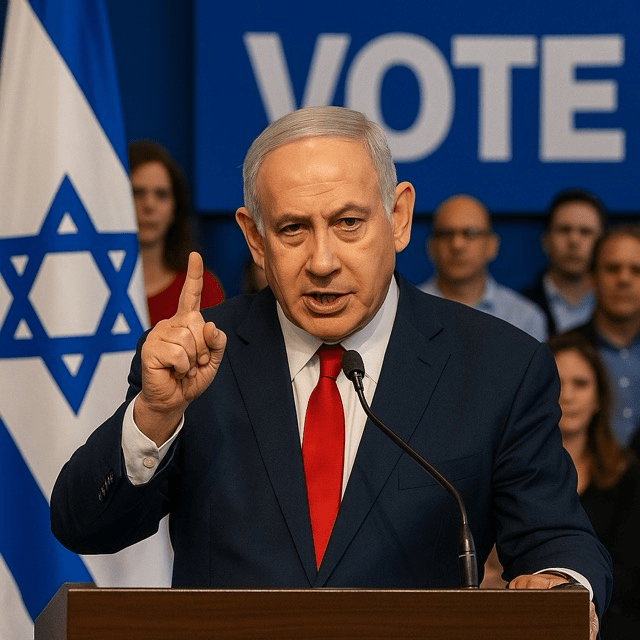
Benjamin Netanyahu, Israel’s longest-serving prime minister and a central figure in the country’s modern political history, is preparing his strategy for a political comeback as national elections draw closer. Despite mounting legal challenges, domestic unrest, and international scrutiny, the Likud party leader appears poised to reclaim leadership in a highly polarized political landscape.
According to senior Likud officials, Netanyahu has already begun assembling a campaign team, focusing on both party unity and voter outreach. His strategy includes a mix of nationalist messaging, economic promises, and tough-on-security rhetoric aimed at mobilizing the party’s base while attempting to win back centrist voters who drifted away during recent political turbulence.
“Netanyahu never really left the battlefield,” said Dr. Eitan Lev, a political analyst at Tel Aviv University. “Even while facing corruption charges and leading a deeply controversial coalition, he has remained one of Israel’s most visible and influential figures. His next campaign will center on restoring stability and strength to Israel.”
The prime minister is expected to leverage his track record in foreign affairs—particularly the Abraham Accords and his close ties with U.S. and regional leaders—as part of his campaign narrative. Recent reports suggest that Netanyahu plans to visit key international allies before the election period, reinforcing his image as an experienced statesman capable of navigating complex geopolitics.
Domestically, Netanyahu will also have to reckon with the legacy of his current tenure, including the controversial judicial reform proposals that triggered months of mass protests and divided the nation. Sources close to the Likud leader say that his upcoming campaign will seek to “reframe the narrative,” casting the reforms as necessary for restoring democratic balance rather than weakening judicial independence.
Still, challenges remain. Netanyahu is currently on trial in three separate corruption cases, with legal proceedings expected to continue during the campaign season. His political rivals, both within the right and across the opposition spectrum, are preparing for a fierce battle.
Yair Lapid, head of the centrist Yesh Atid party, has already positioned himself as the primary challenger. “Israel needs clean leadership, not more chaos,” Lapid said in a recent speech. “The next election is about trust—who can lead Israel without dragging the country through constant legal and political drama.”
Netanyahu’s response has been to double down on his image as a seasoned, irreplaceable leader. In a recent Likud rally, he declared, “Israel needs strength, experience, and vision. I have all three.”
Polls currently show a tight race, with Likud holding a slight edge over its closest competitors but falling short of an outright majority. Coalition building will likely play a crucial role once again, with smaller right-wing and religious parties emerging as potential kingmakers.
Meanwhile, Netanyahu’s team is investing heavily in digital campaigning, targeting younger voters through social media platforms and personalized outreach. A renewed focus on national security and Iran’s growing influence in the region is also expected to dominate the campaign discourse.
As the countdown to elections begins, all eyes are on Netanyahu—not only for what he promises to deliver, but for how he plans to rewrite his legacy in the face of growing skepticism and high political stakes.


 The Tower Post