A string of coordinated explosions targeting oil tankers has rattled the global shipping industry, with growing suspicions of Ukrainian involvement following port calls in Russia.
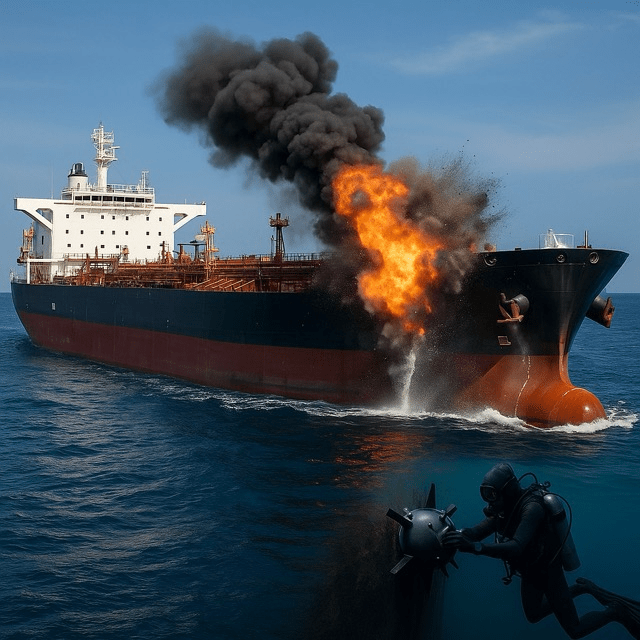
A wave of mysterious explosions has rocked the maritime shipping world, targeting oil tankers in international waters and leaving behind a trail of fear, suspicion, and unanswered questions. In each case, the cause was traced to limpet mines—explosive devices typically attached to ships’ hulls by divers or via drone submersibles. The attacks, executed with precision, have prompted alarm among international security experts and ignited a flurry of speculation regarding the culprits behind the sabotage.
At least five oil tankers, operating under different flags but sharing one conspicuous commonality, have been hit in the past three months. All had called at Russian ports within weeks prior to the attacks. This detail has fueled theories that the incidents may be connected to the ongoing conflict between Russia and Ukraine, with several intelligence analysts pointing fingers at Ukraine’s military intelligence service. The motive, they suggest, could be to disrupt Russia’s oil trade and exert pressure on its global shipping interests.
No group or nation has officially claimed responsibility, and Ukraine’s Ministry of Defence has neither confirmed nor denied involvement. Still, Ukrainian officials have repeatedly warned that Russian energy infrastructure and trade would remain “legitimate targets” while the war continues. A shadow campaign at sea, they argue, is simply an extension of a broader hybrid warfare strategy.
One incident, involving the Liberian-flagged *Sea Falcon*, occurred 200 nautical miles off the coast of Oman. Investigators found traces of high-grade explosives used in military operations, attached magnetically to the ship’s hull below the waterline. The blast left a gaping hole in the tanker’s cargo hold, forcing an emergency response. No casualties were reported, but the damage underscored the professional execution of the operation.
“This has the hallmarks of a state-backed operation,” said Michael Arendt, a maritime security analyst with the Global Seaways Institute. “The level of planning, the choice of targets, and the method of attack suggest not pirates or mercenaries, but trained operatives working under official orders.”
Experts say that the deliberate use of limpet mines—designed for stealth and deniability—serves a strategic purpose. The aim, according to former naval intelligence officer Sarah Kwon, is to “destabilize enemy shipping without leaving clear attribution.”
The geopolitical implications of the attacks are vast. Insurance premiums for tankers operating in high-risk zones have surged, and global oil prices have spiked amid growing concerns over supply chain disruptions. In response, NATO has increased surveillance of key maritime routes, while commercial fleets have been advised to alter course and minimize time spent near Russian ports.
Despite mounting speculation, the fog of war persists. Russia has accused “hostile actors” of attempting to sabotage its commercial fleet but stopped short of naming Ukraine. For its part, Ukraine remains cryptic. A senior Kyiv official, speaking on condition of anonymity, told *The Times* that “the sea is vast, and the war has many fronts.”
As investigations continue and tensions escalate, the limpet mine attacks may mark a new, shadowy chapter in modern naval conflict—one where the boundaries of warfare blur and the stakes ripple far beyond the coastline.




 The Tower Post