With $4.5 trillion in proposed cuts favoring the wealthy, critics warn of deep social and fiscal consequences for America’s poor and the economy at large.
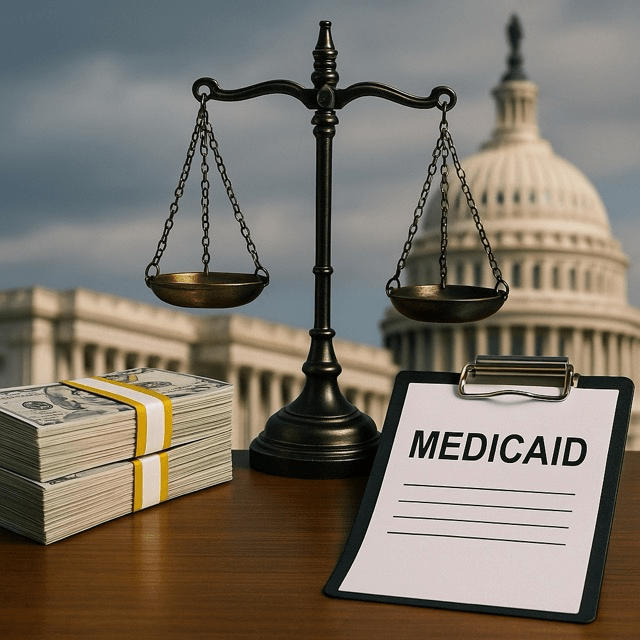
A sweeping tax bill under consideration in the U.S. Congress has ignited fierce national debate, with economists, policy experts, and public health advocates warning that the proposed legislation could sharply increase inequality, unravel healthcare access, and send shockwaves through financial markets.
If passed, the bill would enact an estimated $4.5 trillion in tax cuts over the next decade. While supporters claim the package will stimulate growth and reward entrepreneurial risk-taking, a new analysis from Yale University paints a more troubling picture: the benefits would be heavily skewed toward the wealthiest Americans, while lower-income households would see their real incomes fall.
The tax cuts, which include reductions in capital gains taxes, corporate tax rates, and estate taxes, are being framed by Republican lawmakers as pro-growth and pro-business. However, critics argue the measures disproportionately favor the top 1%, exacerbating already historic levels of income inequality.
“This is a tax cut for the yacht class, not the working class,” said Professor Alan Grayson, a public policy economist at Yale. “The poorest Americans will not only see no benefit — they’ll be worse off in real terms.”
Perhaps even more controversial are the proposed offsets. To fund the tax breaks, the bill includes sweeping cuts to federal spending, particularly targeting social safety nets. Chief among them is Medicaid, the federal healthcare program for low-income Americans. According to the Center on Budget and Policy Priorities, the bill would strip an estimated 12 million people of their health coverage by 2034.
“These cuts are a moral and public health disaster,” said Dr. Rebecca Moreno, a pediatrician in rural Ohio. “We’re talking about kids, the elderly, and disabled individuals who depend on Medicaid for everything from insulin to cancer treatment.”
Beyond its social impact, the bill is also raising alarms on Wall Street and among fiscal conservatives. The non-partisan Congressional Budget Office (CBO) has estimated that the measure would add more than $3 trillion to the national debt over the next ten years — a level of borrowing that could undermine investor confidence in U.S. assets and disrupt bond markets.
“Massive debt expansion without a clear path to repayment puts pressure on interest rates and the value of the dollar,” said Nina Levitt, a senior fixed-income strategist. “The U.S. Treasury market is the bedrock of global finance. You shake that, and the effects ripple worldwide.”
Defenders of the bill argue that it will boost investment and spur job creation, eventually leading to greater tax revenues. But many experts remain unconvinced, citing the 2017 tax cuts — which added significantly to the deficit while delivering limited economic gains — as a cautionary precedent.
As lawmakers prepare for a vote, public opinion is deeply divided. A recent Pew Research poll shows that 61% of Americans oppose the bill, while only 29% support it. The White House has so far remained cautiously supportive, but even some moderate Republicans have expressed concern over the deficit impact and Medicaid reductions.
The coming weeks will prove critical. If passed in its current form, the bill could reshape the American economic landscape for a generation — widening wealth gaps, destabilizing healthcare access for millions, and injecting new uncertainty into already volatile financial markets.




 The Tower Post