Once a symbol of Italian luxury’s unstoppable rise, the iconic fashion house faces headwinds in global markets. Is this a pause or the beginning of a deeper shift?
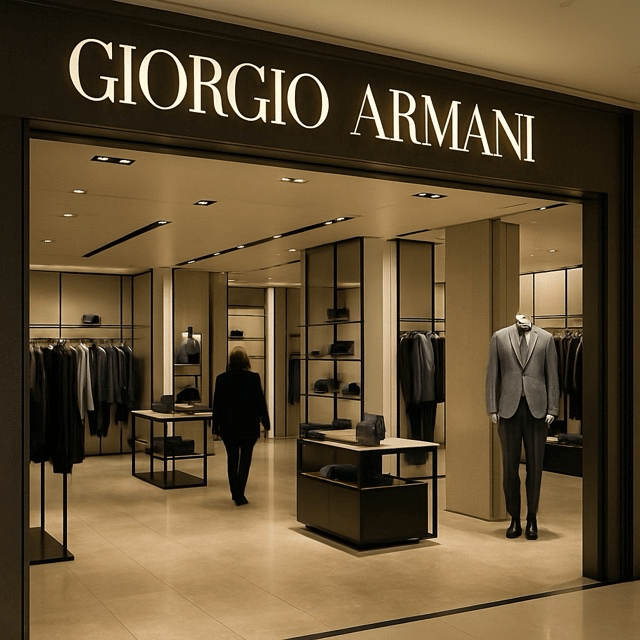
Giorgio Armani, the emblem of timeless Italian fashion, is experiencing an unexpected slowdown. The company’s latest financial results reveal a notable dip in both revenue and profits, sparking questions within the luxury industry about the sustainability of Armani’s business model and its global appeal.
According to recent figures, Giorgio Armani S.p.A. reported a decline in turnover for the first half of the year, paired with a noticeable contraction in net earnings. The drop — modest by mainstream standards — is nonetheless significant for a brand that has long been viewed as a steady performer immune to the sector’s cyclicality.
Company insiders cite multiple factors behind the downturn: a deceleration in Asia-Pacific markets, shifting consumer behavior in the United States, and a broader recalibration within the luxury goods industry following post-pandemic exuberance.
“Armani’s DNA is built around discreet luxury and enduring elegance,” said Claudia Ferraro, a Milan-based fashion consultant. “But the market has become more fragmented and fast-paced. Heritage brands are now competing not only with each other but with digital-first disruptors.”
One of the most notable weak spots has been the Asia-Pacific region, traditionally a growth engine for Armani. Slower-than-expected recovery in China, coupled with a more cautious consumer mindset, has impacted in-store and online sales. Meanwhile, increased competition from younger, more flamboyant labels has made it harder for Armani’s minimalist aesthetic to stand out among younger luxury buyers.
In Europe and North America, the brand continues to perform solidly in high-end formalwear and cosmetics, but demand for mid-tier collections has softened. Retail analysts point to a changing luxury consumer who now prizes limited drops, exclusivity, and experiential branding — areas where Armani has traditionally been more conservative.
Internally, Armani is undergoing operational shifts aimed at streamlining distribution and modernizing its digital infrastructure. While the company has made progress in e-commerce and sustainability initiatives, critics argue the pace of innovation lags behind competitors like LVMH or Kering.
Still, many industry veterans urge caution before reading too much into a single year’s figures.
“Armani has always played the long game,” said Matteo Colombo, editor-in-chief of *Luxury Italia*. “This is not a brand chasing hype. It’s a brand built on consistency, which can sometimes look slow during moments of turbulence.”
The company, still privately owned and steered by founder Giorgio Armani himself, has emphasized stability and independence over aggressive expansion. With the designer now in his late 80s, speculation about succession and strategic vision is once again circulating.
Despite the financial dip, Armani remains debt-free, profitable, and highly respected within fashion circles. The brand’s enduring appeal in haute couture, red carpet events, and global retail underscores its foundational strength.
Yet as the luxury landscape evolves, so too must Armani. Whether the current deceleration is a brief correction or a harbinger of deeper shifts will depend on how the maison adapts — and how it balances tradition with transformation.




 The Tower Post