Amid international criticism and Palestinian resistance, a growing segment of Israeli society continues to push for sovereignty over the occupied territories.
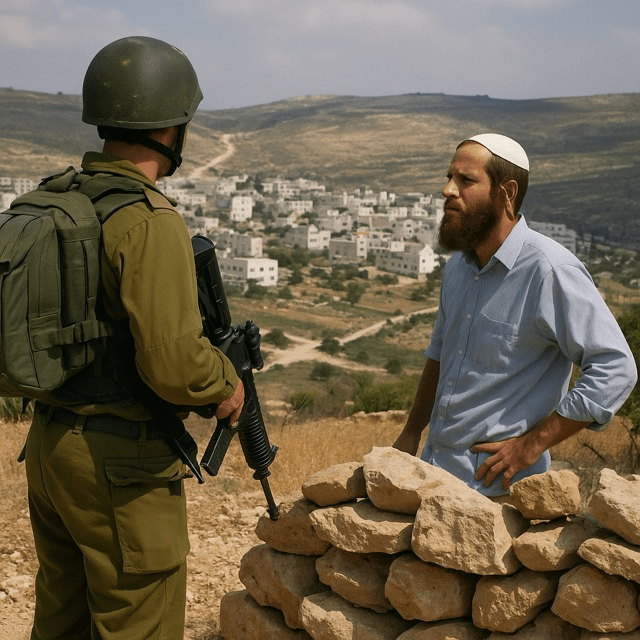
While the international community largely supports a two-state solution, a significant and vocal segment within Israeli society is advocating for the permanent annexation of the West Bank — or, as it is known in Hebrew, Judea and Samaria. For these Israelis, the territory is not just a geopolitical bargaining chip but a historic and religious birthright.
The movement is complex and varied, composed of religious nationalists, right-wing political figures, settler groups, and ideological activists. Many of them argue that Israel has both a biblical claim and a security imperative to retain the land, which it has controlled since the 1967 Six-Day War.
“The West Bank is the heartland of our ancestral homeland,” said Yossi Dagan, head of the Samaria Regional Council and one of the leading voices in the annexation movement. “This is not occupied territory. This is liberated territory.”
Over 450,000 Israeli settlers now live in the West Bank, many in large blocs near Jerusalem and Tel Aviv, others in more isolated hilltop communities deep within Palestinian-majority areas. Despite decades of diplomatic efforts and intermittent peace talks, settlement expansion continues, often with the backing of Israeli state infrastructure and military protection.
The Israeli government’s stance on the issue has shifted over time. While previous administrations committed—at least rhetorically—to a negotiated solution, recent years have seen a rise in political rhetoric supporting partial or full annexation. Prime Minister Benjamin Netanyahu has repeatedly hinted at formalizing Israeli sovereignty over major settlement blocs, particularly during election cycles.
Critics argue that annexation would not only doom any prospect of a viable Palestinian state but also deepen Israel’s diplomatic isolation and potentially trigger violence. The Biden administration has warned against unilateral moves, and the European Union has stated such actions would be considered violations of international law.
Yet for supporters of annexation, these warnings are either exaggerated or irrelevant. “Israel must do what is right for Israel,” said Talia Cohen, a settler activist from Efrat. “The world did not come to our defense in 1948, and we cannot wait for its approval now.”
The push for annexation is also entangled with religious Zionism, which views the return to biblical lands as a divine mission. This ideology has found increasing traction within segments of the Israeli Defense Forces and educational institutions, giving it influence that extends beyond politics and into the cultural fabric of the country.
Palestinians, meanwhile, see the continued expansion as an existential threat. With little control over borders, security, and increasingly fragmented territory, many say that a future Palestinian state is being made impossible by design.
“This is not about security,” said Dr. Hanan Ashrawi, a Palestinian political analyst. “It’s about domination, displacement, and denying us our basic rights.”
Despite international opposition, the annexation movement is unlikely to disappear. With far-right parties gaining influence and settler populations growing, the idea of a Greater Israel — stretching from the Mediterranean to the Jordan River — is no longer confined to the political fringe.
As tensions rise and negotiations stall, the future of the West Bank remains a flashpoint — not just between Israelis and Palestinians, but within Israel itself.




 The Tower Post