Brussels finalizes historic target to slash greenhouse gas emissions, setting the stage for sweeping industrial and societal transformation.
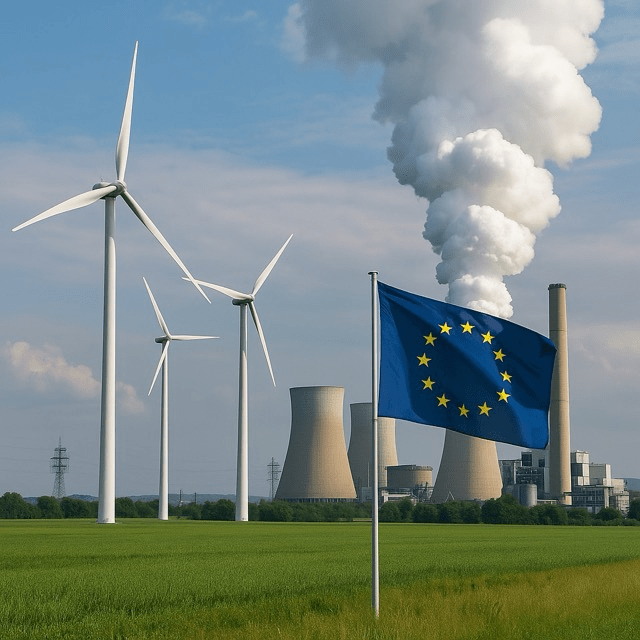
The European Union has officially confirmed its ambitious new climate target: a 90% reduction in greenhouse gas emissions by 2040, compared to 1990 levels. The announcement, made in Brussels this week, positions the EU as a global leader in the fight against climate change — but also sets the stage for dramatic shifts in industry, energy, and transportation.
The 2040 target, long discussed and now formally adopted, is seen as a critical milestone on the EU’s path toward full climate neutrality by 2050. It also signals to markets, policymakers, and citizens that the bloc remains committed to its Green Deal agenda despite geopolitical tensions and economic headwinds.
“This is not just a climate goal — it’s a growth strategy,” said European Commission President Ursula von der Leyen. “The transition to a low-carbon economy will create jobs, drive innovation, and enhance Europe’s global competitiveness.”
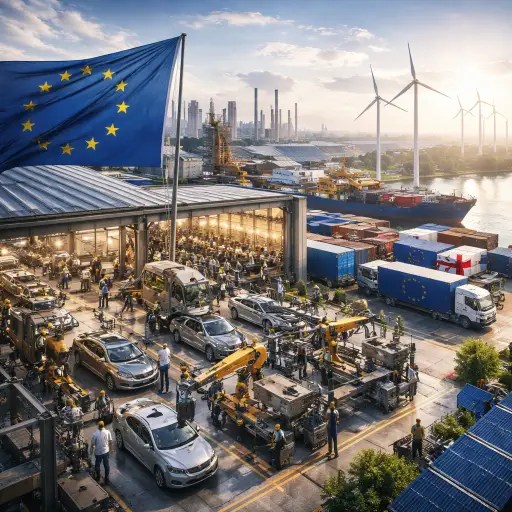
Reaching the 90% target will require sweeping measures across sectors. Coal will be almost entirely phased out, the pace of renewable energy deployment will double, and combustion engine vehicles will largely vanish from roads. Agriculture, buildings, and shipping — traditionally harder to decarbonize — will also face new limits and incentives.
The EU’s climate commissioner, Wopke Hoekstra, emphasized the importance of social equity in the process. “We must ensure the green transition leaves no one behind. This means supporting vulnerable regions, workers, and families as they adapt to new realities.”
Environmental groups welcomed the decision but urged faster implementation. “The goal is ambitious, but ambition alone is not enough,” said Magda Nowak of Greenpeace Europe. “What matters now is action — every year, every ton of CO2, every policy tool must align.”
Business reaction was mixed. Green tech firms hailed the clarity, saying it provides long-term certainty for investment. Traditional manufacturers, especially in the automotive and heavy industry sectors, warned of the potential costs and competitiveness challenges.
“This is a monumental task,” said Jean-Michel Lefèvre, policy director at the European Industrial Alliance. “Industry needs support, not just targets — especially as global rivals face looser rules.”
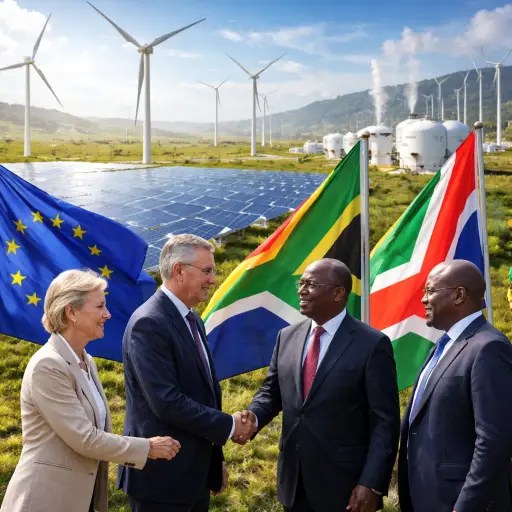
The 2040 goal will also feed into the EU’s negotiating position at upcoming international climate summits, where it hopes to encourage other major economies — including the U.S., China, and India — to adopt more aggressive reduction plans.
Domestically, the implementation challenge looms large. Member states will need to update national energy and climate plans, invest heavily in clean infrastructure, and coordinate policy reforms at a scale rarely seen in peacetime Europe.
Yet the European public appears broadly supportive. A recent Eurobarometer survey showed that 74% of EU citizens view climate action as a top priority, even if it entails major economic changes.
As the world warms and the carbon budget shrinks, the EU’s new target sends a clear message: the time for half-measures is over. What remains to be seen is whether Europe — and the world — can move fast enough.

 The Tower Post