From urban centers to rural towns, South Africans navigate fear, inequality, and resilience in a country plagued by rising insecurity.
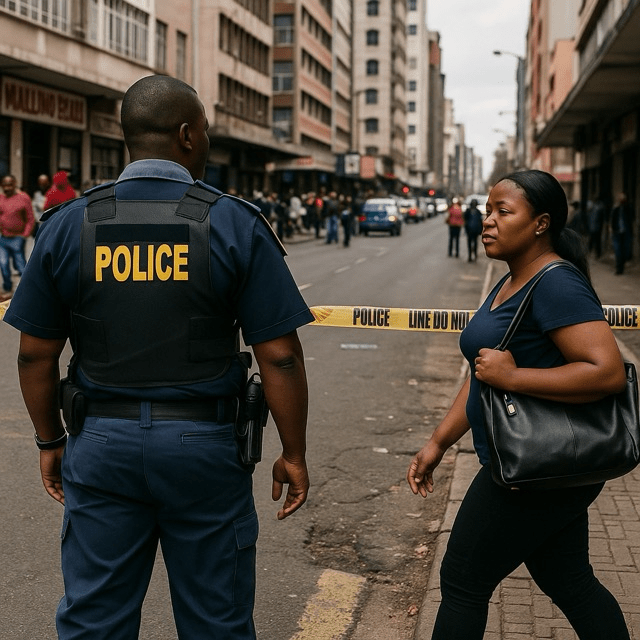
For millions of South Africans, safety has become a distant memory. Whether commuting to work, locking up homes at night, or sending children to school, the shadow of crime and violence looms over every aspect of daily life.
South Africa, one of the continent’s most developed economies, is also among the world’s most violent societies outside of active war zones. According to government statistics, the country records an average of 70 murders a day, with rates of assault, carjacking, and sexual violence persistently high. For many citizens, it’s not a matter of if they will be affected, but when.
Johannesburg resident Nandi Mkhize speaks with quiet resignation. “We’ve been robbed twice. My husband was carjacked at gunpoint. My son was stabbed for his phone,” she says. “Every day, we live with this fear.”
The roots of South Africa’s crime crisis are deeply intertwined with its history of apartheid, economic inequality, and systemic unemployment. Despite being three decades into democracy, wealth disparity remains among the highest globally, and access to education, healthcare, and opportunity is deeply unequal.
For those in townships and informal settlements, police presence is often sporadic, and trust in law enforcement remains low. In many areas, vigilante justice and private security firms have filled the void left by an overstretched and under-resourced police force.
“There is a deep sense of abandonment,” says Professor Marius van der Merwe, a criminologist at the University of Cape Town. “The state is perceived as either incapable or unwilling to provide basic protection. That erodes social trust.”
Businesses, too, are affected. Retailers invest heavily in surveillance, armored vehicles, and armed guards. Restaurants close early, and tourism — a vital source of jobs — is frequently undermined by headlines of attacks on visitors. Load-shedding and poor public services further compound the sense of disorder.
Women and children are particularly vulnerable. South Africa has one of the highest rates of gender-based violence in the world, and shelters are overwhelmed. Advocacy groups call it a national emergency that demands a coordinated and sustained response.
Government initiatives, including the National Strategic Plan on Gender-Based Violence and policing reforms, have shown limited impact. Corruption, bureaucratic inefficiencies, and political instability have diluted implementation.
Yet amid the despair, resilience remains. Community patrols, social entrepreneurs, and civic organizations continue to offer lifelines of support. In Cape Town’s gang-plagued neighborhoods, faith leaders and youth mentors intervene to keep children off the streets. In Durban, digital apps now allow residents to report crimes and alert neighbors in real time.
But most agree: systemic change is needed.
“What’s missing is political will and long-term investment,” says Thandiwe Nkosi, a human rights lawyer. “Crime is not just a policing issue — it’s a poverty, education, and dignity issue.”
Until such change materializes, South Africans will continue to live with high walls, panic buttons, and daily anxiety — navigating hope and hardship in a country both vibrant and volatile.


 The Tower Post