The agreement — among the largest in AI history — will power OpenAI’s Stargate infrastructure, leasing energy equivalent to a quarter of U.S. data centre capacity.
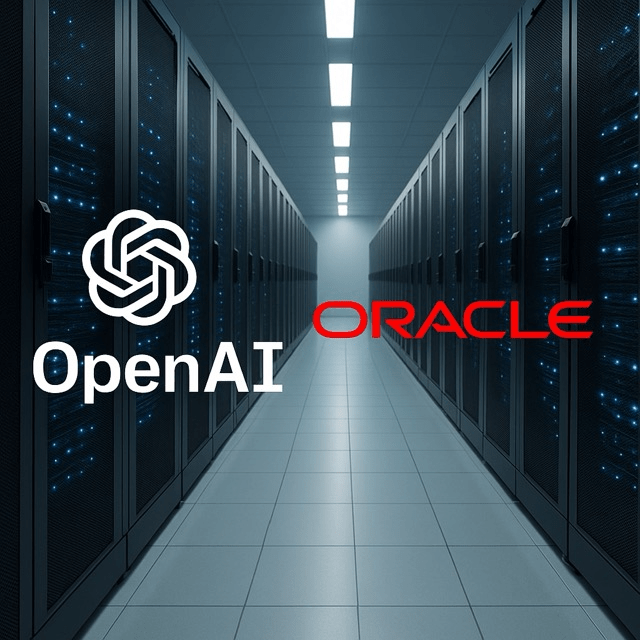
In a landmark deal poised to reshape the AI infrastructure landscape, OpenAI has agreed to pay $30 billion annually to lease computing power from Oracle. The agreement, one of the largest cloud infrastructure deals ever made, will provide the artificial intelligence company with 4.5 gigawatts of capacity — equivalent to roughly 25% of the United States’ current operational data centre capacity.
The move marks a dramatic expansion of OpenAI’s ambitious “Stargate” project, its proprietary AI computing architecture designed to scale training and inference of advanced AI models. The collaboration underscores the growing demand for massive, energy-intensive cloud computing resources as companies race to stay ahead in the generative AI arms race.
“This isn’t just about access to servers,” said a senior Oracle executive familiar with the deal. “It’s about building the foundation for the next era of AI — one where the infrastructure is as strategic as the algorithms themselves.”
Under the terms of the agreement, Oracle will provide OpenAI with a vast network of cutting-edge data centres, powered by its cloud computing platform and energy-efficient hardware. The scale of the deployment will require new facilities and expanded energy sourcing, including renewable integration and high-efficiency cooling systems.
The financial scope of the deal — $30 billion per year — has stunned industry watchers and analysts. It highlights the rapidly escalating costs of developing frontier AI models, such as OpenAI’s GPT-series, and the arms-length partnerships forming between AI labs and infrastructure giants.
OpenAI, backed by Microsoft and a growing ecosystem of corporate partners, has been investing heavily in compute capacity to support its mission of building general-purpose AI systems. The Stargate initiative, until recently shrouded in secrecy, is envisioned as a multiyear push to create the world’s most powerful and efficient AI training platform.
Sources suggest that the Oracle deal represents just the first phase, with additional partnerships and expansions expected in the near term. The agreement will help OpenAI maintain pace with rivals such as Google DeepMind, Anthropic, and Meta, all of which are building out dedicated AI supercomputing platforms.
Environmental advocates, however, have expressed concern about the energy demands of such massive cloud operations. A 4.5-gigawatt load is comparable to the energy consumption of several million households. OpenAI and Oracle have stated that sustainability will be a “top design priority,” but critics say the broader industry must reconcile AI growth with climate goals.
“This is a staggering amount of energy,” said Dr. Lena Brooks, a researcher in digital infrastructure at MIT. “It shows how intertwined AI development is becoming with the planet’s energy future.”
From a strategic standpoint, the deal also reflects growing concerns about AI infrastructure sovereignty. By tying up a large share of available capacity, OpenAI and Oracle are effectively shaping the future geography and control of AI compute power in North America and potentially beyond.
Oracle, which has trailed rivals like Amazon Web Services and Microsoft Azure in cloud dominance, sees the partnership as a transformative opportunity to leapfrog into AI leadership. “This is Oracle’s moonshot,” said tech analyst Daniel Monroe. “They’ve gone all-in on powering the next generation of intelligence.”
As AI innovation becomes increasingly dependent on physical infrastructure, the OpenAI-Oracle agreement stands as a testament to the new era: one where power — literal and computational — is the currency of the future.




 The Tower Post