Labour leader signals stability and economic continuity with strong endorsement of Rachel Reeves ahead of critical policy period.
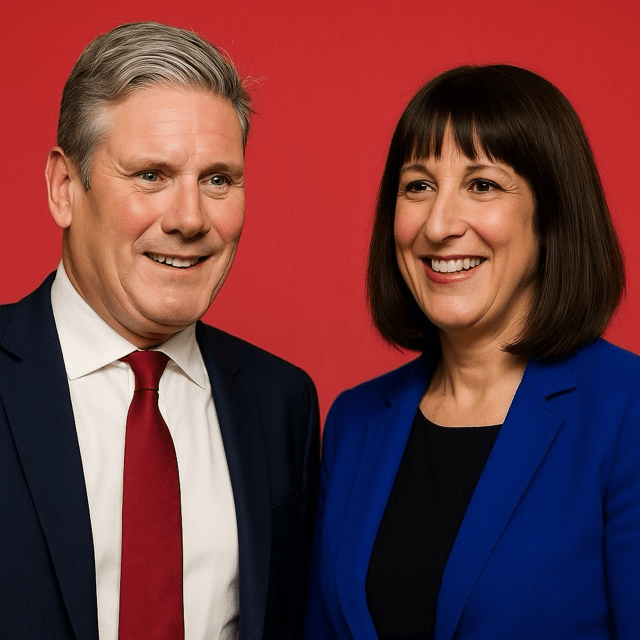
In a significant show of confidence, Labour leader Sir Keir Starmer has declared that Rachel Reeves will serve as Chancellor of the Exchequer “for a very long time to come,” cementing her central role in the party’s economic vision ahead of the next general election.
The endorsement, made during a campaign stop in Birmingham, signals Labour’s intent to project stability, continuity, and competence in the economic sphere — a critical battleground as the party seeks to return to power after more than a decade in opposition.
“Rachel has the clarity, the discipline, and the vision that the country needs,” Starmer said. “She will be Chancellor not just in our first term, but I believe for many years after. That is the level of trust I place in her — and that the British people will come to share.”
Reeves, a former Bank of England economist and long-time MP for Leeds West, has gained increasing prominence within the party over the past two years. Her speeches and policy proposals have focused heavily on fiscal responsibility, green investment, and rebuilding economic resilience — a contrast to the more radical approaches of Labour’s recent past.
By casting Reeves as a long-term fixture, Starmer is also sending a message to financial markets and business leaders: under Labour, there will be no shocks, no sudden U-turns, and no deviation from pragmatic economic stewardship.
Analysts say the endorsement reflects a carefully choreographed strategy. With voters increasingly focused on cost-of-living pressures, public services, and long-term growth, Labour’s leadership hopes to present a government-in-waiting that is both serious and steady.
“Reeves is positioning herself as the anti-Truss,” said Fiona Mallory, political editor at *The Herald*. “Her promise of ‘securonomics’ — marrying economic growth with social security — is about reassurance. Starmer’s words show they are betting heavily on her credibility.”
Indeed, Reeves has frequently highlighted the need for “economic security,” arguing that sound public finances and social justice must go hand in hand. She has pledged not to raise income tax or National Insurance rates, instead focusing on closing loopholes and targeting windfall profits in specific sectors.
While critics on the left argue that the party’s economic policy lacks ambition, Reeves’ message appears to be resonating beyond Labour’s base. Recent polling suggests growing support for her handling of economic issues, particularly among middle-income voters.
Her appointment as the first female Chancellor, should Labour win, would also mark a historic milestone — one Starmer has not hesitated to spotlight.
“It’s not just about representation,” he said. “It’s about competence. It’s about vision. Rachel brings both.”
With the general election expected within the next year, Starmer’s statement puts Reeves firmly at the heart of Labour’s case for government. Whether that message will translate into votes remains to be seen — but the party is clearly placing its economic future in her hands.
For now, Labour’s economic message is simple: a steady hand, a long-term plan — and a Chancellor here to stay.


 The Tower Post