From Serie A to Serie C: A Journey of Decline and Hope
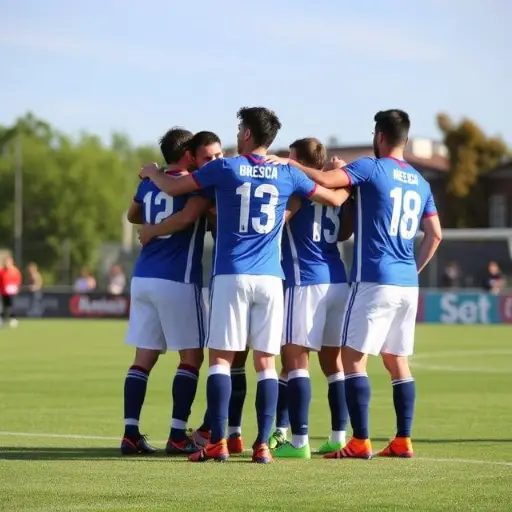
The once-proud Brescia football club, a founding member of Serie A and home to Italian football legends Roberto Baggio, Pep Guardiola, and Andrea Pirlo, has been wiped out of existence due to financial struggles. The club’s downfall is a tale of mismanagement, controversy, and ultimately, a four-point deduction that sealed its fate.
Brescia’s history dates back to 1911, when the club was founded in the industrial town of Brescia, Lombardy. The club’s early years were marked by a solid 10th-placed finish in its debut Serie A campaign, but it was a decade of relative anonymity that followed. The club’s most notable achievement was holding the longest unbroken spell in Serie B, from 1947 to 1965.
However, it was the turn of the century that brought Brescia to the spotlight, thanks to the arrival of Roberto Baggio, one of Italy’s greatest players. Baggio’s four-season spell at the club was marked by an exceptional burst of form, including a spot in the Uefa Intertoto Cup. The club’s best season was in 2001, finishing eighth and leading to a spot in the Intertoto Cup. Baggio retired in 2004, and the club’s brief flirtation with the elite was finished.
Fast forward to 2017, when businessman Massimo Cellino purchased the club. Cellino’s tenure was marked by controversy and division, with 24 coaching changes in eight years and 13 of the incumbents lasting fewer than 100 days in charge. The club’s financial struggles came to a head in May, when an investigation into financial irregularities was revealed, including missed payments to players, staff, and the Italian Football Federation (FIGC).
The investigation led to a four-point deduction, sending Brescia into the relegation zone and handing a reprieve to Sampdoria. On Thursday, the FIGC formally upheld its decision, banning Cellino and his son, Edoardo, for six months and revoking the club’s licence to operate at professional level. This effectively wiped Brescia out of business, leaving the club with the only option of reforming in the amateur, regionalised Serie D.
However, the story of Brescia’s demise is not yet over. Hopes are building that the club will be reborn in Serie C, thanks to the efforts of local companies, including Feralpi, a leading steel manufacturer. Feralpi’s president, Giuseppe Pasini, has been working with town mayor Laura Castelletti and another local company, A2A, to ensure professional football continues in the town.
The deadline to complete all the paperwork and register for next season’s Serie C is 15 July, leaving little time for the new club to be formed. The old club’s Rigamonti Stadium is owned by the town council, but the council has signed a lease with Cellino until 2028. However, the council has countersigned that the lease is invalid due to missed payments and the club’s disqualification by the FIGC, and locksmiths have been sent in to reclaim the site.
At the moment, things look on track for Feralpi’s takeover, and fans of Brescia are holding onto hope that their beloved club will rise from the ashes in Serie C, a far better outcome than the alternative of no professional football in the town.




 The Tower Post