Resilient growth in the eurozone defies American trade pressure, driven by industrial exports and consumer confidence
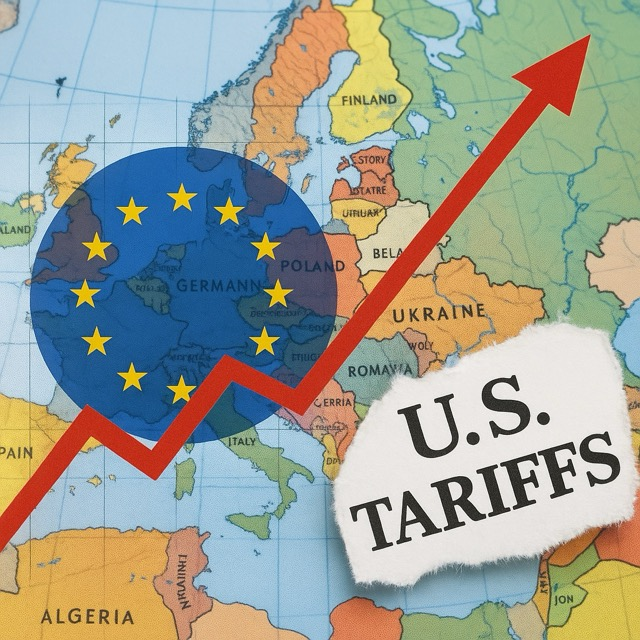
Despite mounting trade tensions and looming tariff threats from the United States, the European economy is demonstrating unexpected strength. Eurozone growth figures for the second quarter of 2025 reveal a steady uptick in output, bolstered by surging exports, robust industrial production, and renewed consumer confidence across major EU economies.
Brussels Pushes Forward
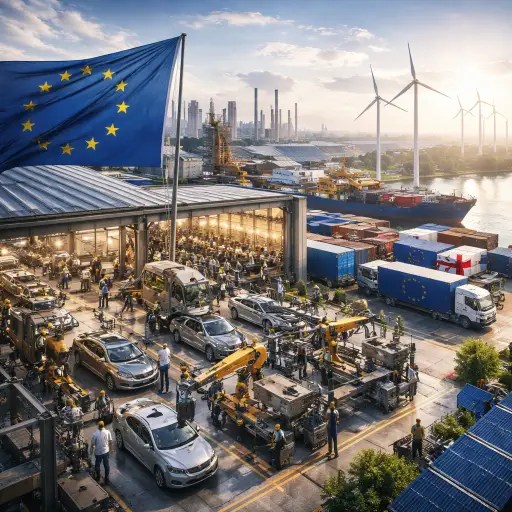
At the center of the momentum is Germany, whose manufacturing sector showed a 1.8% expansion, followed closely by France and the Netherlands. Economists had forecast a slowdown following Washington’s warning earlier this year of a potential 10% blanket tariff on European imports, but the figures tell a different story.
“This is a message of resilience,” said Paolo Gentiloni, EU Commissioner for the Economy. “The fundamentals are strong, and our internal demand continues to drive investment and innovation.”
The European Central Bank (ECB) has maintained its cautious optimism, holding interest rates steady while signaling further support if geopolitical risks translate into tangible slowdowns.
U.S. Trade Threats Unnerving but Not Deterring
In April, the U.S. administration—seeking to rebalance its trade deficit—announced a review of tariff structures targeting European vehicles, pharmaceuticals, and agricultural goods. While no formal implementation date has been set, the 10% tariff proposal remains on the table, unsettling markets and policymakers alike.
European leaders have condemned the measure as “unjustified and counterproductive,” warning that a tit-for-tat escalation could harm both sides of the Atlantic. Nonetheless, European exporters have been pivoting toward alternative markets, particularly in Asia and Latin America, to hedge against potential U.S. restrictions.
Market Resilience and Strategic Shifts
Stock indices across Europe have remained buoyant. The EURO STOXX 50 gained 2.5% in June, with analysts attributing the uptick to strong earnings reports and reduced fears of a recession. Automotive giants like Volkswagen and Stellantis reported double-digit growth in EV sales to Asia and the Middle East, offsetting concerns about U.S. exposure.
Simultaneously, EU firms have been accelerating supply chain diversification. “We’re learning from past crises,” noted Clara Huber, an analyst at Deutsche Bank. “The European response has been both strategic and swift—protecting key sectors while enhancing trade resilience.”
Public Sentiment and Political Unity
Public opinion has also tilted in favor of a firmer European stance. A recent Eurobarometer survey showed 64% of EU citizens support countermeasures if the U.S. proceeds with its tariff plan. This groundswell of support has reinforced unity among EU member states, often divided on economic strategy.
European Parliament President Roberta Metsola stressed the need for “strength through solidarity,” warning that appeasement could lead to long-term economic vulnerability.
Looking Ahead
While uncertainties remain, particularly ahead of the U.S. presidential election cycle, European policymakers insist the bloc is ready for whatever comes next. Trade negotiations between Brussels and Washington are ongoing, with EU diplomats hopeful that economic pragmatism will prevail.
For now, Europe’s economic engine keeps humming—fueled by diversification, adaptability, and a collective resolve to weather external shocks.
Conclusion
In the face of American tariff threats, Europe has chosen not to retreat but to adapt and grow. The coming months may test this resilience further, but for now, the continent appears to be powering forward—undaunted, unified, and determined to shape its own economic destiny.


 The Tower Post