The EU is just a few years away from deploying artificial intelligence-powered fighter jets, reshaping the future of aerial warfare
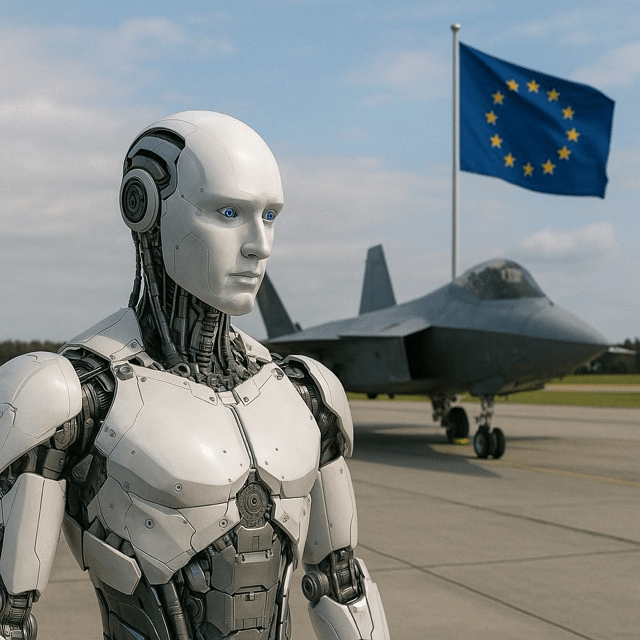
AI Fighter Jets: Europe Nears the Age of Uncrewed Combat Missions
The EU is just a few years away from deploying artificial intelligence-powered fighter jets, reshaping the future of aerial warfare
Europe is on the brink of a technological revolution in aerial defense as the EU moves closer to operationalizing AI-powered fighter jets. According to defense insiders and EU military officials, the continent could see the deployment of fully autonomous or remotely piloted combat aircraft within the next five to seven years.
This development marks a critical milestone in the evolution of modern warfare, where artificial intelligence not only assists human pilots but may soon fly, fight, and survive in combat zones independently. These uncrewed aircraft systems (UCAS) are designed to execute high-risk missions, including reconnaissance, electronic warfare, and air-to-air combat, all without putting human pilots in harm’s way.
The cornerstone of the EU’s ambitions is the Future Combat Air System (FCAS), a joint initiative led by France, Germany, and Spain. The program aims to develop next-generation air superiority platforms, integrating AI, advanced sensors, and swarming drone capabilities. Airbus and Dassault Aviation, the two aerospace giants behind the project, have confirmed that AI autonomy is central to their research and development roadmap.
“We are not talking about replacing human judgment, but enhancing decision-making in milliseconds,” said a senior engineer at Airbus Defence. “AI allows for faster reaction, optimized performance, and safer execution of dangerous missions.”
The potential benefits are vast. Uncrewed jets can perform longer missions without fatigue, maneuver more aggressively without the limitations of human physiology, and coordinate as intelligent swarms — tactics that could redefine air dominance.
Yet the emergence of AI-driven air combat raises pressing ethical and legal questions. Who is accountable for decisions made by autonomous systems in lethal scenarios? What safeguards ensure AI behaves as intended in the fog of war? The EU has pledged to adhere to international humanitarian law, but defense analysts warn that norms may be tested as technological capabilities outpace policy frameworks.
Security experts also stress the geopolitical ramifications. As China and the United States advance their own UCAS programs, Europe’s accelerated efforts aim to maintain parity in the global power structure. “It’s a matter of strategic autonomy,” said a NATO official. “Europe cannot afford to be technologically dependent in future conflicts.”
The skies above the battlefield are changing fast. As Europe prepares to launch the next generation of uncrewed combat aircraft, one thing is clear: the fusion of AI and aerial warfare is no longer science fiction, but imminent reality.




 The Tower Post