Spain’s Prime Minister battles political turmoil, judicial pressure, and coalition fractures amid corruption probe
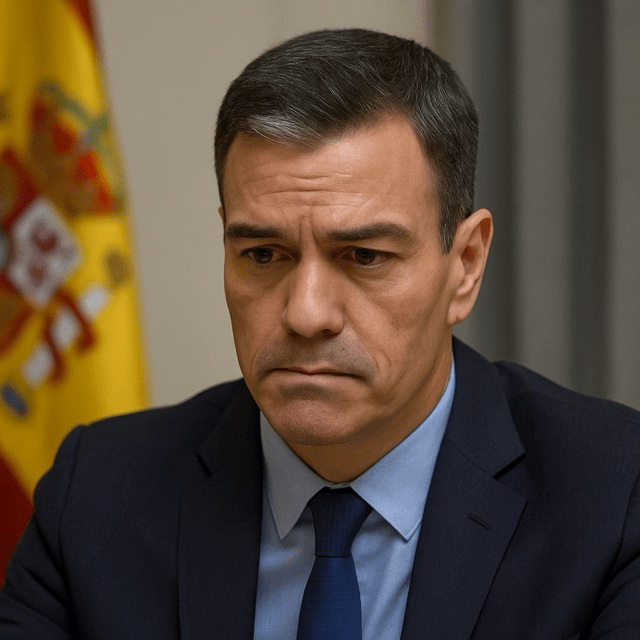
Pedro Sánchez Confronts the Deepest Crisis of His Premiership
Spain’s Prime Minister battles political turmoil, judicial pressure, and coalition fractures amid corruption probe
Madrid — Spanish Prime Minister Pedro Sánchez is facing the most perilous moment of his political career as his government reels from a corruption scandal that has engulfed close allies, strained the ruling coalition, and sparked widespread public disillusionment.
At the heart of the storm is an investigation involving alleged misuse of public funds, influence peddling, and illegal lobbying tied to senior figures in Sánchez’s Socialist Party (PSOE) and its regional affiliates. Though the Prime Minister himself has not been directly implicated, the crisis has shaken the foundations of his administration, calling into question his political judgment and authority.
“This is a credibility crisis,” said Carlos Echevarría, a professor of political science at the University of Valladolid. “It’s not just about corruption. It’s about whether Sánchez can continue to lead a fragmented coalition while defending institutional integrity.”
The scandal comes at a time of mounting tension within the governing alliance between the PSOE and the left-wing Sumar party. Sumar leaders have voiced concern over transparency and accountability, pressuring Sánchez to make firmer commitments to political reform — demands that risk destabilizing an already delicate parliamentary balance.
Meanwhile, Spain’s conservative opposition, led by the Popular Party (PP), has seized on the opportunity to launch a barrage of attacks in parliament, demanding Sánchez resign or call early elections. “Spain deserves a government free from the shadows of corruption,” PP leader Alberto Núñez Feijóo declared during a heated debate.
Public sentiment has also turned. A recent poll by CIS (Centro de Investigaciones Sociológicas) found trust in the Sánchez government has plummeted, with 62% of respondents expressing dissatisfaction with its handling of the scandal. Demonstrations have erupted in major cities, including Madrid and Barcelona, calling for resignations and institutional reform.
In a televised address to the nation, Sánchez acknowledged the gravity of the crisis but vowed to remain in office. “We are facing a difficult moment, but we must confront it with transparency, justice, and the courage to defend democracy,” he said. He also pledged to support ongoing judicial investigations, promising “full cooperation, wherever the facts may lead.”
Despite this pledge, judicial authorities have signaled that the probe could extend to higher levels of the administration. Spain’s National Court is reportedly reviewing contracts and communications involving officials in multiple ministries, deepening the sense of uncertainty within government circles.
Observers say Sánchez’s ability to navigate the storm will depend on his capacity to maintain coalition unity while demonstrating credible leadership. “If he can clean house and push forward anti-corruption reforms, he might survive,” said Cristina de Toro, a veteran political analyst. “But if more names surface, the pressure could become unsustainable.”
As Spain braces for a turbulent political season, one thing is clear: Pedro Sánchez is now fighting not just for his premiership, but for the future direction of Spanish democracy itself.
 The Tower Post