Industry leaders warn new tariff plan could raise costs for consumers and damage U.S. export competitiveness
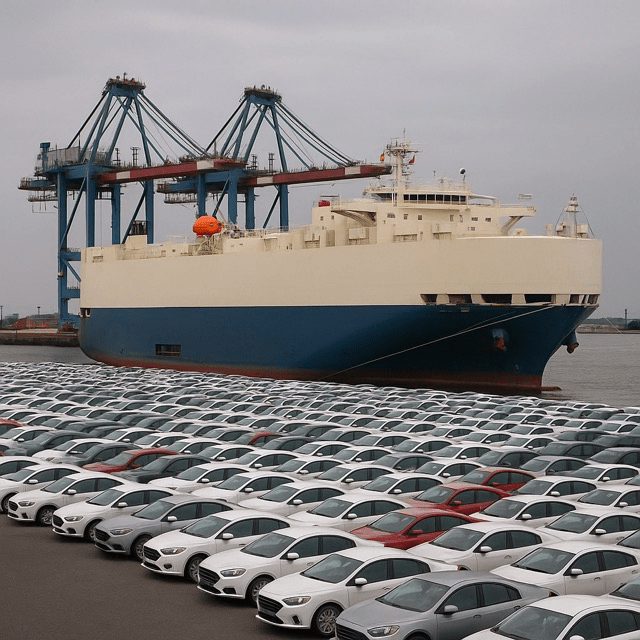
Trump’s Proposed Port Fee Sparks Outcry from Carmakers and Shipowners
Industry leaders warn new tariff plan could raise costs for consumers and damage U.S. export competitiveness
Washington — Former President Donald Trump’s proposal to impose a new port fee on all foreign-made goods arriving in U.S. ports has triggered an immediate backlash from major U.S. carmakers and maritime transport companies, who say the measure would ultimately punish American consumers and exporters alike.
Under the plan, a port entry fee of up to 10% would be levied on goods entering the country from overseas, a move Trump argues is essential to protect domestic manufacturing and reduce America’s trade deficit. “Foreign nations have been taking advantage of us for decades,” Trump said at a recent campaign rally. “It’s time we put America first — especially at our ports.”
But industry leaders are warning that the proposed policy could backfire. Auto manufacturers and shipping firms say the tariff would increase the cost of imported parts, disrupt supply chains, and reduce the global competitiveness of American-made products.
“This proposal is a direct hit to American manufacturing,” said Julie Mason, spokesperson for the American Automotive Coalition. “Many of our vehicles rely on global supply chains. If ports are taxed, prices will rise — not just for cars, but for appliances, electronics, and everyday goods.”
U.S. shipowners, who transport billions of dollars in goods through ports in New Jersey, Los Angeles, and Savannah, argue the fee would add logistical headaches and jeopardize export contracts. “This isn’t a tax on China or Europe — it’s a tax on trade,” said James Peterson, president of the U.S. Maritime Alliance. “The real losers will be American farmers, factory workers, and consumers.”
Economists have also weighed in. According to a study by the Peterson Institute for International Economics, the proposed fee could lead to a 3% to 5% increase in consumer prices across a range of imported and domestically assembled goods. The automotive sector, which already faces inflationary pressures, would be particularly vulnerable.
The backlash comes amid a broader debate about protectionism and global trade. Trump has long championed tariffs and border taxes as tools to revitalize U.S. industry, but critics argue such measures often have unintended consequences.
“In theory, you’re punishing foreign producers,” said trade economist Linda Cho. “In practice, you’re raising costs for American businesses and households.”
Political reaction has been mixed. Some Republican lawmakers have backed the measure, calling it a “bold move” to restore U.S. industrial power. Others, particularly from port-heavy states, have expressed concern. Senator John Cornyn of Texas said, “We need fair trade, not self-inflicted wounds.”
As the 2024 campaign heats up, the port fee debate is likely to intensify, becoming a flashpoint in the broader conversation about America’s economic direction. For now, business leaders and port operators are urging caution — and hoping policymakers listen before ships are anchored and factories slow down.




 The Tower Post