Despite far-right-led efforts, Ursula von der Leyen secures broad support in Strasbourg
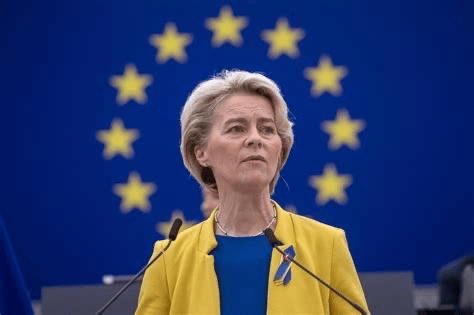
On July 10, 2025, the European Parliament in Strasbourg witnessed a dramatic vote of no confidence aimed at European Commission President Ursula von der Leyen. The motion, spearheaded by far-right and nationalist groups under the leadership of Romanian MEP Gheorghe Piperea, accused von der Leyen and her Commission of opaque decision-making and alleged misconduct during the procurement of COVID-19 vaccines. Yet, when the ballots were counted, the motion failed to secure the requisite two-thirds majority, with 175 MEPs voting in favor, 360 against, and 18 abstaining. The result not only ensured von der Leyen’s continuation in office but also underscored the fragility of Europe’s centrist alliances.
The censure motion, tabled by 77 MEPs primarily from the European Conservatives and Reformists, Patriots for Europe, and Europe of Sovereign Nations groups, was quick to rally attention. Piperea and his supporters alleged that von der Leyen had withheld crucial communications, including text messages between her office and Pfizer’s CEO, and had centralized power in Brussels at the expense of national parliaments. These accusations, echoed by some Green and Socialist MEPs, tapped into broader anxieties about democratic oversight within the EU’s sprawling bureaucracy.
Debate in the chamber was intense. Proponents of the motion highlighted what they termed “Pfizergate,” citing investigative reports that called for greater transparency. However, von der Leyen’s defenders rallied around her pandemic record, emphasizing the Commission’s role in negotiating over €2.5 billion in vaccine contracts and coordinating an equitable distribution strategy that reached all 27 member states. Manfred Weber, leader of the European People’s Party (EPP), publicly urged his group’s MEPs to oppose the motion, arguing that a successful vote would plunge the EU into unprecedented institutional turmoil.
In the lead-up to the vote, polling among MEPs painted a clear picture: von der Leyen enjoyed solid backing from the EPP, Socialists and Democrats (S&D), and Renew Europe groups. According to internal sources, some 553 of the 720 MEPs were present, ensuring a comfortable margin. Ultimately, only 175 votes were cast in favor—a tally that included several surprise yes votes from dissident EPP members and a handful of abstentions from the liberal Renew group. By contrast, 360 voted against, reflecting a cross-party consensus to maintain stability.
Political analysts view the outcome as a mixed blessing for von der Leyen. Surviving the motion allows her to proceed with her legislative agenda, including the upcoming negotiations on the EU’s 2026–2032 long-term budget and critical climate and migration reforms. Yet, the fact that the motion was tabled at all signals growing discontent, even among some centrist allies. As Nicholas Vinocur of Politico noted, the vote served as a “powerful warning” – an “absolute last chance” for von der Leyen to address concerns about transparency and democratic accountability.
Reactions in Brussels were swift. Ursula von der Leyen, addressing the press outside the Parliament chamber, described the vote as “a testament to the resilience of our European project.” She reiterated her commitment to defending the rule of law, advancing the Green Deal, and strengthening the EU’s strategic autonomy. Parliamentary Vice President Katarina Barley added that while the motion’s failure was expected, it “must not be a blank check” and urged the Commission president to engage more closely with MEPs on key dossiers.
Far-right parties, undeterred, vowed to keep pressure on the Commission. The motion’s organizers have hinted at further inquiries into alleged conflicts of interest and calls for an independent oversight mechanism for high-level EU appointments. On social media, nationalist MEPs decried the result as a demonstration of institutional “groupthink,” promising to revisit censure motions should von der Leyen stray from what they term “the will of the people.”
Despite the vociferous opposition, mainstream parties rallied to von der Leyen’s defense. The S&D group issued a statement praising her pandemic leadership and condemning attempts to weaponize parliamentary procedures for partisan gain. Renew Europe leaders pointed to recent achievements, such as the EU–UK post-Brexit trade agreement and accelerated digital transformation initiatives, as evidence of effective Commission governance.
This episode marks only the second time in a decade that a Commission president faced such a motion—the first being Jean-Claude Juncker in 2014, who also survived. Experts caution that while no-confidence votes are rare, they have become easier to propose: just 72 MEPs are needed to trigger one. That procedural accessibility, combined with escalating distrust toward Brussels, means that von der Leyen will likely confront additional challenges during her second term.
Looking ahead, the Commission president’s immediate priorities include finalizing the Recovery and Resilience Facility allocations for member states still rebuilding after the COVID-19 crisis, advancing the deforestation-free products regulation, and negotiating the EU’s stance on reforming the World Trade Organization. How she navigates the balance between bold policy initiatives and parliamentary scrutiny may determine her political capital in the months to come.
As MEPs departed Strasbourg, the vote’s aftershocks were palpable. Von der Leyen’s survival cements her position, yet the underlying fissures in the Parliament suggest that unity in the face of external challenges may not extend to internal dissent. For Europe’s top bureaucrat, the message is clear: she has won the battle, but the war for credibility and cohesion in a polarized Parliament is far from over.




 The Tower Post