Historic financial commitment aims to accelerate reconstruction efforts after years of conflict.
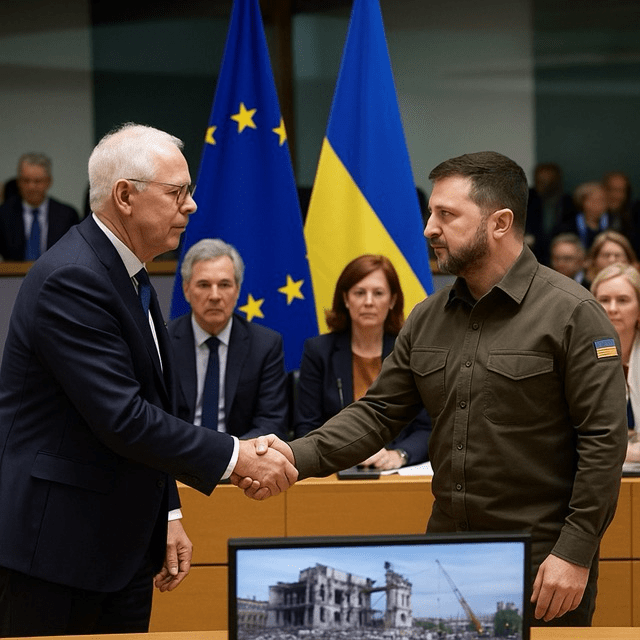
At a landmark gathering in the Eternal City on July 10, 2025, leaders from across the European Union convened in Rome for the long-awaited Summit on Ukraine Reconstruction. Against a backdrop of crumbling infrastructure and ongoing humanitarian needs, the summit resulted in a historic €10 billion pledge, marking one of the largest European financial commitments in recent memory. The funds are earmarked for critical infrastructure restoration, housing rehabilitation, and the revitalization of key economic sectors in Ukraine.
President Ursula von der Leyen, speaking on behalf of the European Commission, hailed the pledge as a “turning point” in Europe’s unified response to the crisis. “This is not just about rebuilding roads and bridges,” she emphasized. “It is about restoring hope, dignity, and the prospect of a peaceful future for the Ukrainian people.” The commitment underscores the EU’s determination to support Ukraine’s sovereignty and territorial integrity in the face of sustained aggression from Russia.
Infrastructure experts estimate that the €10 billion will be allocated over the next three years, with an initial disbursement of €4 billion expected before the end of 2025. Priority will be given to rebuilding critical transport corridors in the eastern regions, many of which have suffered extensive damage from artillery shelling. Projects include the reconstruction of the Kharkiv rail network and the restoration of the Donbas highway, both vital for connecting local communities to broader economic markets.
Housing rehabilitation also featured prominently in the summit’s agenda. Ukrainian officials presented harrowing accounts of families living in makeshift shelters, with over 1.5 million homes damaged or destroyed since the onset of the conflict. The EU funds will support the construction of at least 200,000 temporary and permanent housing units, incorporating modern energy-efficient designs. This initiative aims to address immediate shelter needs while promoting sustainable building practices that can withstand future crises.
Economists at the summit outlined plans to bolster Ukraine’s agriculture and manufacturing sectors, which form the backbone of the national economy. Dedicated grants will finance the replacement of damaged farming equipment, the renewal of irrigation systems in the south, and the modernization of processing facilities. Simultaneously, the EU’s European Investment Bank will provide low-interest loans and technical assistance to Ukrainian small and medium-sized enterprises (SMEs), fostering job creation and stimulating local economies.
The summit also featured a high-level panel on governance and anti-corruption measures. With transparency identified as crucial for effective aid delivery, the EU and Ukraine agreed to establish an independent monitoring body. Chaired by a rotating group of EU commissioners and Ukrainian civil society leaders, the body will audit fund allocations, track project progress, and publish quarterly reports to ensure accountability and public confidence.
While celebratory in tone, the summit was not without its tensions. Some member states, notably Hungary and Slovakia, voiced concerns about the scale of financial exposure and potential risks of fiscal mismanagement. Diplomatic sources reveal that these objections were addressed through the summit’s carefully structured oversight mechanisms and conditional disbursement schedules. To secure unanimous support, the clause requiring periodic review of progress benchmarks and the possibility of reallocating resources for underperforming projects was introduced.
Ukrainian President Volodymyr Zelenskyy, present via video link, expressed profound gratitude and underscored the symbolic significance of the EU’s solidarity. He reiterated his administration’s commitment to rigorous governance standards and invited international observers to participate in the oversight body. “This funding,” Zelenskyy stated, “is proof that Europe stands with Ukraine, not only in words, but in deeds. We will honor this trust and ensure that every euro transforms lives.”
Civil society organizations celebrated the summit’s outcome, while also cautioning that implementation will be the true test of Europe’s resolve. NGOs working on the ground stressed the need for swift disbursement of funds and the inclusion of local communities in decision-making processes. “Reconstruction must be participatory,” said Maria Ivanova of the Ukrainian Reconstruction Forum. “Meaningful engagement with residents will guarantee that projects address real needs and foster long-term resilience.”
As the summit concluded beneath the Roman skyline, delegates departed with cautious optimism. The pledge of €10 billion signals a reinvigorated phase of support for Ukraine, one that extends beyond military aid and diplomatic backing to tangible reconstruction efforts. The coming months will reveal whether this financial commitment can catalyze the rebuilding of a nation scarred by war, and whether Europe’s united front will endure the challenges ahead.

 The Tower Post