Soaring spreads and robust demand position firms for record returns on metal shipped into America
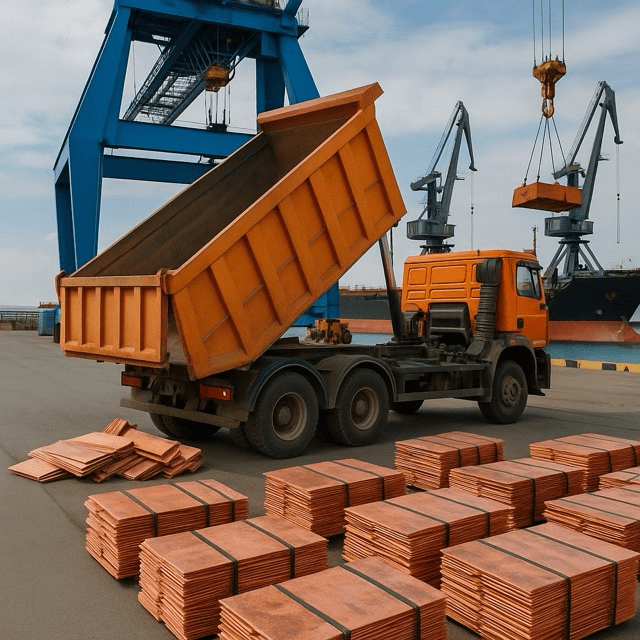
Commodity trading houses stand to pocket extraordinary gains exceeding $300 million this year on copper shipped into the United States, according to industry analysts. A confluence of factors — from narrow physical premiums and widening futures spreads to resurgent consumer demand — has created an unusually profitable window for firms dealing in the red metal.
At the heart of this profit bonanza is the structure of the copper futures curve. With near-term contract prices trading at a discount to later-dated contracts, traders can purchase physical metal at lower spot rates while locking in higher forward prices for future delivery. “This contango scenario offers arbitrage opportunities that are unprecedented in recent memory,” said Maria Chen, a base metals strategist at GlobalMarkets Research.
Physical premiums — the additional cost charged by warehouses and leasing centers — have also collapsed in key hubs like New York’s Commodity Exchange (COMEX) and warehouses servicing major US ports. Lower storage and financing costs have trimmed expenses for traders, enabling them to capture the full margin between purchase and sale contracts.
Meanwhile, US copper demand has bounced back strongly post-pandemic. Infrastructure spending under the Bipartisan Infrastructure Law, together with a rebound in manufacturing and renewable energy projects, has propelled consumption. The latest data from the US Geological Survey shows a 7% year-on-year increase in refined copper usage through the first half of 2025.
Large commodity firms have ramped up imports from major producers such as Chile, Peru, and Indonesia, leveraging long-term offtake agreements to secure supply. By coordinating shipments to coincide with favorable futures spreads, they maximize returns on each ton landed on US shores.
Trade blurred by geopolitics has further amplified margins. Disruptions in alternative supply routes — notably constraints on Russian copper exports following Western sanctions — have tightened the global market, pushing premiums in other regions higher while US premiums lag. “Traders are effectively arbitraging regional dislocations to their advantage,” noted Chen.
Some firms have hedged transport and currency risks via forward freight agreements and currency swaps, protecting gains from slippage. The interplay of derivatives and physical trading has transformed what was a modest commodities play into a multi-hundred-million-dollar profit center.
However, this windfall is not without risks. A sudden flattening of the futures curve, spikes in storage costs, or a slowdown in US industrial demand could erode margins rapidly. Moreover, increased scrutiny from regulators wary of market manipulation may prompt closer monitoring of warehouse stocks and trading positions.
Industry veterans caution that the current window may close as exchanges adjust margin requirements or as participants recalibrate hedging strategies. “These pockets of profit rarely last more than a few quarters,” said James Morales, head of base metals trading at Citadel Commodities. “Firms are racing to extract as much value as possible before the market normalizes.”
As the second half of the year unfolds, copper traders will be closely monitoring US economic data, futures curve dynamics, and global supply disruptions. With more than $300 million potentially on the table, the stakes are high — and the next moves by market makers could set the tone for base metals trading in 2026.




 The Tower Post