France and Germany refuse entry over missing birthplace information in Uruguay’s new passports
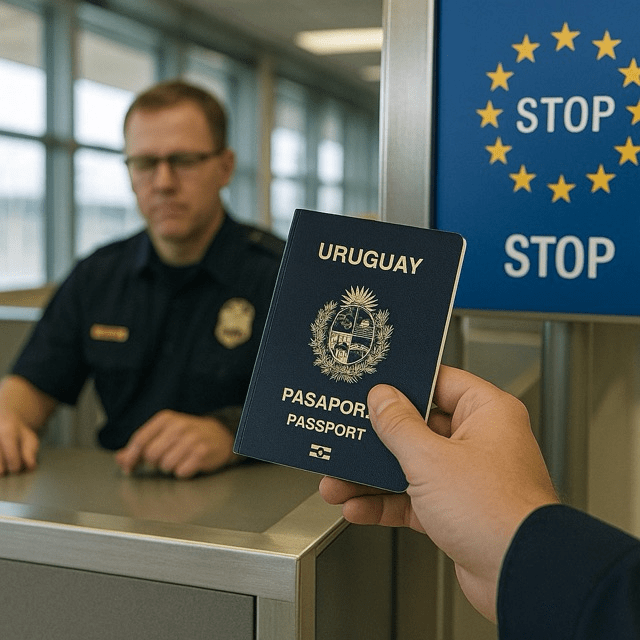
In a move hailed domestically as a modernization effort, Uruguay began issuing new biometric passports earlier this year—unfortunately omitting a seemingly innocuous data point: the holder’s place of birth. While Uruguay’s civil registry and older green passport models include this detail, the sleek burgundy booklets issued since March list only nationality and date of birth. Now, Paris and Berlin are pushing back, denying entry to travelers whose documents lack the contested field.
The dispute first surfaced in late May when Uruguayans traveling through CDG airport reported secondary screening and, in some cases, refused boarding. French border officials informed carriers that passports without a birthplace entry did not meet the requirements outlined in the 2006 EU Regulation on security features for passports. Germany soon followed suit at Frankfurt and Munich airports, applying the same rule in defiance of Montevideo’s assurances of compliance with international standards.
“I’ve traveled with my new passport to Brazil and Argentina without issue,” said María Fernanda López, one of several travelers stranded in Paris. “But when I tried to board for Madrid, they told me my passport was invalid. It’s baffling.” López and her fellow passengers were forced to reschedule flights and procure emergency travel documents, some at considerable personal expense.
Uruguayan Foreign Minister Diego Pérez Díaz expressed dismay at the sudden bureaucratic roadblocks. In a statement released from Montevideo, he noted: “Our passports fully comply with ICAO [International Civil Aviation Organization] guidelines. The absence of place of birth does not compromise security or identity verification. We are engaging with our European partners to clarify and resolve this matter urgently.”
Experts point to differing interpretations of the ICAO’s Document 9303, which sets machine-readable passport standards. While the global directive recommends—but does not mandate—inclusion of birthplace, certain EU member states have codified stricter requirements into national law. “France and Germany maintain a literal stance,” explained Dr. Elena Verdi, a specialist in international travel regulations at the University of Turin. “Until Uruguay amends its template or secures an exemption, travelers will face continued delays.”
Airlines caught in the middle are grappling with liability concerns. Carriers risk fines for transporting passengers with allegedly non-compliant documents. At least two Uruguayan airlines have started issuing formal advisories, urging customers holding the new passports to obtain a certificate of nationality or carry older passports as backup when traveling to Schengen countries.
Uruguay’s passport office insists that adding birthplace fields requires a software update to the new electronic chip infrastructure—an undertaking expected to take three to four months. Meanwhile, Montevideo is negotiating a temporary waiver with EU authorities. Government sources indicate that a joint technical working group will convene next week to draft a provisional solution, potentially allowing travelers to present an apostilled civil registry extract.
The diplomatic friction underscores broader tensions over travel document harmonization. Since Brexit, the EU has tightened passport controls and emphasized stricter border protocols. For smaller nations like Uruguay, aligning domestic reforms with the bloc’s evolving regulations poses significant challenges, both logistical and diplomatic.
For Uruguayan citizens abroad, the controversy has practical consequences. Students studying in Europe report difficulty renewing visas, while business executives face setbacks attending conferences. “It’s more than an inconvenience—it affects careers and livelihoods,” noted Gonzalo Fernández, CEO of a Montevideo-based export firm. “We trust our government to ensure global mobility, but this episode shakes confidence.”
As Uruguay works to update its passport design, travelers are advised to check entry requirements and carry supplementary documents. Until a formal resolution is reached, the birthplace omission will remain a stumbling block, leaving Uruguayans navigating a complex web of international regulations—one that, ironically, is measured not by miles but by a missing line in their passports.




 The Tower Post