International partners, including U.S. envoy Kellogg, unite to tackle crisis with renewed vigor
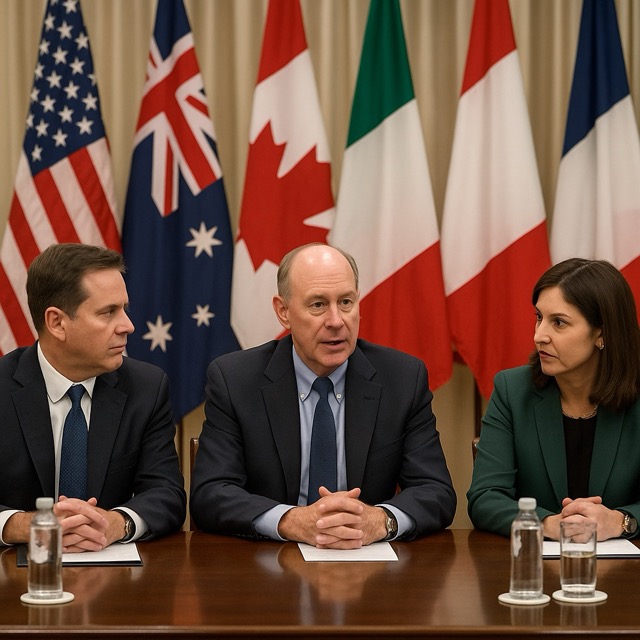
In a display of diplomatic tenacity, the long-dormant ‘Coalition of the Willing’ has been revitalized, bringing together a diverse array of nations pledging coordinated action on emerging global challenges. United States envoy Jonathan Kellogg, dispatched last month to spearhead American engagement, attended the opening session in Brussels, marking the first major gathering since the coalition’s inception over two decades ago.
Originally formed to address security threats in the early 2000s, the Coalition had gradually faded as member states pursued bilateral initiatives. However, escalating conflicts in multiple theaters—ranging from the Sahel to the South China Sea—coupled with disruptive cyber campaigns, prompted a reassessment of multilateral mechanisms. In response, coalition leaders drafted a renewed framework emphasizing rapid crisis response, intelligence sharing, and joint capacity building.
The Brussels summit saw representatives from more than 20 countries, including key European partners—France, Germany, Italy, and Poland—as well as regional stakeholders from Southeast Asia and Africa. “This coalition is not about old battles; it is about forging practical solutions for contemporary threats,” declared Belgian Foreign Minister Isabelle Dubois in her keynote address.
Envoy Kellogg, who took up his post in June, underscored the United States’ commitment to collective security. “We recognize that no nation can navigate these complex challenges alone,” Kellogg told reporters. “By pooling our resources and expertise, we can deliver faster, more effective responses to crises—be they humanitarian, cyber, or conventional conflicts.”
A central pillar of the coalition’s renewed charter is the establishment of a Joint Operations Task Force (JOTF), designed to coordinate real-time information exchange and streamline decision-making in emergencies. The JOTF will leverage advanced data platforms and satellite surveillance to provide member states with up-to-the-minute situational awareness.
In addition, the coalition announced an ambitious training initiative, codenamed Operation Vanguard Shield, which will deploy multinational advisory teams to vulnerable regions. The first deployments are slated for the Horn of Africa later this year, where insurgent activity and climate-driven displacement have fueled instability.
Economic and development partners also feature prominently in the coalition’s agenda. The International Development Bank has pledged $150 million to support infrastructure resilience in coalition-identified hotspots, while the World Health Organization will coordinate medical response protocols under the coalition health arm.
Despite the optimism, challenges lie ahead. Some member states voiced concerns over legal mandates for intervention, budgetary allocations, and the balance between military and soft-power tools. Debates over the coalition’s scope—the extent to which it should engage in kinetic operations versus diplomatic and humanitarian efforts—are expected to continue in follow-up working groups.
Analysts caution that sustaining momentum will require clear success stories. “Coalitions thrive on results,” noted Dr. Amina Sharif, a security studies expert at King’s College London. “Early wins in joint training exercises and rapid disaster relief deployments will be crucial to maintaining political will and public support.”
As delegates prepare for the coalition’s next meeting in Singapore this November, all eyes will be on the Joint Operations Task Force pilot tests and initial field missions. With U.S. envoy Kellogg and his counterparts at the helm, the Coalition of the Willing aims to demonstrate that multilateral action can still deliver where unilateral efforts fall short.



 The Tower Post