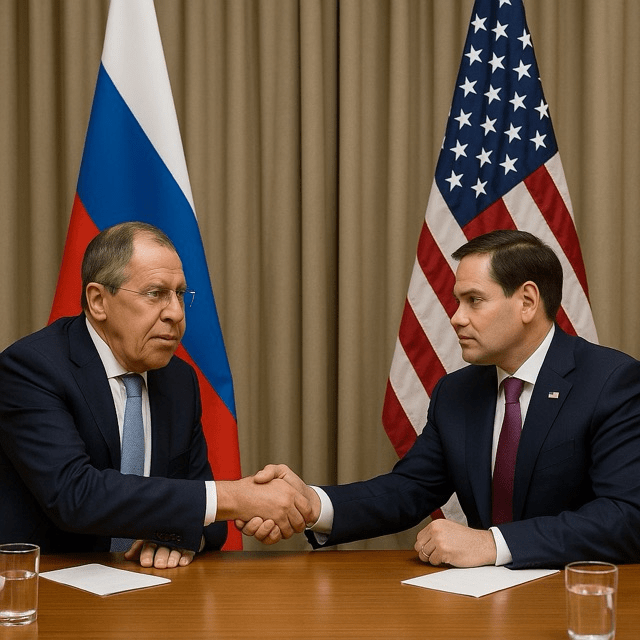
July 10 summit aims to navigate U.S.-Russia tensions amid global crises

On July 10, Russian Foreign Minister Sergei Lavrov and U.S. Senator Marco Rubio convened in Geneva for high-stakes discussions against a backdrop of strained bilateral relations. The meeting, brokered through multilateral channels, represented the first direct engagement between senior Russian and U.S. officials in over a year. Held in a neutral setting at the Palais des Nations, the session focused on de-escalation measures, regional conflicts, and pathways to resume stalled diplomatic dialogues.
Senator Rubio, acting in his capacity as a special envoy appointed by the U.S. Senate Foreign Relations Committee, emphasized the importance of addressing Russian activities in Ukraine and Syria. In his opening remarks, Rubio reiterated U.S. commitment to NATO allies and underscored concerns over ongoing military buildups along Ukraine’s eastern front. “We seek clarity on intentions and assurances that Russia will respect sovereign borders,” he stated, pressing Lavrov for concrete steps toward ceasefire reinforcement and humanitarian access.
Lavrov, known for his seasoned negotiation tactics, responded by outlining Moscow’s security demands, notably the lifting of sanctions targeting key Russian industries and a halt to Western arms deliveries to Ukraine. He also raised the issue of U.S. drone operations in Syria and Afghanistan, urging Washington to cooperate on counterterrorism initiatives. “Dialogue, not confrontation, must guide our actions,” Lavrov asserted, advocating for a reciprocal approach to sanctions relief tied to mutual security commitments.
Following their one-on-one session, Lavrov and Rubio convened a broader working group that included senior aides and legal advisors. Discussions ranged from proposed confidence-building measures—such as mutual inspections at strategic military sites—to pathways for extending the New START nuclear arms reduction treaty beyond its current expiration in 2026. Participants described a candid atmosphere, acknowledging deep-seated mistrust but expressing cautious optimism about incremental progress.
Observers noted that the timing of the meeting was significant: coinciding with shifting power dynamics in the Middle East, the resurgence of great-power competition in the Asia-Pacific, and an impending G20 summit later this month. Both sides recognize that unresolved U.S.–Russia tensions complicate international cooperation on climate change, nonproliferation, and global public health challenges. By reopening communication channels, Lavrov and Rubio aimed to set the stage for broader negotiations at ministerial level.
Critics on Capitol Hill remain skeptical, warning that engagement without preconditions risks legitimizing Russian aggression. Senator Lindsey Graham (R-SC) commented, “Talking is fine, but we cannot reward bad behavior with diplomatic recognition.” Conversely, some European diplomats applauded the initiative, arguing that dialogue—even if limited—helps avert unintended escalations and builds mechanisms to manage crisis flashpoints.
The Geneva talks concluded with a joint communiqué outlining areas of agreement on narrow security measures and a commitment to reconvene before the end of August. A pledge to establish a hotline between the Russian Foreign Ministry and the U.S. Senate Foreign Relations Committee was highlighted as a tangible step to facilitate rapid communication during emergencies.
As news of the Lavrov-Rubio meeting reverberated through global capitals, analysts hailed it as a cautious but necessary recalibration of U.S.–Russia relations. While comprehensive breakthroughs remained elusive, the engagement demonstrated that even amid profound disagreements, both sides see value in maintaining diplomatic avenues. “Incremental dialogue is preferable to dangerous silences,” said Madeleine Albright, former U.S. Secretary of State.
Looking ahead, stakeholders will watch closely whether the July 10 summit paves the way for a ministerial meeting in New York during the UN General Assembly or a follow-up session in Moscow. The durability of any progress hinges on follow-through and the political will to balance pressure tactics with pragmatic cooperation.
Ultimately, the Lavrov-Rubio encounter underscored a fundamental truth of international diplomacy: even adversaries must keep talking. In an era of multifaceted global challenges, the corridors of Geneva provided a rare, if fragile, bridge between two of the world’s most powerful capitals.

 The Tower Post