Speeding Up Healing and Reducing Infections
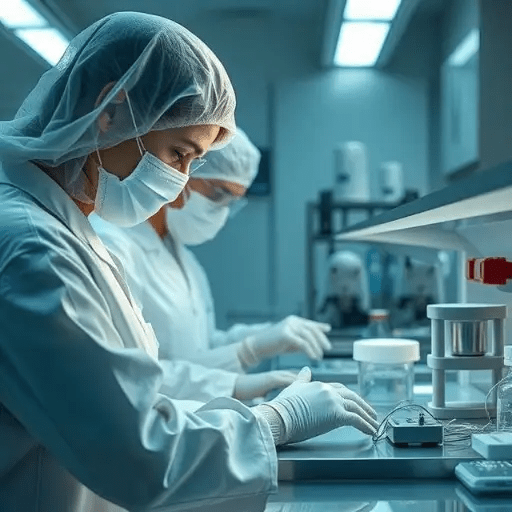
In a remarkable feat of innovation driven by the ongoing war, researchers at Tel Aviv University and Sheba Medical Center have developed a groundbreaking bioengineered skin that holds the potential to revolutionize the treatment of severe burn injuries.
This artificial skin, created entirely from a patient’s own cells, is a game-changer in the field of burn care. It is stable, easy to handle, and flexible, with the ability to double the healing speed for skin grafting and significantly reduce the risk of infections. The technology is based on a production method called electrospinning, which creates a nanofiber scaffold resembling a web-like net.
The key innovation lies in the design of the scaffold, which incorporates a specific sequence of amino acid-based peptides modeled on the human body. This allows cells to attach properly and regenerate the skin effectively, promoting cell growth and adhesion. In preclinical trials on mouse models, the results were remarkable, with better scarring, functional skin, and the growth of hair follicles – a crucial indicator of successful skin regeneration.
“The design of the scaffold with the peptide is the novelty of this project,” said Prof. Lihi Adler-Abramovich, a lead researcher on the study from TAU’s Laboratory for Bio-Inspired Materials and Nanotechnology. “It allows cells to attach properly and regenerate the skin effectively, promoting cell growth and adhesion.”
The artificial skin is made up of several layers, each with its own unique properties:
Epidermal layer: This outermost layer is composed of a thin, flexible membrane that mimics the natural skin’s barrier function, preventing water loss and protecting against external factors.
Dermis layer: This layer is made up of a network of nanofibers that provide structural support and facilitate cell growth.
Hypodermis layer: This innermost layer is composed of a soft, gel-like material that helps to absorb shock and reduce the risk of scarring.
The artificial skin is also designed to be highly adaptable, allowing it to conform to the shape and contours of the patient’s body. This is achieved through the use of a unique combination of materials and manufacturing techniques, including electrospinning, 3D printing, and bioactive peptide incorporation.
While the researchers have filed a patent on the scaffold and are planning further experiments on large animals and clinical studies on humans, the collaboration between the TAU and Sheba Medical Center teams has already yielded remarkable results. As Adler-Abramovich noted, “The collaboration between the researchers is amazing. It’s really exciting. We’ll continue to work together and hopefully make the skin even better.”
The potential applications of this technology go beyond burn treatment, with possible uses in:
Wound care: Artificial skin could be used to treat chronic wounds, such as diabetic foot ulcers or pressure sores.
Skin reconstruction: The technology could be used to create artificial skin for reconstructive surgery, allowing for more precise and customized results.
Cosmetic applications: Artificial skin could be used in cosmetic procedures, such as facial rejuvenation or scar revision.




 The Tower Post