Building a Central Stock Market to Attract Global Investors and Strengthen the Eurozone
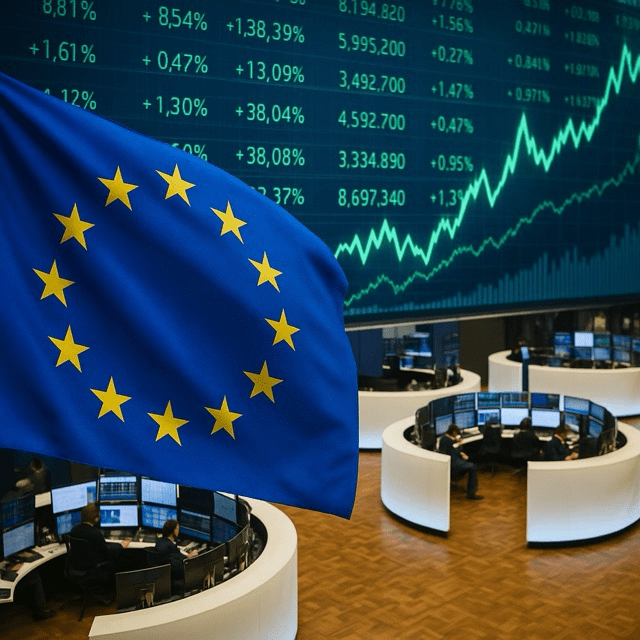
As global investors reassess risk amid growing concerns over US monetary policy, a significant wave of capital is seeking new destinations. European policymakers now face a pivotal question: should the European Union spearhead the creation of a single, pan-European stock exchange capable of drawing capital flows away from American markets? Proponents argue that such a bourse would not only bolster the EU’s financial sovereignty but also stimulate deeper economic integration across member states.
Currently, Europe’s equity trading landscape is fragmented. Key markets—London, Frankfurt, Paris, and Madrid—operate under separate regulatory frameworks and technological infrastructures. This splintering raises costs for cross-border listings and constrains liquidity, making it harder for European companies to compete globally. In contrast, the United States benefits from a unified, liquid market that offers scale and simplicity to issuers and investors alike.
Calls for consolidation have grown louder since the Federal Reserve signaled potential interest rate hikes, prompting a reversal of yield-seeking capital toward US-denominated assets. European Central Bank data shows a net outflow of €50 billion from European equity funds in the first quarter of 2025. Economists warn that without a compelling alternative, this trend could undermine the EU’s growth prospects and weaken the euro’s standing as a reserve currency.
A central stock exchange could address these challenges. By harmonizing listing requirements, unifying trading platforms, and enforcing common corporate governance standards, the EU could create a seamless marketplace. Companies would gain access to a broader investor base, while fund managers would benefit from enhanced liquidity and reduced transaction costs. Moreover, a unified exchange could launch EU-wide index products, further enticing passive capital inflows.
Implementation would require overcoming political and technical hurdles. Member states would need to cede certain national competencies to a supranational entity, potentially under the auspices of the European Securities and Markets Authority (ESMA). The creation of a shared trading infrastructure would demand significant investment, likely through public–private partnerships. Ensuring fair representation and governance across diverse economies—from Germany’s manufacturing powerhouse to Greece’s smaller markets—would be paramount.
France and Germany have already taken preliminary steps toward consolidation, exploring a joint venture between Euronext and Deutsche Börse. However, achieving true pan-European scale will necessitate broader participation, including smaller exchanges in Italy, Spain, and the Nordics. The Venice Stock Exchange and the Stockholm bourse, for instance, could contribute sector specializations, while a unified entity enhances overall market depth.
From a regulatory perspective, the European Commission could incentivize migration by offering transitional relief on capital gains taxes for assets listed on the central exchange. Additionally, aligning MiFID II regulations with streamlined disclosure requirements would reduce administrative burdens. These reforms might be bundled into the Commission’s upcoming Capital Markets Union phase two package, targeting deeper financial integration.
Investor groups have welcomed the idea. The European Fund and Asset Management Association (EFAMA) argues that consolidated markets will improve price discovery and reduce fragmentation. “A true single market for equities would position Europe as a credible rival to Wall Street,” said EFAMA Director Marc Bouvier. “It’s an opportunity to enhance our economic resilience and reclaim lost ground.”
Yet skeptics caution against overestimating the benefits. They point to technological arms races and the rapid evolution of electronic trading systems. Any new exchange must match—or exceed—the performance and reliability of existing platforms. Cybersecurity, latency management, and regulatory arbitrage will all demand rigorous oversight.
Despite these concerns, momentum is building. As capital seeks safe harbors beyond US shores, Europe’s fragmented exchanges stand at a crossroads. By uniting under a single banner—a pan-European bourse—the EU could transform capital markets, support its companies, and assert financial leadership on the world stage. The question is no longer whether Europe can build such an exchange, but whether it will muster the political will to do so.




 The Tower Post