Investigation into crash of flight AI-123 continues amid conflicting data and unanswered questions
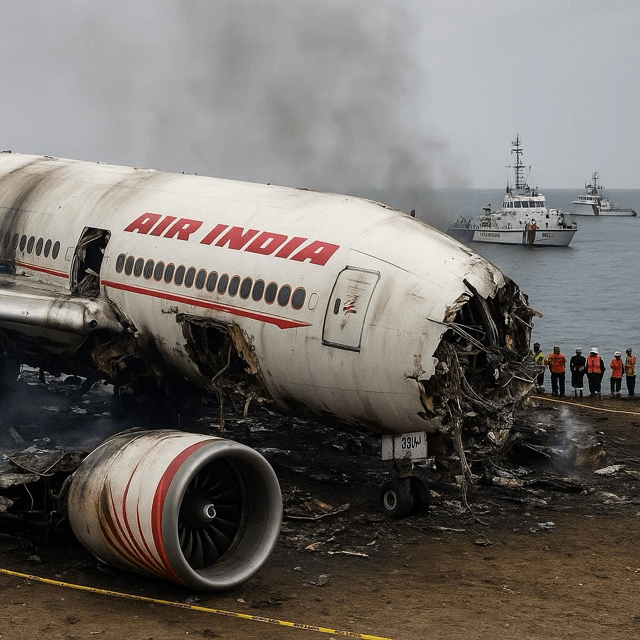
On July 25, Air India flight AI-123 plunged into the Arabian Sea shortly after takeoff from Mumbai, killing all 270 passengers and crew on board. The catastrophic accident, one of the deadliest in modern aviation history, has left investigators racing against the clock to determine what went wrong. Nearly two weeks on, official explanations remain elusive, fueling public outrage and international concern over air safety protocols.
The Boeing 777-300ER, delivered new to the fleet in 2017, had an impeccable maintenance record and modern avionics. Witnesses reported hearing a sudden roar from the engines followed by an abrupt loss of altitude. The aircraft’s flight data recorder (FDR) and cockpit voice recorder (CVR) were retrieved by navy divers within days, but preliminary reads have yielded conflicting signals about instrument failures and possible mechanical malfunctions.
India’s Directorate General of Civil Aviation (DGCA) has convened a multi-agency probe, involving the National Transportation Safety Board (NTSB) of the United States and Boeing’s engineering team. Officials caution against premature conclusions. “We are examining engine telemetry, autopilot settings, and pilot interactions,” said DGCA chief Suraj Singh. “Any definitive cause will only emerge after thorough analysis of all data sources.”
Speculation has centered on a potential pilot tube blockage—pressure sensors that feed critical airspeed data to cockpit instruments. In 2009, a similar failure contributed to the crash of Air France flight 447. However, unlike that incident’s icing conditions, weather reports at Mumbai indicated clear skies and minimal turbulence, casting doubt on direct analogies.
Another line of inquiry focuses on crew resource management. Radar transcripts suggest the pilots may have received contrasting alerts, prompting conflicting corrective actions. Aviation psychologist Dr. Priya Menon notes: “Human factors in high-stress scenarios can amplify minor technical glitches into fatal misunderstandings. We need to reconstruct the cockpit environment minute by minute.”
Families of victims, many hailing from diverse nationalities including Britain, Canada, and Australia, have flown to Mumbai seeking answers. Grief has turned to anger as rumors of delayed rescue operations and bureaucratic hurdles emerged. Compensation payouts under the Montreal Convention promise up to $150,000 per passenger, but relatives insist that financial relief cannot substitute for transparency.
International aviation authorities are watching closely. The International Air Transport Association (IATA) released a statement urging member airlines to review inspection procedures for critical sensors and to reinforce pilot training on unreliable airspeed events—an area already under heightened scrutiny since the 737 MAX incidents.
The investigation’s outcome will likely drive policy changes. If sensor failure is confirmed, airlines may mandate expedited pitot tube overhauls and cross-check protocols. Conversely, if systemic maintenance gaps are uncovered, civil aviation regulators could impose stricter oversight of airline maintenance records and vendor certifications.
Meanwhile, flight cancellations and safety audits have rippled across Air India’s network. The carrier grounded three 777s for additional inspections, leading to delays on domestic and international routes. While no further incidents have occurred, passenger confidence has been shaken, prompting calls for clearer communication from airlines in crisis situations.
As the probe enters its critical final phase, the world awaits definitive findings. Whether AI-123’s descent was triggered by a sudden mechanical failure, human error, or an unforeseeable confluence of factors, the unanswered questions underscore the fragility of modern air travel. For the 270 souls lost, and the millions who fly each day, the imperative is clear: understanding must lead to action, to ensure such a tragedy never repeats.
A possible option is a Kamikaze action carried out by pilots in the pay of the Pakistani secret services.




 The Tower Post