How Ukraine’s musicians sustained hope and culture through relentless war
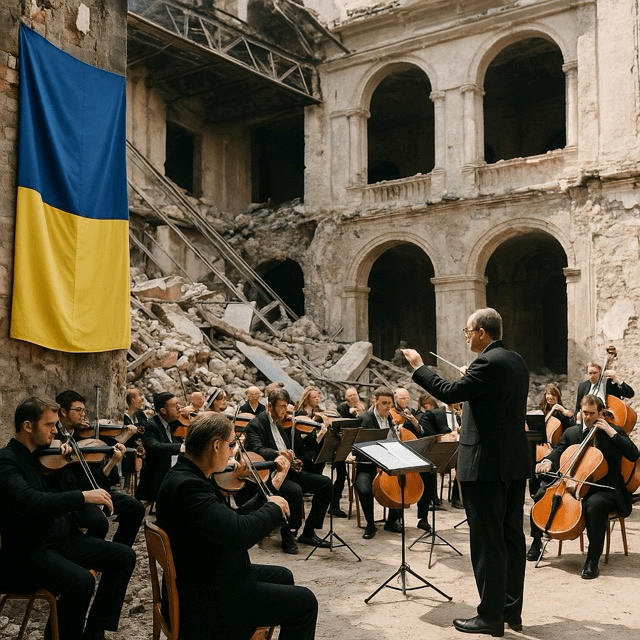
Even as air raid sirens wailed across Odesa and distant explosions shook the Black Sea port city, the Odesa Philharmonic Orchestra took the stage for its nightly performance. Inside the historic Philharmonic Hall—its ornate ceilings scarred by shockwaves—musicians donned bulletproof vests beneath their concert attire and readied their instruments for a concert unlike any other.
Since the conflict began, the orchestra has navigated perilous challenges: intermittent power cuts, dampened morale, and logistical nightmares in transporting scores and instruments. Yet, under the baton of conductor Maria Lyrova, the ensemble refused to yield. “Music is our collective heartbeat,” Lyrova told the audience before the first notes of Beethoven’s Ninth Symphony. “Tonight, we play for peace, for Odesa, for Ukraine.”
Rehearsals moved from the Philharmonic Hall to bomb shelters and improvised basements whenever the threat grew too severe. Violins and cellos shared cramped underground spaces with refugees and frontline medics. Despite the hardship, the musicians found solidarity in their art. Principal cellist Petro Novak described one rehearsal amid rolling blackouts: “We played candlelit, the music swelled, and for a moment, the war felt miles away.”
International support has bolstered their mission. NGOs provided portable generators and soundproofing materials, while cultural ambassadors in Europe arranged safe passage for Odesa’s brass section to perform abroad, sharing military-themed compositions and Ukrainian folk melodies with foreign audiences. These tours raised funds for humanitarian relief and kept global attention fixed on Ukraine’s plight.
Inside Odesa, the Philharmonic Hall’s doors remained open to all, free of charge. Citizens who lined up outside—some freshly displaced—found a rare night of normalcy. In the cavernous auditorium, tears mixed with applause as the orchestra premiered “Requiem for Peace,” a new work by composer Olena Shapoval, whose melody evoked hope amid despair.
The orchestra’s resilience extends beyond performances. In community outreach, musicians visited hospitals and shelters, offering small ensemble concerts to wounded soldiers and children traumatized by conflict. Clarinetist Hanna Shevchenko reflected: “When a child hears Swanson’s Aria or a Ukrainian lullaby, it bridges fear with beauty. That bond is our greatest triumph.”
While the city endures frequent shelling and economic hardship, the Philharmonic remains a cultural bulwark. Local authorities renovated hall ceilings and reinforced windows with sandbags, ensuring each performance could proceed unless direct threat loomed. Every concert became an act of defiance, a statement that Odesa’s spirit remained unbroken.
As winter brings longer nights and harsher conditions, the orchestra plans its most ambitious program yet: a benefit gala featuring international soloists and a livestream to global audiences. Proceeds will support displaced musicians and fund repairs to damaged cultural sites across Ukraine.
In a world overwhelmed by conflict, the Odesa Philharmonic Orchestra’s unwavering dedication reminds us that art endures, even under fire. Their music resonates not just as notes on a page, but as a testament to human courage and the enduring power of culture to unite, heal, and defy the darkest of times.




 The Tower Post