President Javier Milei pins hopes on currency strength as the Central Bank releases fresh CPI figures amid economic volatility
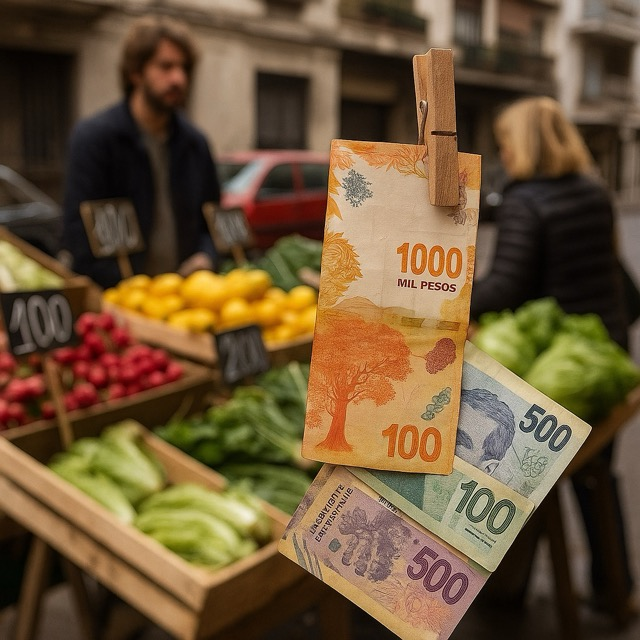
Argentina has just published its latest consumer price index (CPI), offering a stark reminder of the country’s long-running struggle with inflation. According to data released by the national statistics agency, prices climbed by 8.1 percent in June on a month-on-month basis, bringing annual inflation to a staggering 174 percent. Such figures underscore the formidable challenge confronting President Javier Milei, who has staked much of his economic programme on a stronger peso to tame runaway price growth.
Milei, a libertarian economist turned president, took office earlier this year with promises of sweeping market reforms. Central to his strategy is the restoration of confidence in Argentina’s currency. After years of heavy money printing under previous administrations, the peso has been one of the world’s worst-performing currencies. In recent weeks, however, the government’s commitment to fiscal austerity and a firmer monetary stance has led to a modest rebound in the peso’s value against the dollar.
Analysts caution that currency strength alone may prove insufficient to bring inflation under control. “A stable exchange rate can help limit imported inflation, but domestic price pressures are driven by entrenched indexation mechanisms and wage dynamics,” explained Martín Uribe, an economist at Columbia University. Argentina’s economy has for decades relied on automatic price and wage adjustments tied to past inflation, creating a self-reinforcing loop that resists conventional monetary tightening.
To break this cycle, Milei’s administration has slashed public spending by 25 percent in the last quarter and pledged to eliminate energy subsidies. The government has also accelerated interest rate hikes, with the central bank’s key rate now standing at an eye-watering 136 percent. These measures mark a sharp departure from the politically driven interventions of the past but carry significant economic and social costs, including a deepening recession and rising unemployment.
June’s CPI report highlights the uneven impact of these policies. While imported goods and durable items saw slower price increases, services and food categories continued to surge. Grocery prices alone rose by 9.4 percent last month, exacerbating pressure on low-income households. President Milei faces growing public discontent as real wages erode and poverty rates climb back above 40 percent.
The government’s strategy also involves a gradual unification of multiple exchange rates. Argentina has long operated a complex system of official, blue-dollar, and export-oriented rates. In recent weeks, the gap between these rates has narrowed, suggesting improving market confidence. Yet any abrupt shift toward a single floating exchange rate could trigger renewed volatility, undermining the very credibility the administration seeks to build.
International institutions are watching closely. The International Monetary Fund (IMF) had approved a $44 billion standby arrangement under the previous government, but disbursements have been paused amid ongoing negotiations. IMF officials have urged Argentina to maintain fiscal discipline and rebuild foreign reserves, warning that hasty policy reversals could jeopardise the programme.
Political risks loom large. Argentina’s fragmented Congress poses a formidable barrier to deeper reforms. Opposition parties and powerful labour unions have already rallied against subsidy cuts and austerity measures. Milei’s ability to sustain his reform agenda will depend on forging alliances in a legislature where his coalition lacks a clear majority.
Public opinion remains fragile. A recent poll by the Latin American Public Opinion Project showed that while 52 percent of respondents approve of Milei’s economic vision, 68 percent disapprove of his handling of the crisis. The president’s combative style and radical proposals, such as dollarisation of the economy, fuel both enthusiasm and skepticism among Argentinians weary of chronic inflation.
As Argentina navigates this perilous economic crossroads, the CPI figures laid bare the magnitude of the task. A stronger peso offers hope, but implicit price indexation and political headwinds threaten to derail Milei’s plans. The coming months will test whether currency gains can translate into sustainable price stability or if Argentina will revert to its familiar inflationary path.
For now, the government has vowed to stay the course. In his address following the CPI release, Milei reaffirmed that “only fiscal responsibility and monetary rigor can restore prosperity.” Whether this bold wager on currency strength pays off remains the defining question for an economy long under the shadow of spiraling prices.




 The Tower Post